news
news
news


【Title】Layers of the Latent
【Work Details】
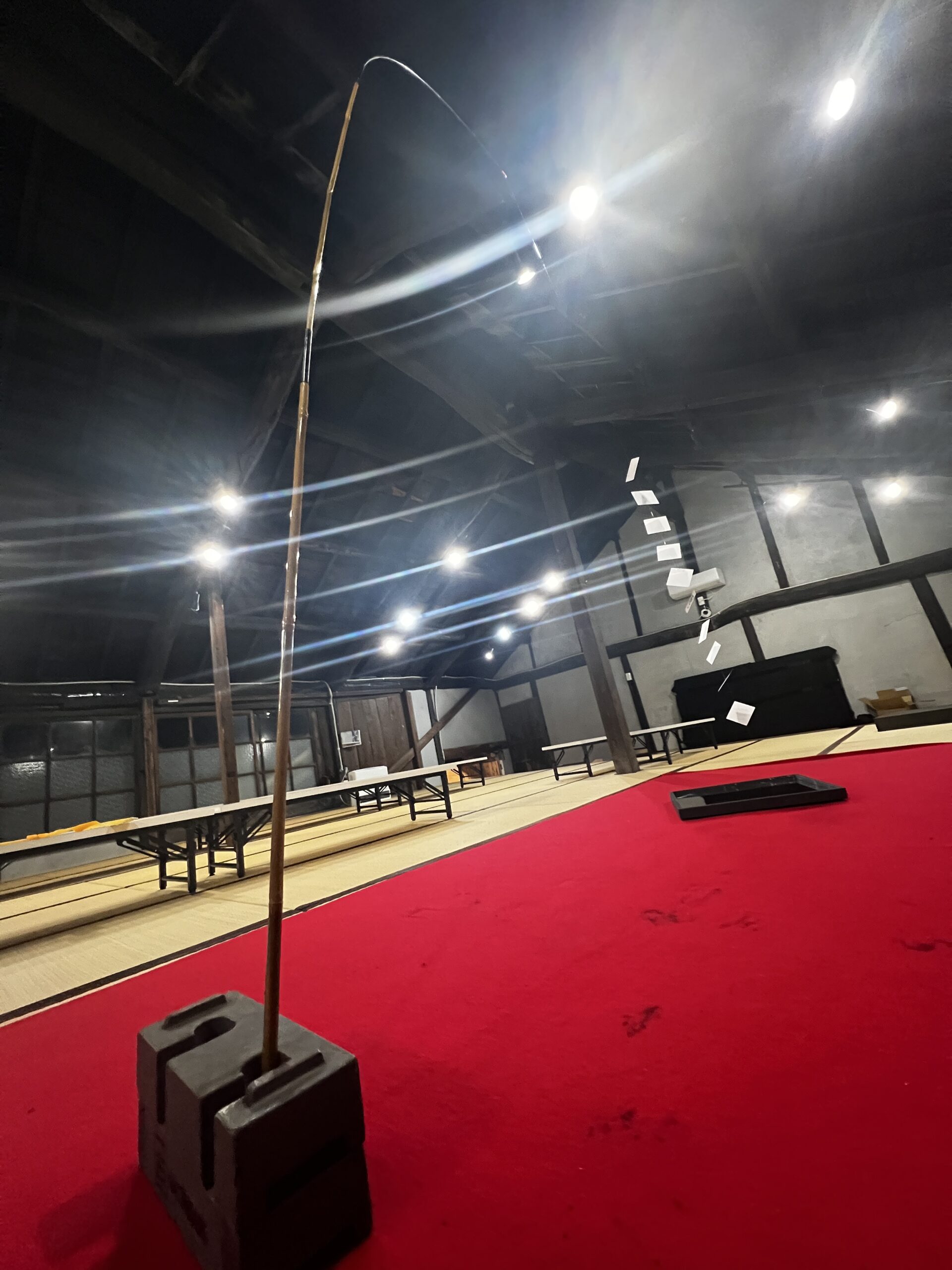
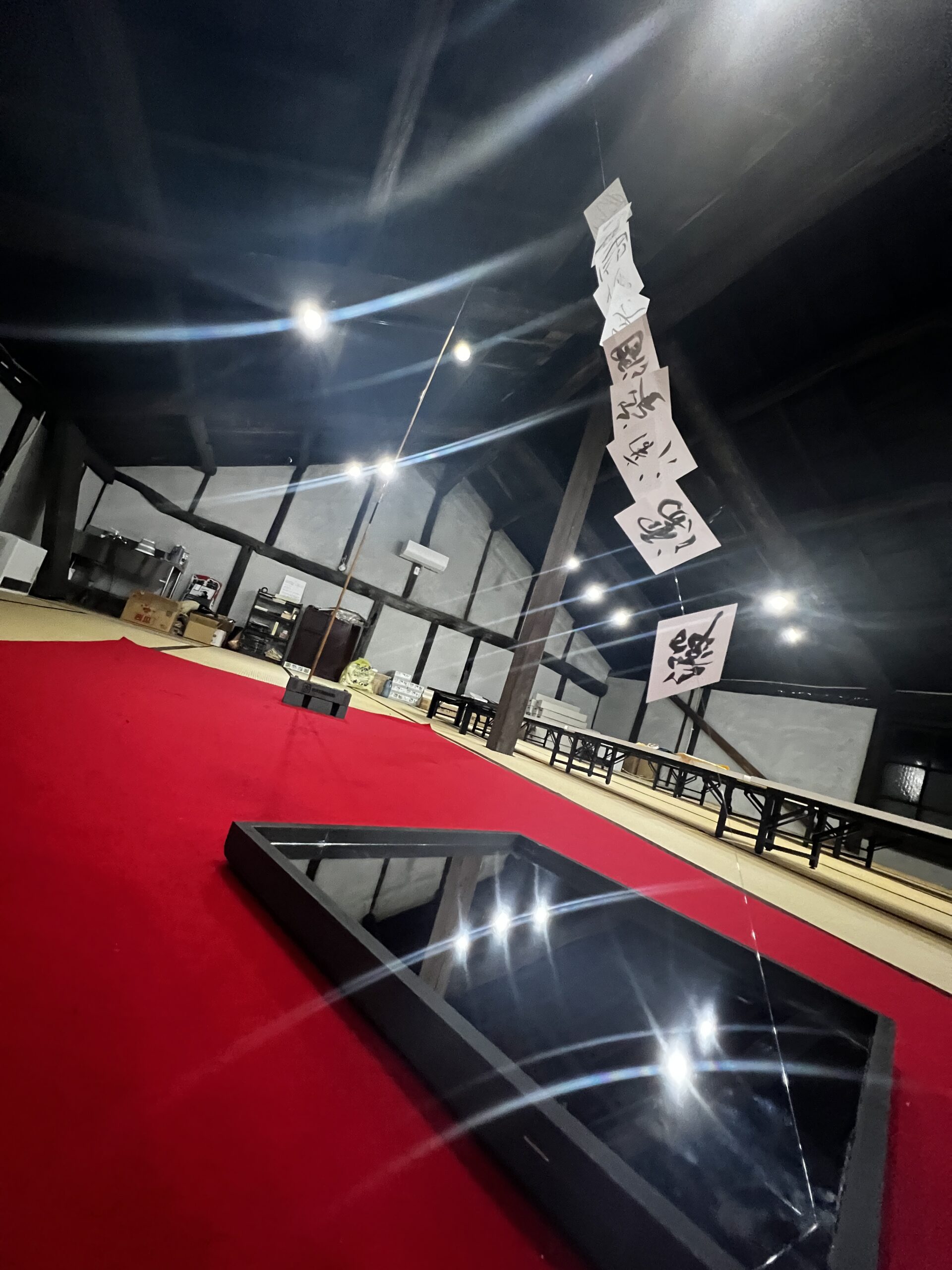
In this work, a single line is lowered from a fishing rod.
It is an image of drawing something up—and at the same time, a metaphor for the human act of trying to bring words into being.
When we attempt to understand something, we extend a thread of consciousness deep into the sensations that lie submerged within us. Then,
gently, we draw them upward in an effort to give them words. This act—unchanged across time—is an instinct intrinsic to humanity, one that has continued and will continue to do so.
The mirror laid at the bottom of the box represents the boundary between the subconscious and the conscious.
On the far side of the mirror lie sensations that have not yet become words—layers that cannot be fully called either memory or thought.
On this side is the world in which words are spoken and meanings are shared. The mirror both separates and connects these two realms.
The sheets of paper suspended at regular intervals along the fishing line represent the “layers” accumulated within the subconscious. Each sheet bears characters, yet all are oriented downward. Viewed from directly above, the text cannot be read. Through the mirror, the characters appear legible—but because they are reversed, immediate understanding remains difficult. This structure reflects the nature of language itself.
Even when a person puts what lies within into words, whether those words truly convey their intention cannot be essentially understood by others—and at times, not even by the speaker themselves.
Rather than taking what is verbalized at face value, this work invites the viewer to attend to the true intention that lies behind the words.
The piece also layers the processes of consciousness and language through transformations of water.
At the lowest level lies sediment—a heavy, settled sensation that precedes meaning. From there it moves through wetness, dripping, bleeding, saturation, reflection, trembling, haze, and mist, finally transforming into fog at the uppermost layer. As one moves upward, the characters grow fainter, their outlines dissolve, and eventually it becomes uncertain whether they can be read at all.
Drawing something up from the subconscious into consciousness—and the subsequent act of verbalization—resembles the process by which water sublimates from liquid to vapor. The moment words are spoken, they are released into space as sound and quickly dissipate like fog. Yet the intentions that resided within those words remain, unmistakably, within both the speaker and the listener. Like letters reflected in a mirror,
they continue to exist—certainly, even if they cannot be directly touched.
This work acquired its structure only through being exhibited in the land of Ōno.
In this place, where underground water changes form and eventually becomes mist that shapes the landscape, I felt an inevitability in overlaying the nature of consciousness and language.
Here, rather than “reading” the letters, I invite you to quietly experience the sensation of drawing something up from within yourself through the mirror. I hope that, for a brief moment, the “latent layers” within each of you may rise and take shape as words.
【YouTube】
URL

【Title】The Cycle of Black
【Work Details】
Calligraphy is an art of irreversibility.
No single stroke ever assumes the same form twice; the moment it is written, it is complete—and at the same time, it slips
into the past. This work does not deny that transience. Rather, it confronts it directly, taking it upon itself and attempting to
summon it back into time once more.
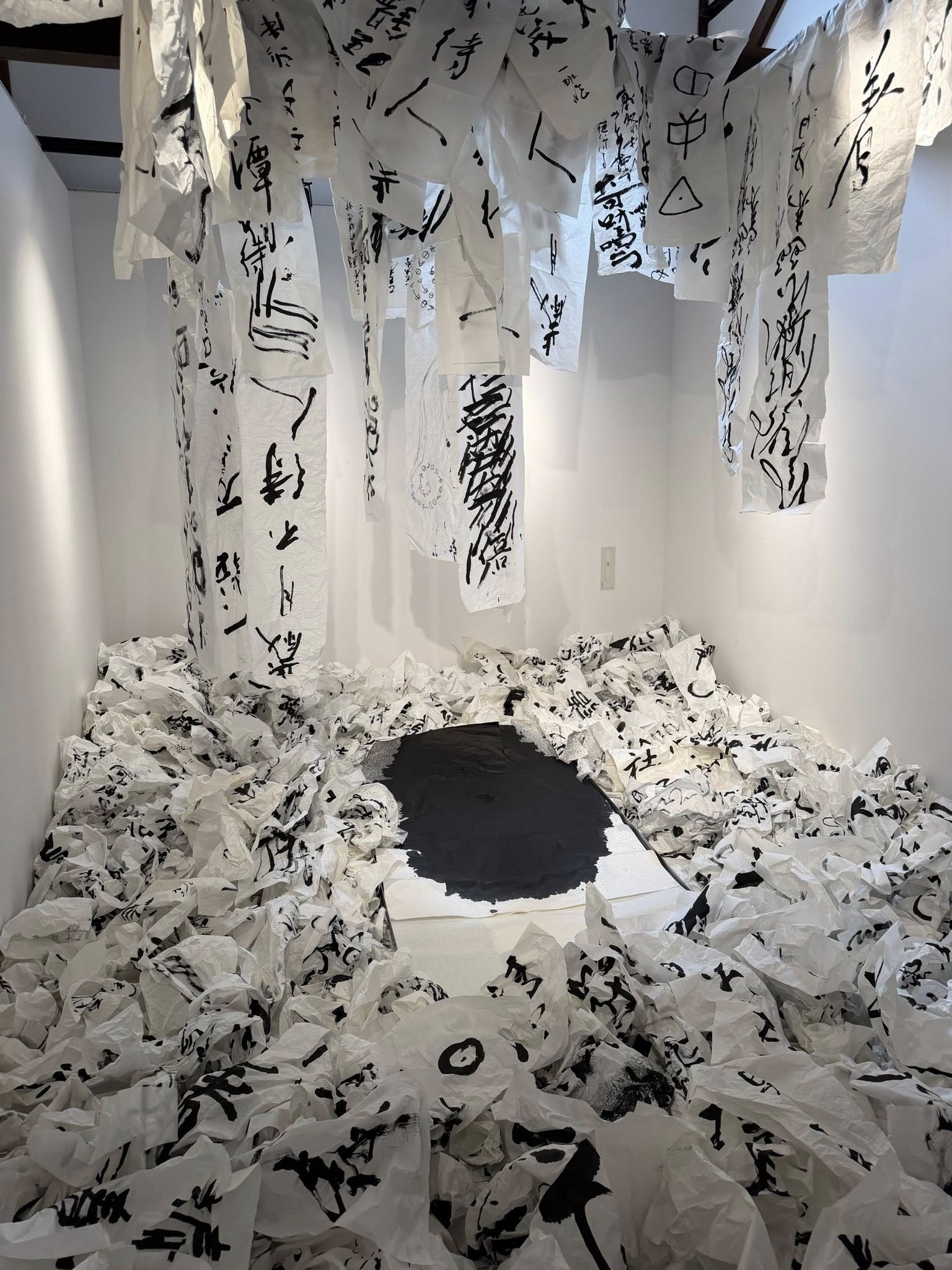
In this piece, ink is made to appear as though it has been extracted from more than five hundred discarded sheets—pages
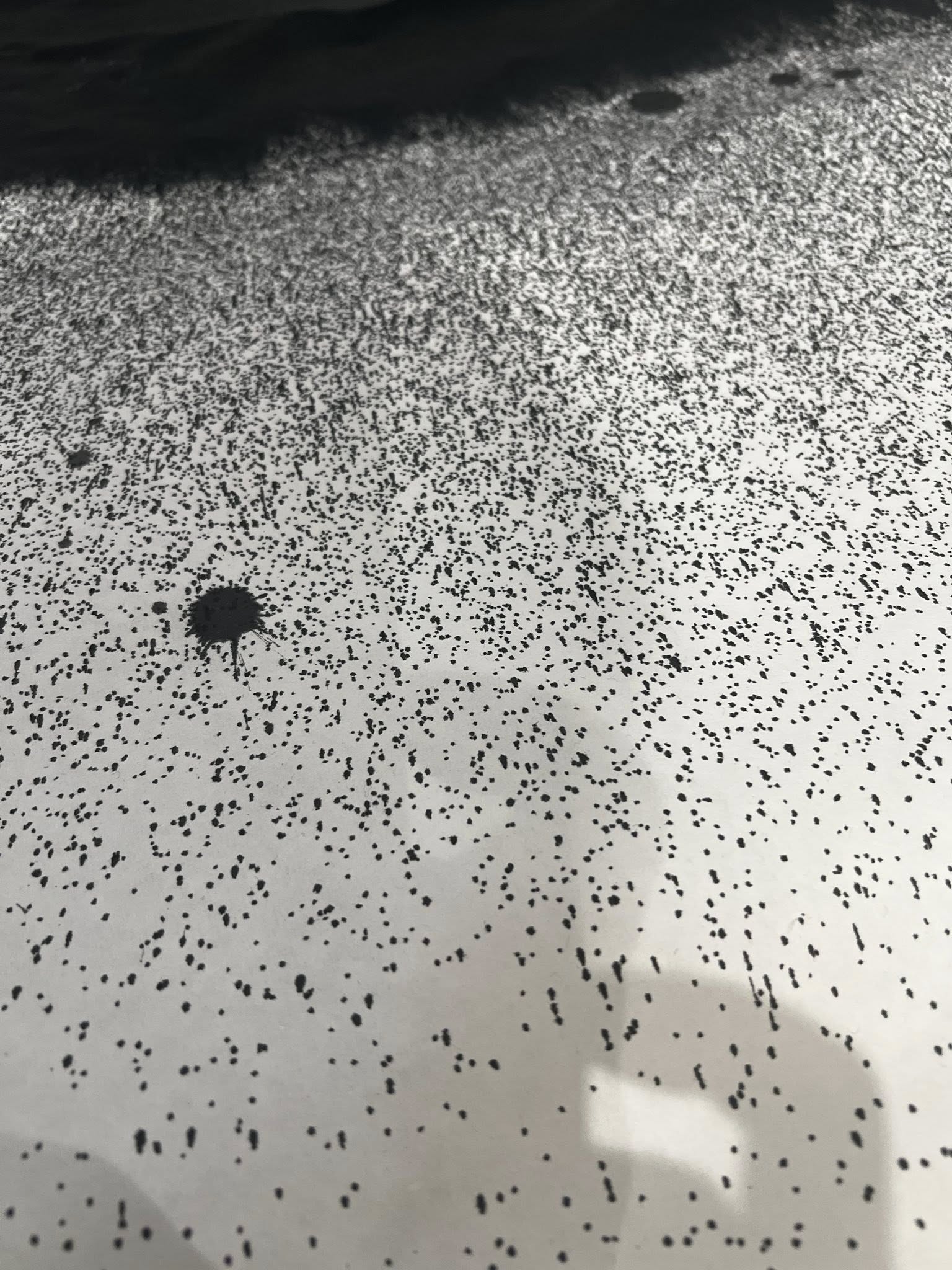
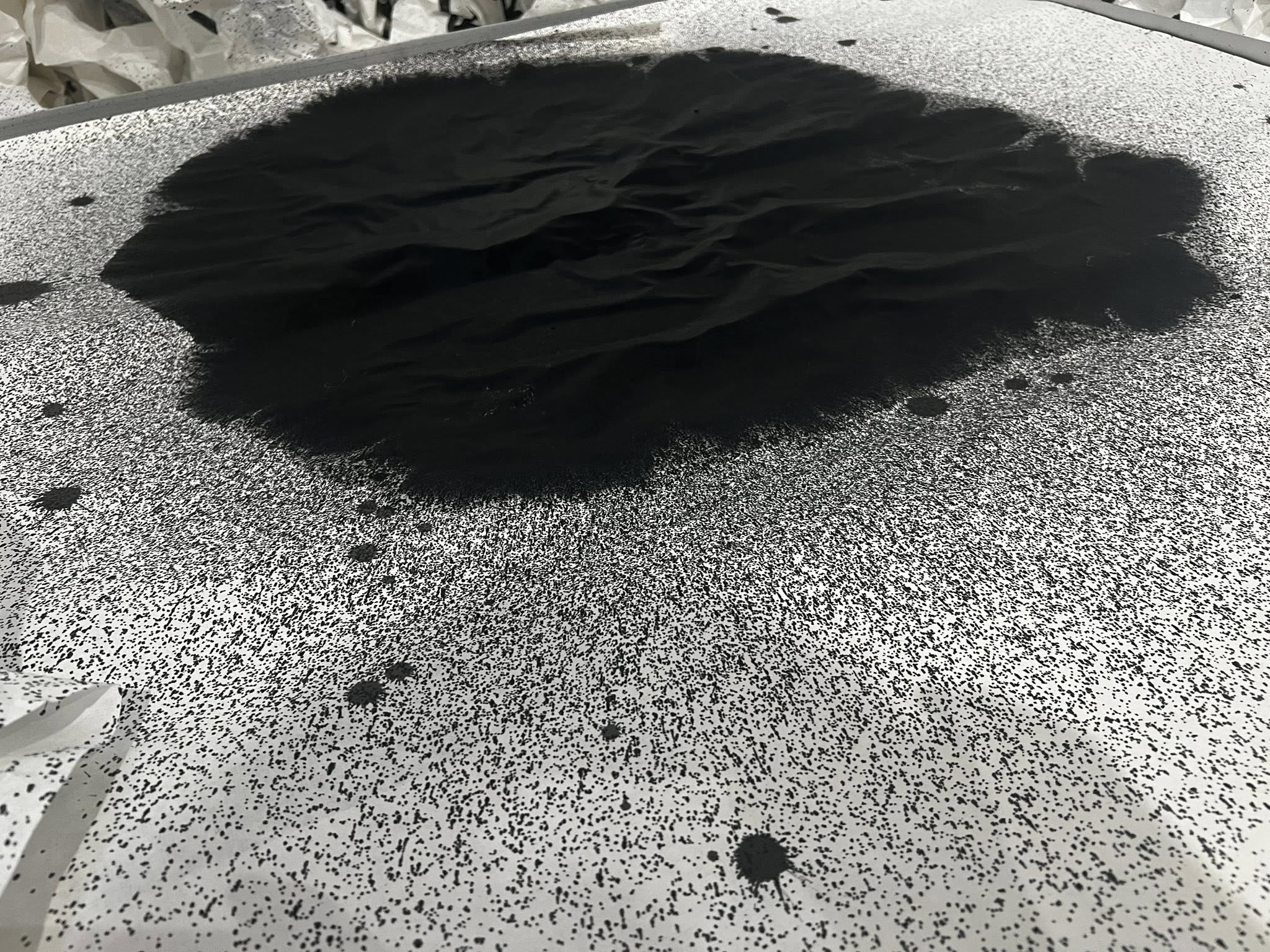
that were written, yet not chosen. The ink is released through an IV drip at an extremely slow rate of 0.1 milliliters per
second, falling drop by drop. Throughout the exhibition period, visitors are invited to witness and experience its continuous
transformation as a work of time-based art.
At the center lies a slanted sheet of washi measuring two meters by one meter. From above, ink falls onto it, released from
the human hand and entrusted instead to gravity and time, endlessly inscribing new traces of calligraphy. Here, a quiet
intersection emerges between spatial art and temporal art.
Discarded sheets are records of failure.
The papers used in this work were gathered from a retreat held by my calligraphy school, Tsugumi, which I oversee. They
are the accumulation of time in which students challenged themselves, hesitated, and continued to write. These sheets are
not mere failed attempts; they are traces of intention and trial and error, and at the same time, evidence of people learning
together.
“The Cycle of Black” thus transcends individual authorship and comes into being as a collaborative work that connects
generations and shared intentions.
In an age when AI can instantly generate “correct answers,” the acts of hesitation, failure, and rewriting are increasingly
pushed outside the bounds of efficiency. Yet is it not precisely failure that stands as proof of creativity granted only to human
beings? Discarded works are not a past to be denied, but a wellspring from which the future is born.
By circulating materials that would otherwise be lost and giving rise to new calligraphy over time, this work elevates
calligraphy from a momentary art to an enduring practice. Within finite repetition, it discovers the infinite; and here, inscribed
before us, is the very image of humanity—continuing to create while carrying its failures forward.
【YouTube】URL

【Title】SANUKI CODE
【Work Details】
Why do human beings carve their thoughts into characters?
Perhaps it is because we have always wished to carry invisible emotions and memories beyond the boundaries of time.
From its very origin, calligraphy has been a “device for preserving memory.” This conviction became the starting point of
SANUKI CODE.
Long ago, a single tanka poem was composed by a poet on the shore:
Even when the fisher’s sleeves at Shido
never find a moment to dry,
so too my love will never cease—
not even for the briefest ebb of the tide.
As we envision this scene, the “breathing” of the tides overlaps with the “eternity” of human longing. Sleeves that never
dry. Love that never ends. Here, we find the very prototype of what we now call ETERNAL.
So how do we, in the present age, inscribe our emotions?
Most of them are recorded as signals of 0s and 1s—binary code.
“1 = presence.” “0 = absence.”
Ink and blank space. Tide and ebb. Light and shadow.
The structures once inherent in ancient poetry and calligraphy are still alive today, drifting within the digital sea. Binary, in
this sense, is the modern kotodama—a new form of Manyōgana, the phonetic script of ancient Japan.
SANUKI CODE is a data art project that converts the kotodama dwelling in the ancient place-name “Shido (Sanuki)” into
Unicode—the universal character encoding system—and renders it visible. Each character is transcribed into waves of
0s and 1s, rising as a rhythm of black and white. The vertical lines that flow downward are the breath of the tides, the
pulse of love, resonating deep within the body like the “DNA of memory.”
Separated by a thousand years, poetry and data depict “eternity” through the very same structure.
I do not seek to deny calligraphy. On the contrary, I have expanded its essence—its power to record existence and reach
far beyond time and space to another—by means of digital information guided by the brush. Brushstrokes dwell within
sequences of black and white dots. Invisible letterforms give rise to “tidal inscriptions.” Thus, this work is presented as
another Manyōshū poem floating upon the modern sea.
The tide comes in and recedes, only to return again.
Data is written, erased, and generated anew.
Though its form may change, human feeling never disappears.
Through SANUKI CODE, the love once sung in the Manyōshū is again engraved into a sea of light and data. I believe this
to be an “Eternal Language”—a language that bridges the ancient and the present.
【YouTube】
URL


【Title】SAPPORO HISTORY
【Work Details】
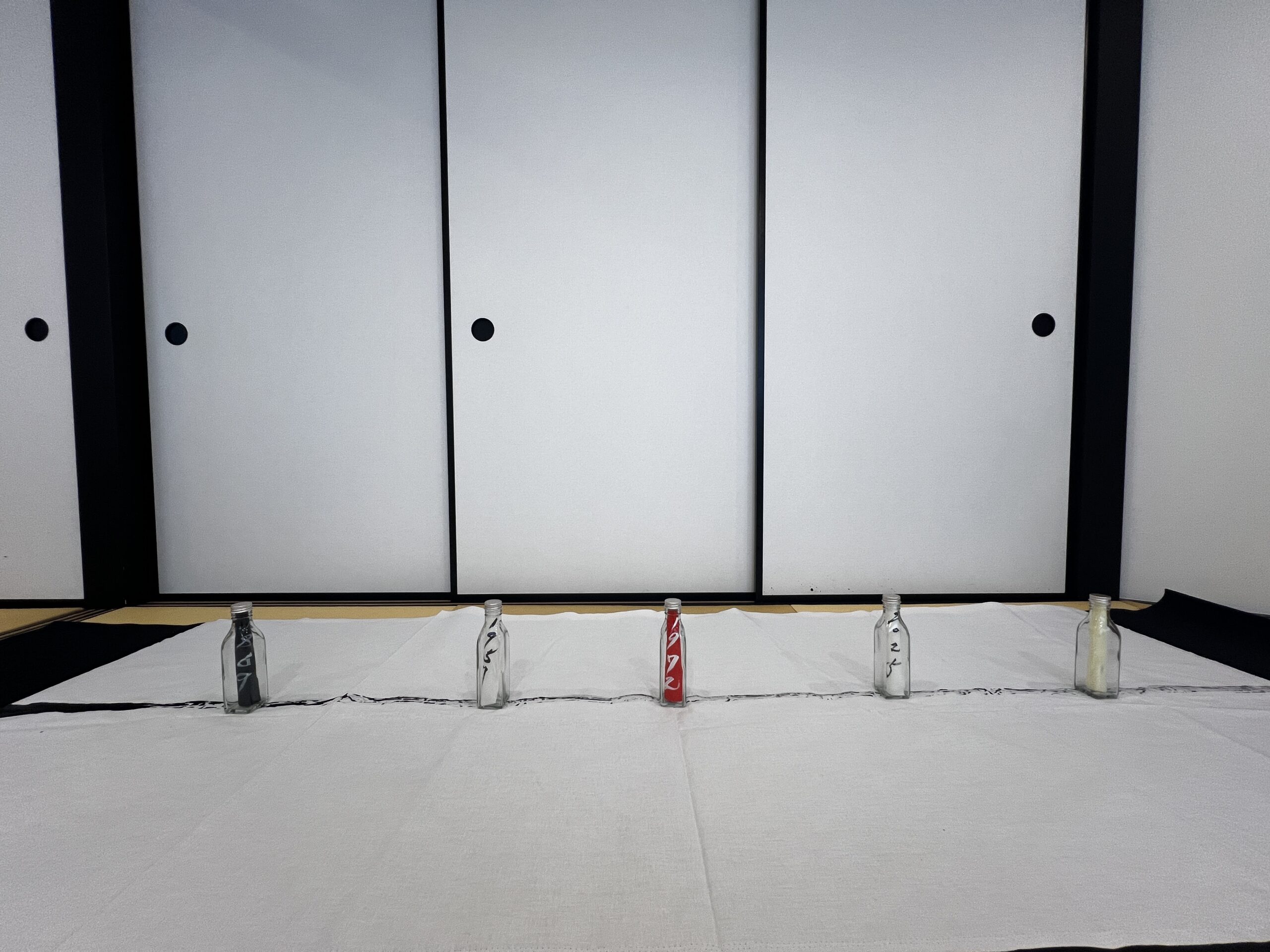
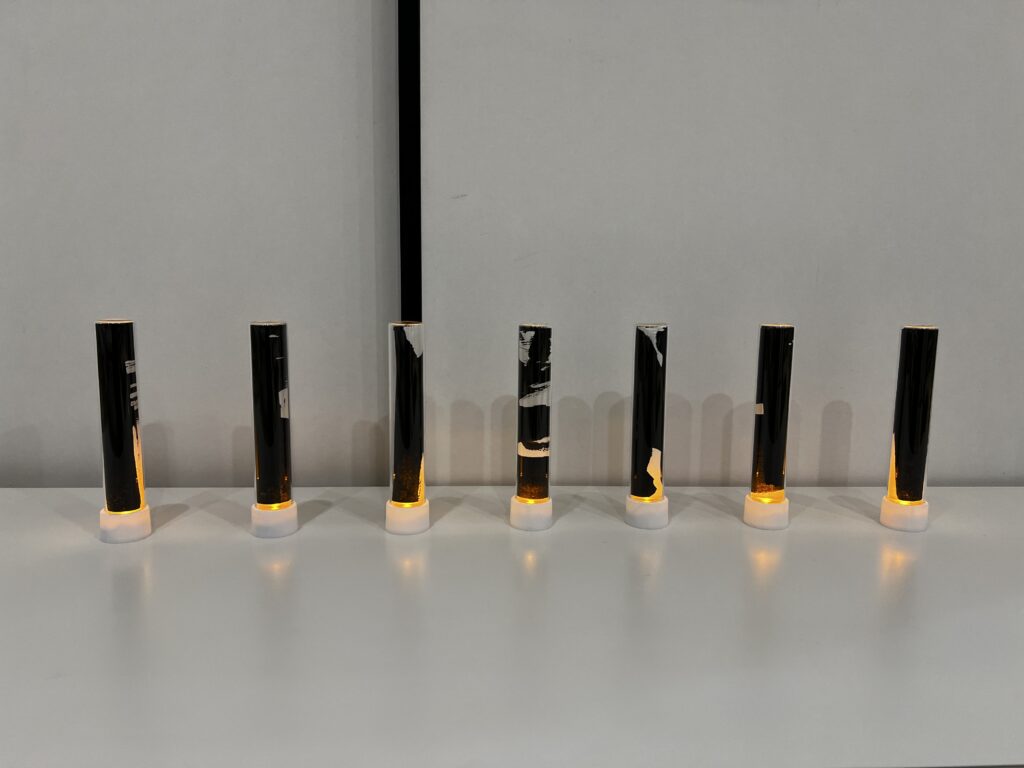
This artwork represents Sapporo’s journey from the beginning of its pioneering development to its future, expressed through five bottles arranged along a single line representing Odori Avenue, with epochal years inscribed within them. The underlying theme is Sapporo’s “eternity” – rooted in Hokkaido’s vast land and maintaining its unchanging vitality even after more than 150 years.
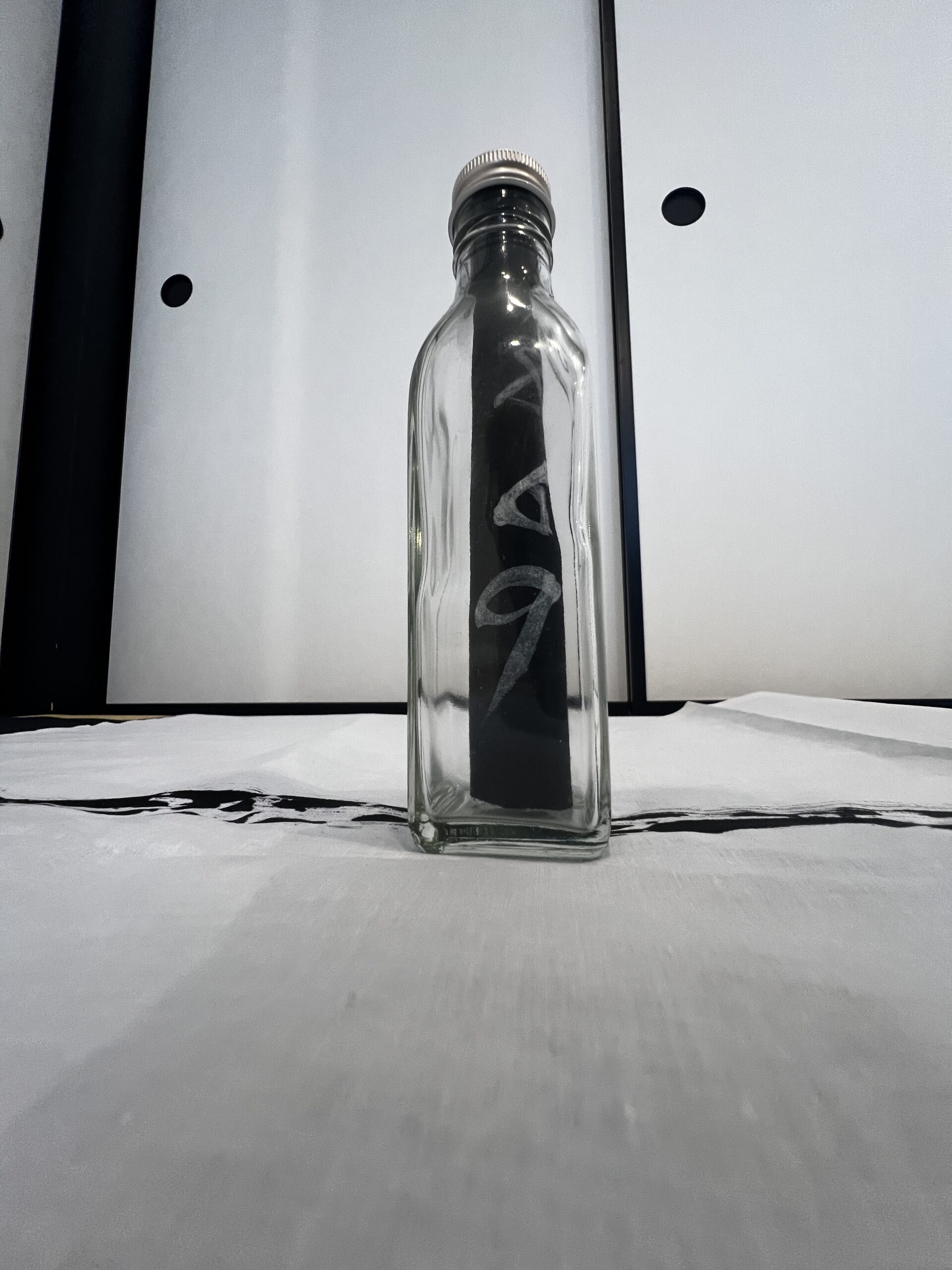
The story begins in 1869, the year the Hokkaido Development Commission was established. On this land where untouched snowfields stretched endlessly, people arrived carrying dreams and hopes, sketching out a grid-pattern city plan. In the artwork, this era is symbolized by black washi paper representing the undeveloped land, with 1869 inscribed in white snow tones to convey “the silence of beginnings.”
1957 marks the completion of Sapporo TV Tower, the city’s symbol. The red steel framework represents urban growth and broadcasting power. The brushwork is sharp and powerful, subtly incorporating the light red hue of Suzuka ink to layer the tower’s commanding presence with the city’s pulse.
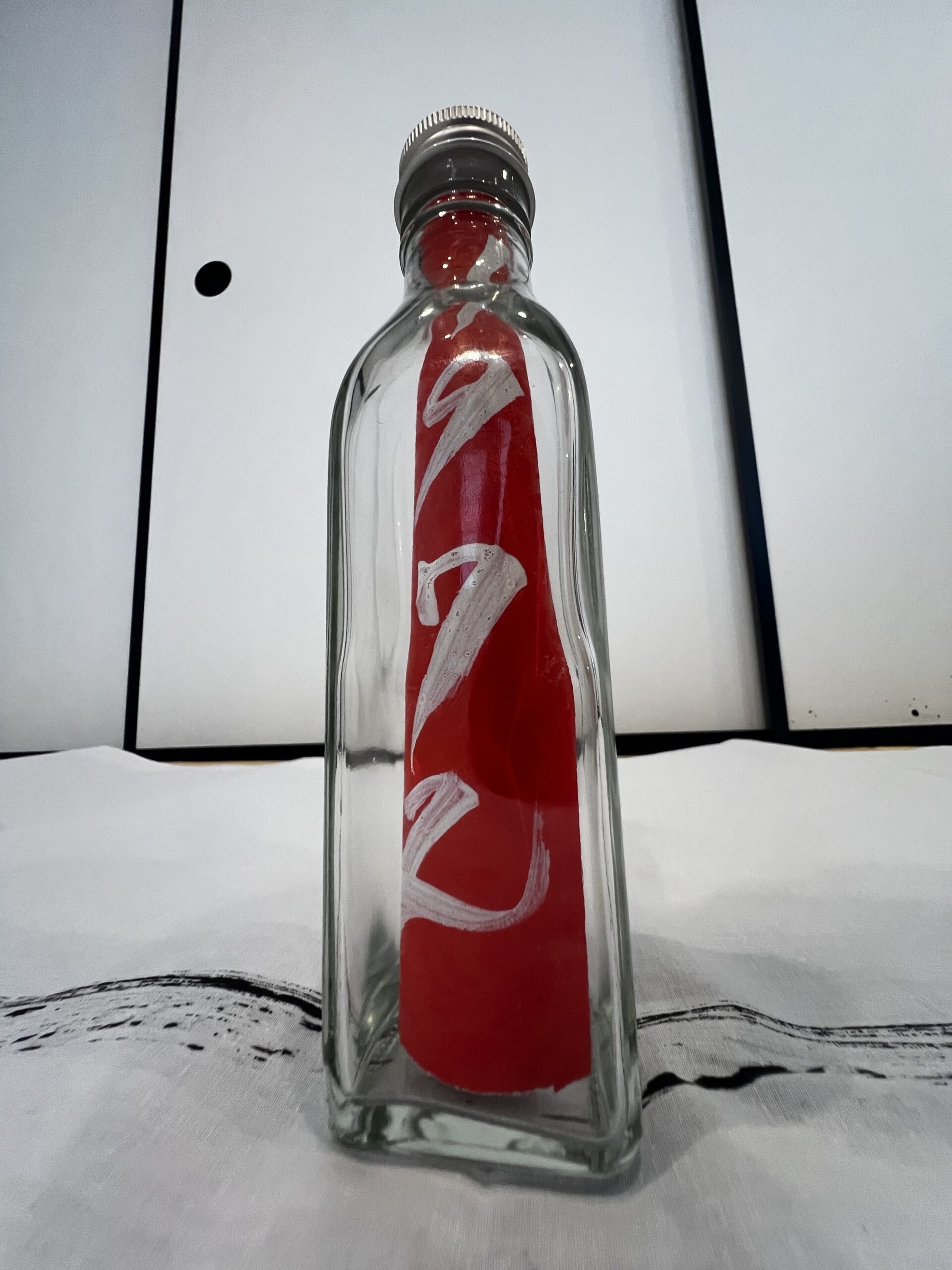
1972 was the moment Sapporo opened to the world – the year it hosted the Winter Olympics. The Olympic flame and silver snow world elevated the city’s global recognition and pride. Here, flame-patterned washi paper expresses the brilliance of snow and the leap onto the international stage. The brushwork is graceful and dynamic, conveying the exhilaration of the Olympics.
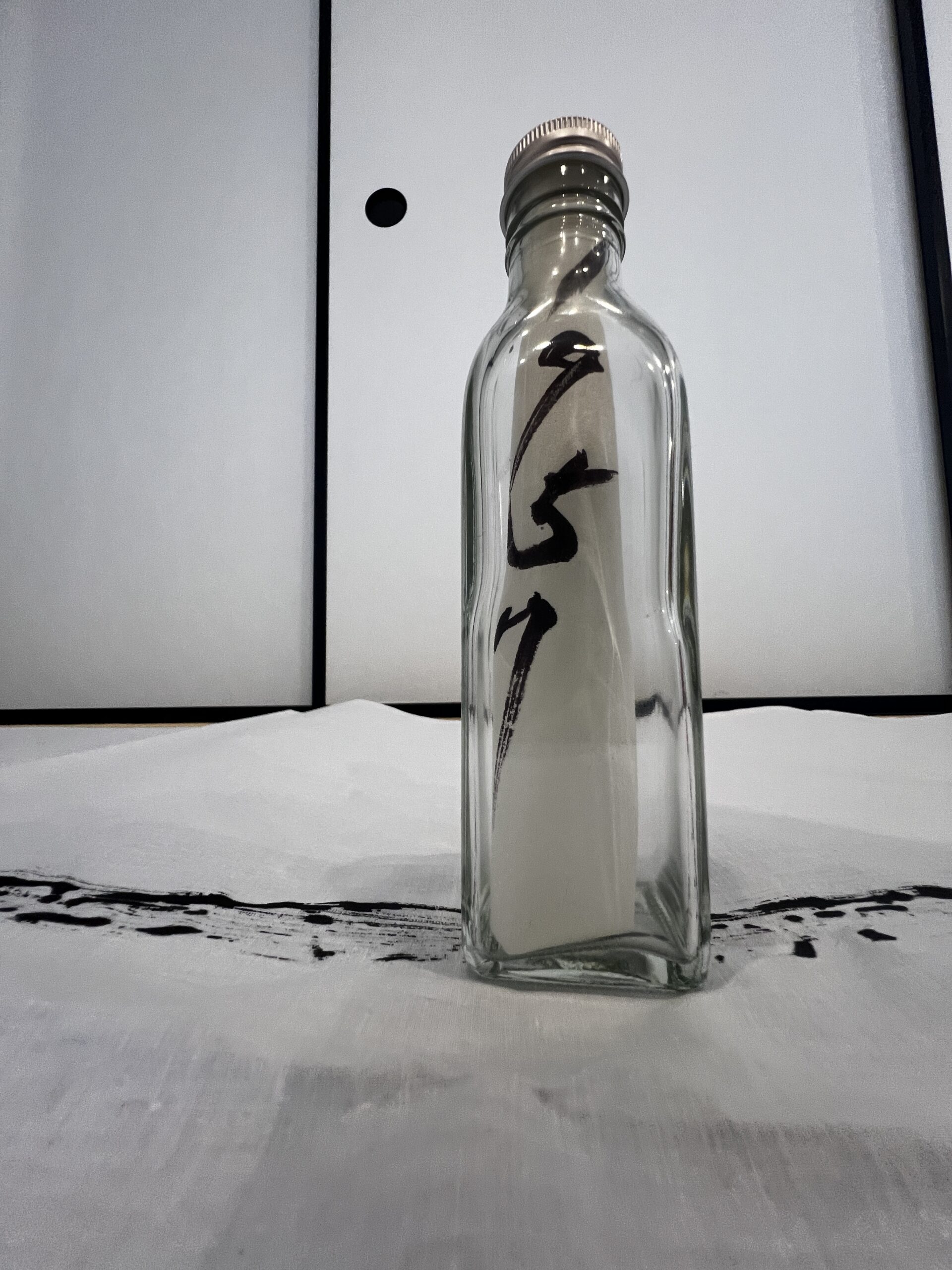
2025 represents modern Sapporo – the composure of a mature city, cultural depth, and challenges for the future. The ink color uses light green Suzuka ink to express stability and dignity.
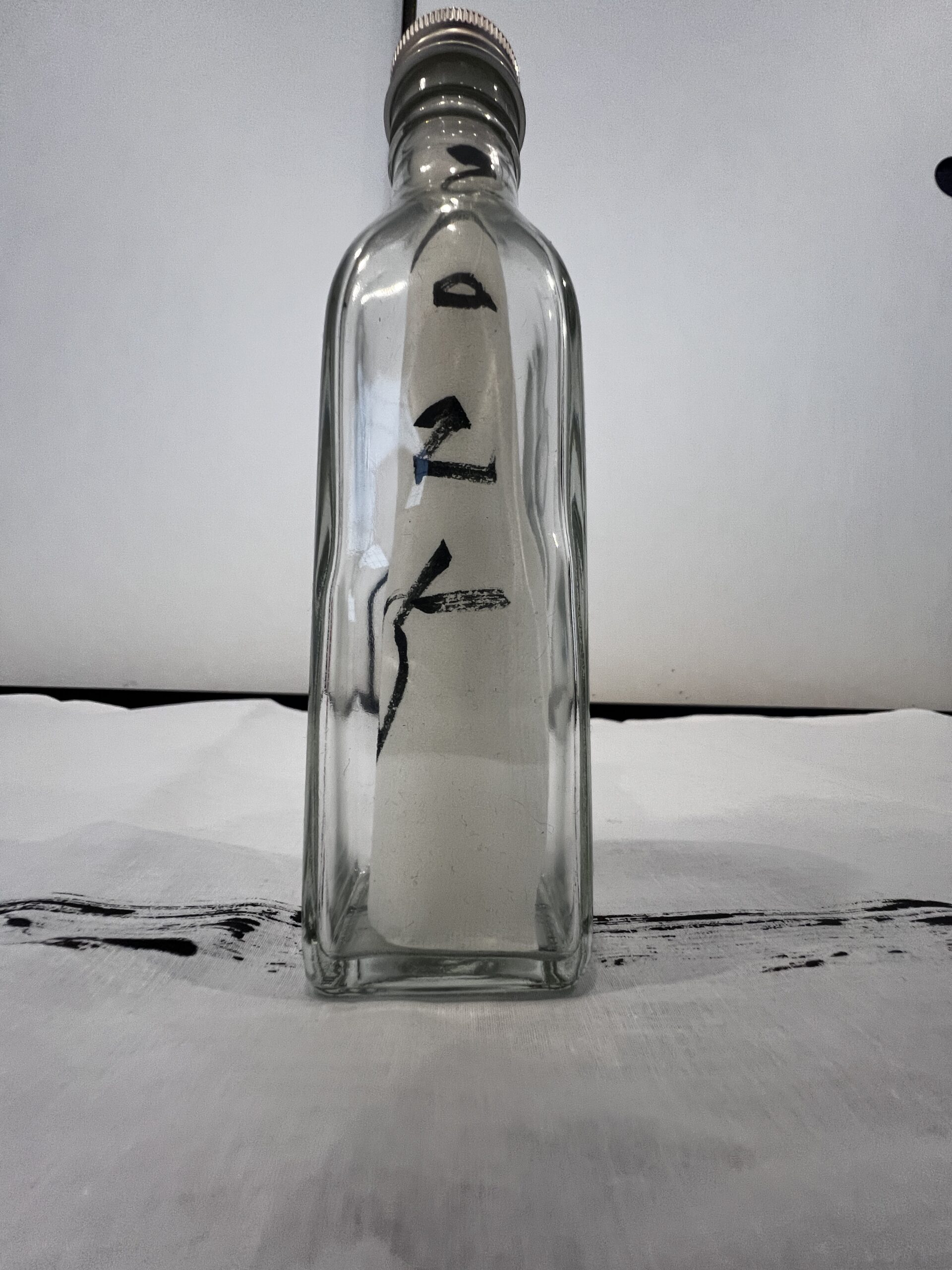
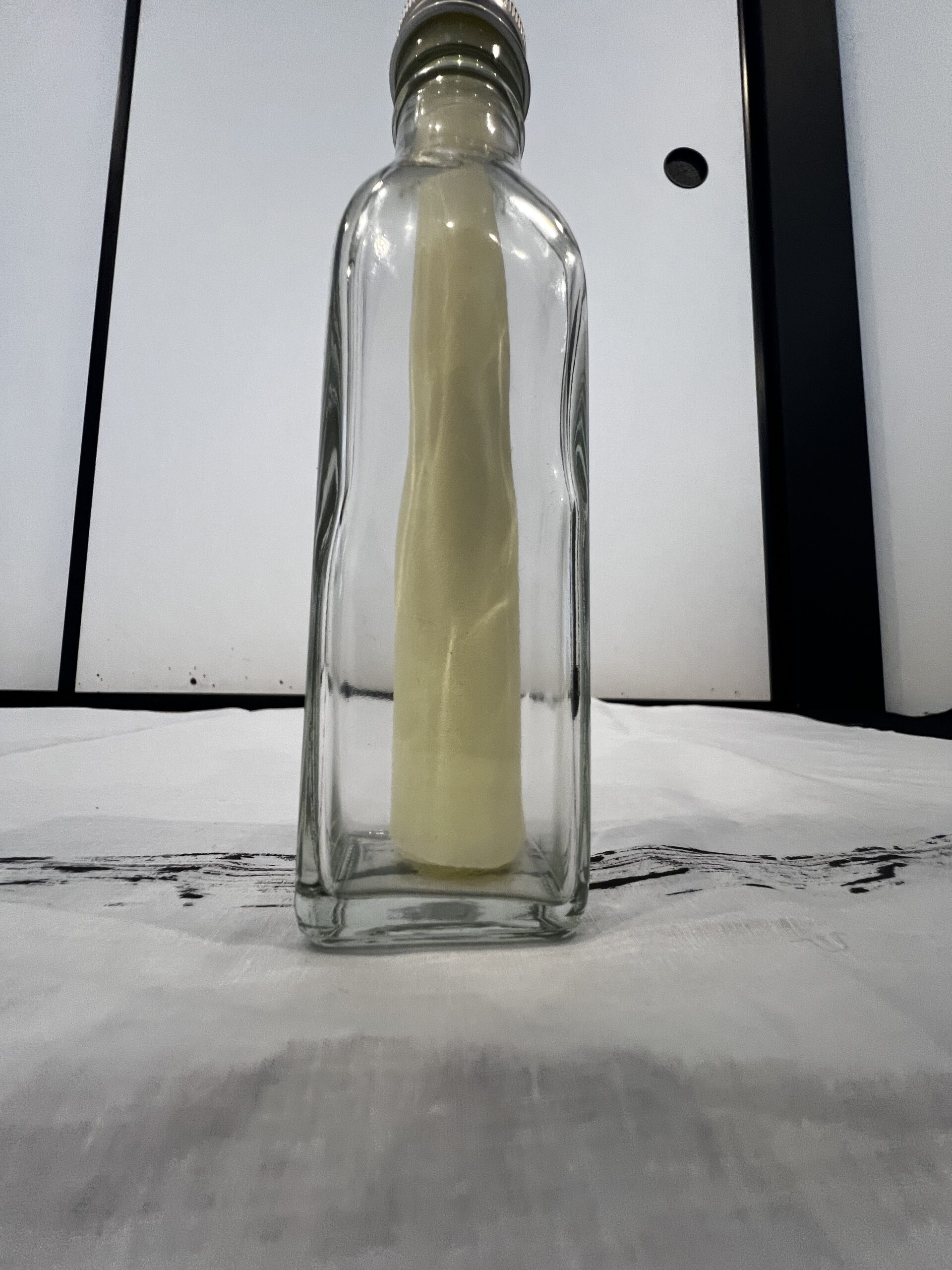
Finally comes the “Future.” No specific year is inscribed here, leaving it to the viewer’s imagination. The washi paper uses a slightly yellowish milk-white color that paints a shimmering, vibrant future, symbolizing Sapporo’s eternal form as it continues to cycle with the seasons, perpetually balancing change and harmony.
The overall composition flows from left to right in chronological progression. By encasing these elements in bottles, I hope viewers can perceive the fluctuation and breathing of each era through the glass’s distortion and curved forms.
“SAPPORO HISTORY” is not merely a chronological table. It is “the story of Sapporo” – weaving together through calligraphy and color the breath of the people living in Sapporo, the accumulated layers of time, and hope for the future yet to come. Viewers will nostalgically reflect on the past while contemplating the present and envisioning an unseen future. This artwork was created to eternally capture that moment.
【YouTube】
URL

【Title】8000generations
【Work Details】
The origin of modern humans can be traced back to the emergence of Homo sapiens in Africa approximately 200,000 years ago.
In reality, the origin of modern humans is understood to have been the result of collective evolution among multiple populations. However, if we were to imagine, hypothetically, that all modern humans began with a single pair, and if we assume that one generation turns over every 25 years, then we would be approximately the 8,000th generation of humanity.
The uninterrupted continuity of human activity carries with it both an optimistic projection—that our species will continue into the future—and a more pessimistic possibility—that it may not.
Living in an age of VUCA, where uncertainty continues to intensify, the future before us may be reduced to two possible sides: Side A or Side B.
Side A is a future in which modern humanity continues along the extension of the present.
Side B is a future in which that continuity comes to an end.
Do we look for what lies beyond on Earth, or in outer space?
Modern humanity is now turning its gaze toward space as a possible path forward.
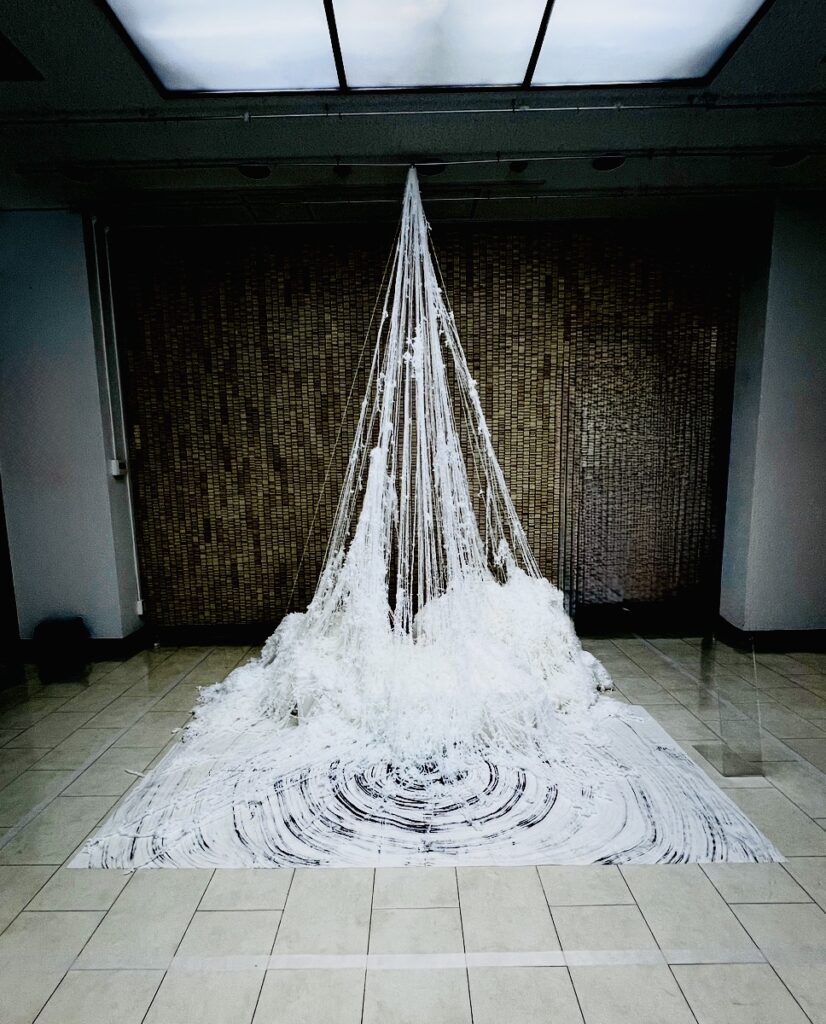
This work imagines a single pair of threads as the starting point of modern humanity—connected, spun, and carried through 8,000 generations—before extending into the future and reaching toward outer space.
According to current scientific understanding, the universe continues to expand under the influence of dark energy. Observations suggest that this expansion is not only ongoing, but accelerating.
The work expresses this ever-expanding universe through countless overlapping lines. These sequences of lines are conceived as “strata of time,” forming cosmic tree rings radiating from the Big Bang at their center. It is a prophetic work that imagines the possibility that humanity’s future may lie somewhere beyond the known universe, emerging at some point among these accumulated rings of cosmic time.
For the production of this work, silk fiber—one of the industries of Sabae City, Fukui Prefecture—was generously provided by Fukushima Orimono Co., Ltd.
Sabae City is widely known today for its eyewear and lacquerware industries, but the textile industry has also flourished throughout Fukui Prefecture since the Edo period. Even today, it continues to evolve through innovation, high-quality manufacturing, and sustainable initiatives, and is expected to further contribute to the revitalization of the regional economy while strengthening its competitiveness both in Japan and overseas.
Precisely because this solo exhibition, which reflects on the future of modern humanity, is being held in Sabae City, the work was created by bringing together the culture of calligraphy with the future born from tradition and innovation in the textile industry.
【YouTube】
URL

【Title】Thought (Nen)
【Work Details】
The character “念” (nen) is composed of “今” (now) and “心” (heart/mind).
Written as “念,” it is read as “omoi” (thought/feeling).
The upper part of “今” represents a lid.
It expresses feelings that are so strongly cherished in one’s heart that they would overflow without a lid.
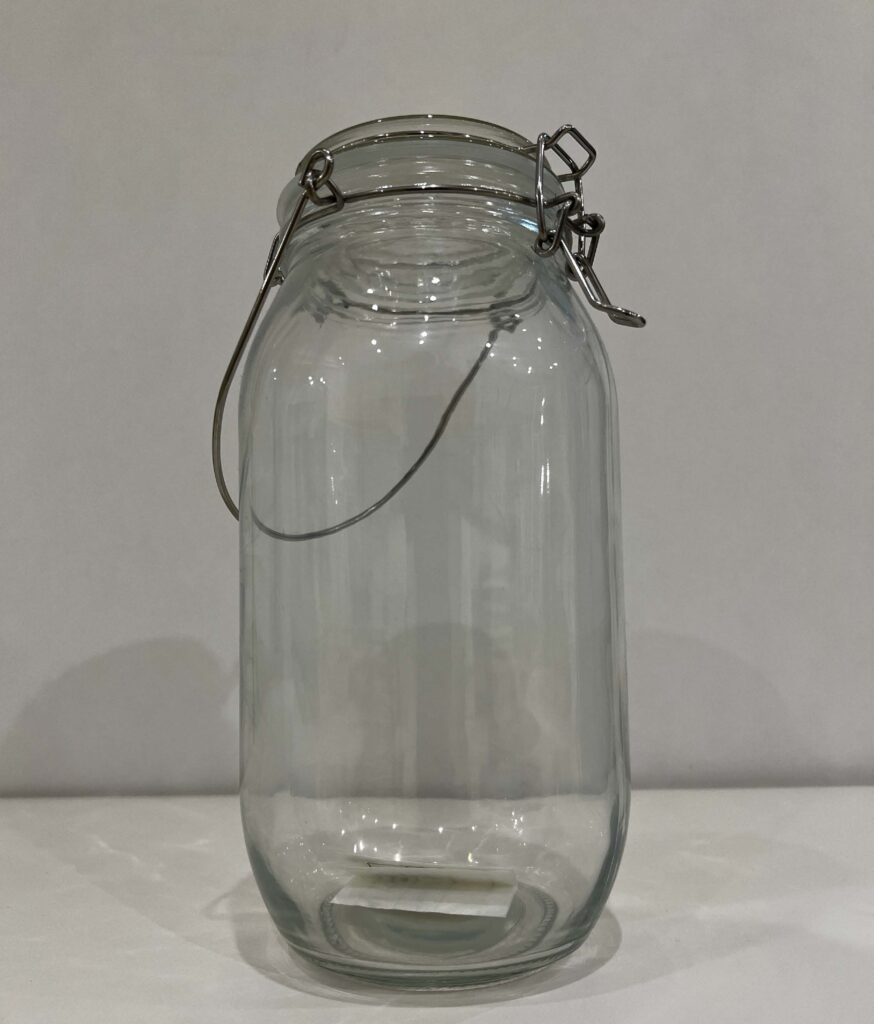
This work is an interactive art piece created together with you, the viewer.
Please write down the strong feelings you cherish at this moment “now” and place them in the jar.
Make sure to close the lid after putting them in the jar.
Storing your strong feelings in this jar and passing this moment on to years and centuries ahead is one of the elements that embodies “eternity.”
【YouTube】
URL

【Title】TIMEMIT
【Work Details】
Modern people are busy. Consumed daily by work, housekeeping, childcare, and elderly care, tasks and studies pile up. The concept of time inevitably comes into play as we consider how to use the 24 hours given equally to everyone each day.
The present that has passed cannot be returned.
Time constantly passes by.
Even spending time regretting what has passed makes time pass.
Yet busy modern people handle multiple tasks.
We continuously consume time without stopping any of our roles.
We consume each moment of the 24 hours with some role or another.
This work expresses our current sense of time – how we use this time now, seemingly planned yet impulsive, and continuously connected without stopping.
In our daily lives filled with moving forward and backward, doing completely different things, having things we should do and want to do, we consume time as if a switch is always turned on somewhere.
“TIME” means time.
“EMIT” means to send out or release.
We are creatures that continue to emit something while using time.
【YouTube】
URL


【Title】Continuing Future (Tsugumi)
【Work Details】
In 2014, I established my own business, founding the general incorporated association Tsugumi-TUGUMI-.
With the ambition to “pass on Japanese culture to the future,” I chose the coined word “Tsugumi” as the company name.
“Tsugumi” also refers to the thrush, the prefectural bird of Fukui Prefecture.
It carries a double meaning: the “thrush” – a hometown bird that can be seen both in Japan and abroad – and “passing on to the future.”
Passing on Japanese culture to the future is not something that ends with our generation but is an eternal endeavor that continues across many generations.
In a world where the act of “writing” itself is disappearing as a tool of expression, perhaps “cultural succession” exists as humanity’s final resistance.
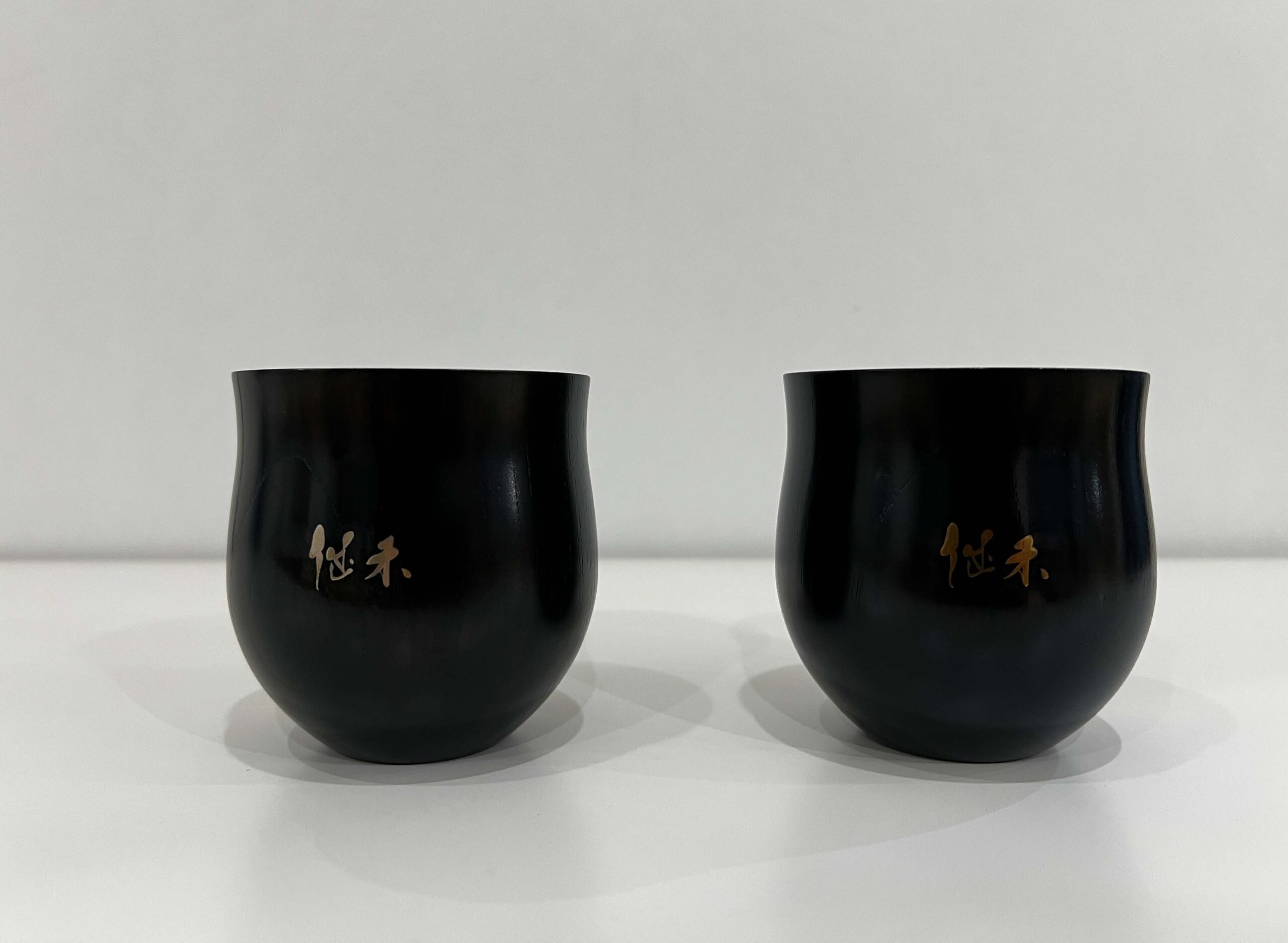
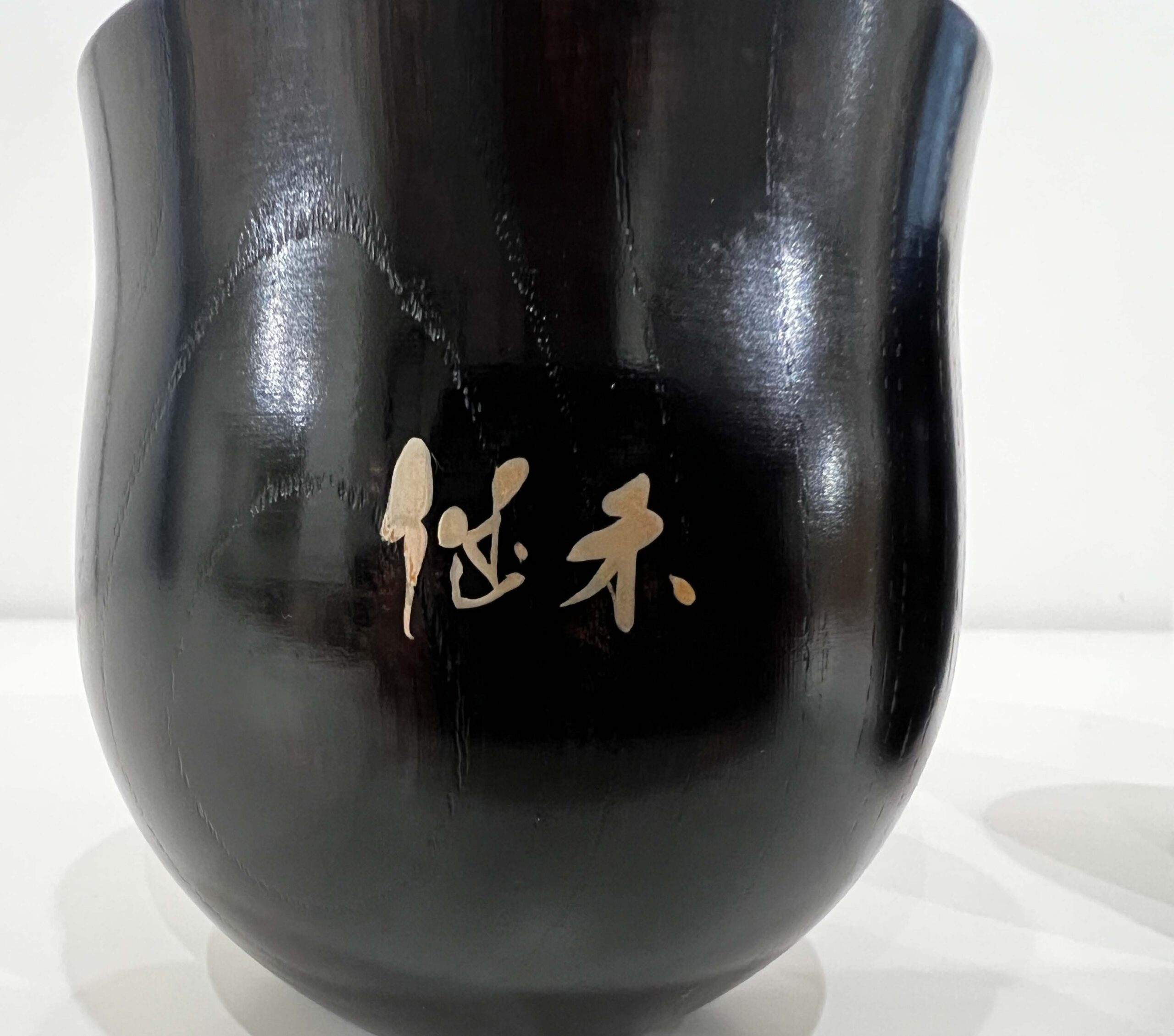
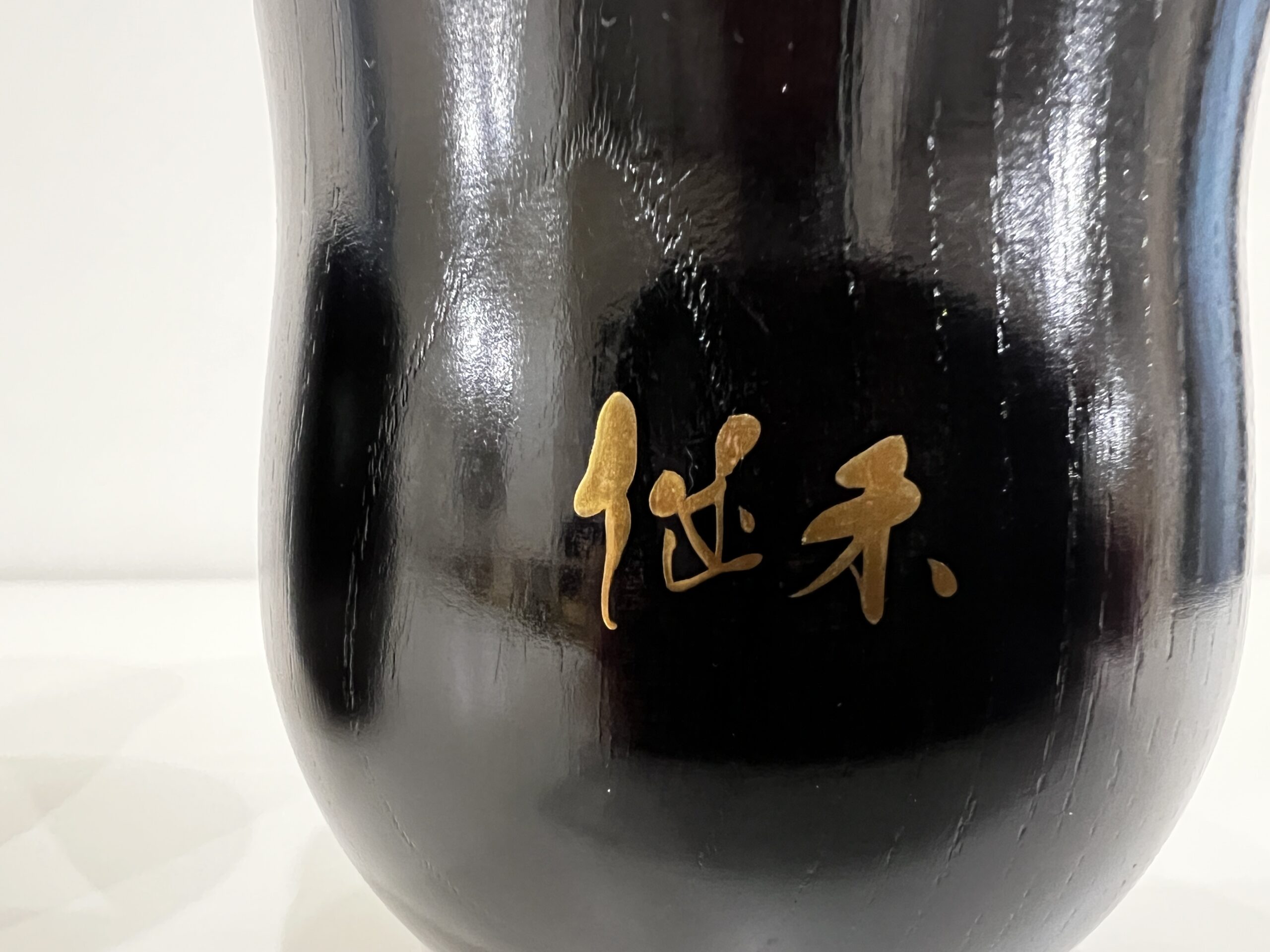
For this exhibition, I wrote the calligraphy “Tsugumi” on light urushi lacquer coffee cups created by Yabushita Yoshiyuki, a kintsugi master from Sabae City, Fukui Prefecture.
Maki-e artist Yabushita Koharu applied gold and silver maki-e decoration to the pieces.
A magnifying glass has been placed beside the artwork. Please feel free to use it to take a closer look at Japanese cultural elements such as calligraphy, lacquer, and makie, as well as the dedication of those who carry on these traditions.
【YouTube】
URL


【Title】Eternal (Ei/Tokoshie)
【Work Details】
Product: “Ei” Design Released in 2022 – Kokuryu Brewery (Sake)
Product: “Tokoshie” Design Released in 2024 – Kokuryu Brewery (Sake)
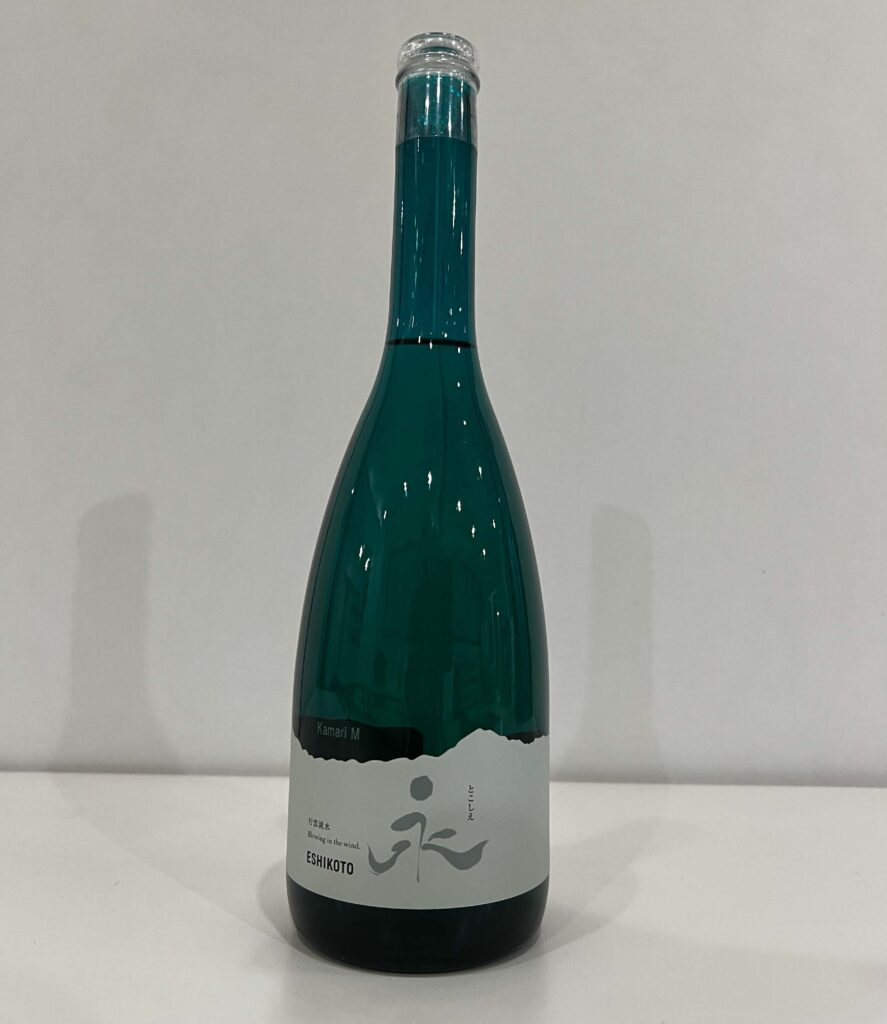
A sake package design exclusively available from Kokuryu Brewery’s ESHIKOTO.
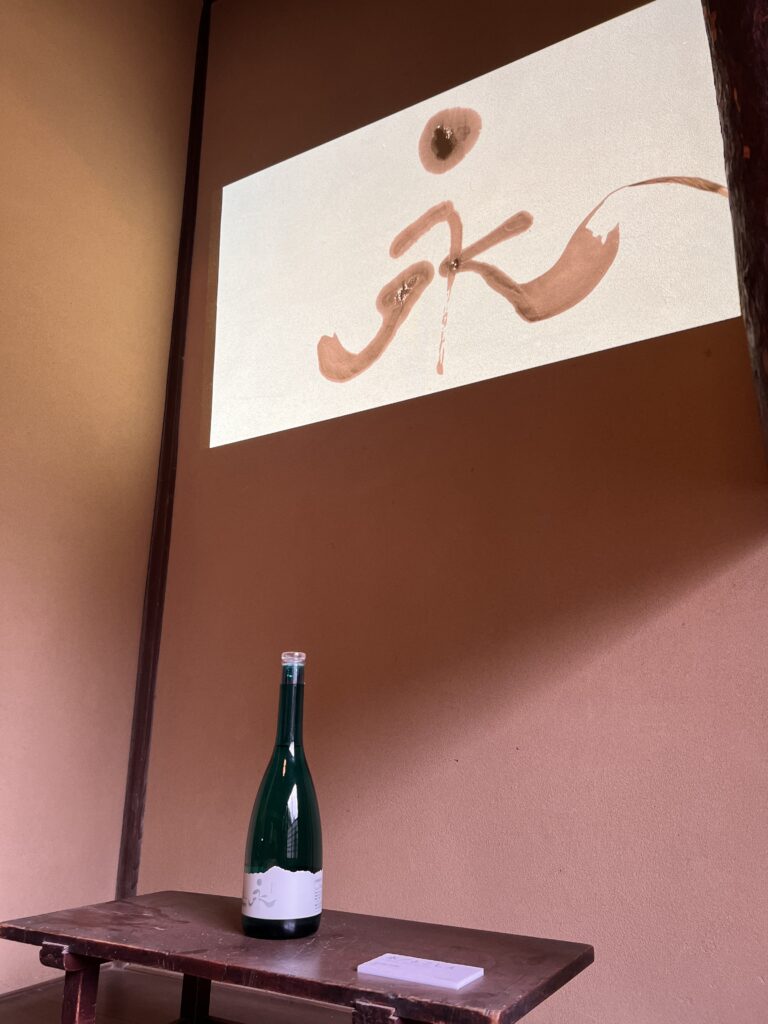
I created the calligraphy for the logo of this sake package, which can only be purchased at “ESHIKOTO” brewery in Eiheiji, Fukui Prefecture.
The character “永” (ei) can be read as “tokoshie,” and means “to remain unchanged and eternal for a long time.”
The Chinese character “永” is a pictograph representing a long river drawing in tributaries.
As sake that will be continuously enjoyed for eternity, I expressed through brush strokes how it flows endlessly while drawing in history.
【YouTube】
リンク

【Title】goldenrecord2024
【Work Details】
In 1977, NASA launched the “Voyager Program,” a mission to explore the outer planets of the solar system and beyond, sending two unmanned spacecraft.
These spacecraft carry the “Golden Record,” containing messages intended for extraterrestrial beings.
The Golden Record contains various sounds and music from Earth, greetings in 55 languages, and photographs and illustrations introducing various scientific information.
The hope was that as Voyager leaves our solar system and travels toward other star systems, it would be discovered and decoded by intelligent extraterrestrial life presumed to inhabit planets in those star systems.
Humanity’s curiosity about unknown worlds knows no bounds. It wouldn’t be an exaggeration to say that we live our daily lives for the progress and evolution of humanity.
Even when it seems we’re doing nothing, our very existence serves as a kind of database for humanity’s next generation, and our ability to adapt to environmental changes is itself linked to human progress.
The COVID-19 pandemic in 2020 brought many behavioral changes to humanity.
All of humanity transitioned without question to days of restricted movement to schools and offices, mandatory stay-at-home orders, and wearing masks while avoiding conversation with others.
In 2024, humanity is returning to its previous daily life as if nothing happened, but that daily life has become a completely different world from before.
The sounds etched into the Golden Record in 1977.
These sounds, cutting out “now” from 47 years ago, will continue drifting through space eternally via Voyager.
The Voyager’s Golden Record includes the Japanese greeting “Konnichiwa, ogenki desu ka?” (Hello, how are you?).
Originally, “konnichiwa” came from phrases like “Kyō wa, gokigen ikaga desu ka” (How are you today?) and “Kyō wa, ii otenki desu ne” (It’s nice weather today).
It’s said that “konnichiwa” spread after being introduced in Meiji-era textbooks with the latter part of “kyō wa” omitted.
This culture of abbreviation can now be seen in messages exchanged among young people in daily life: “Ryōkai desu.” → “ri” “Otsukare sama desu.” → “otsu” “Sō da yo na.” → “sore na” “Maji?” → “ma?”
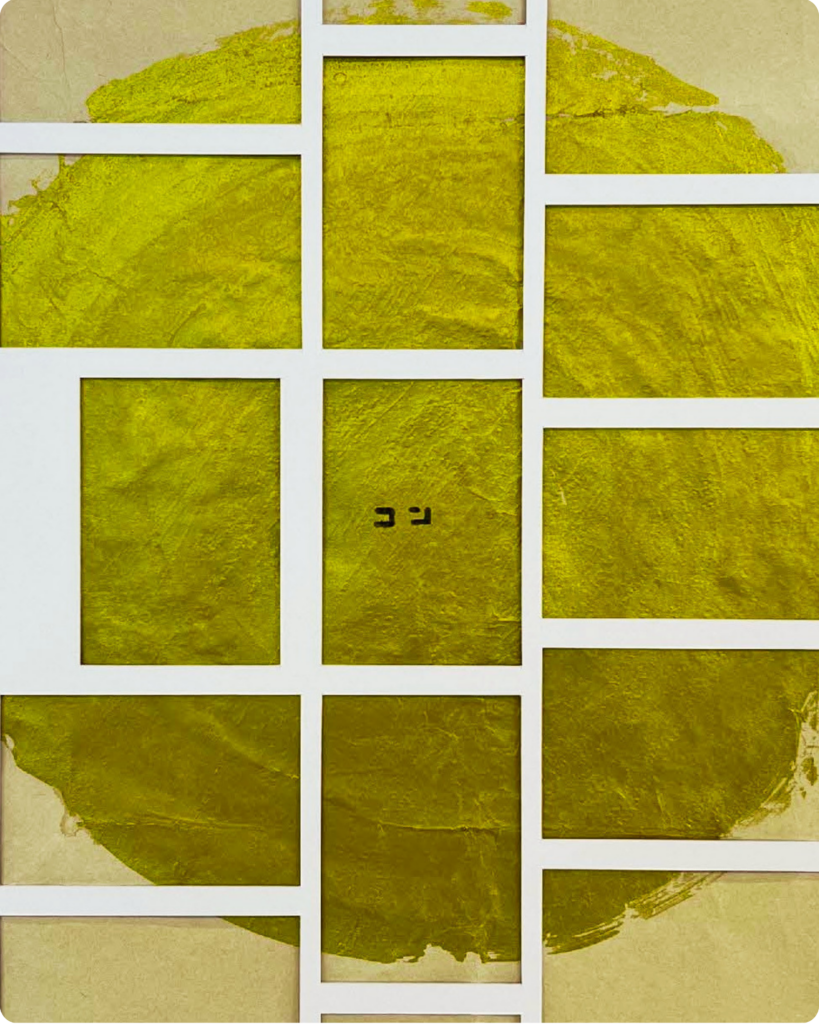
In this Golden Record 2024, I’ve carved “kon,” an even shorter version of “konnichiwa.”
The future of such abbreviation might lead to nothing remaining. Nothing expressed. An empty world might drift.
However, we who live now have words and all kinds of tools available as means of communication.
Yet, there are many barriers to delivering words, making them harder to convey.
Just as the radio waves emitted by Voyager have become weak and difficult to receive.
The world surrounding us is a filter bubble where only information we want enters.
Messages we want to deliver won’t reach their destination unless they match what the receiver needs.
Escaping this echo chamber phenomenon can only be achieved by taking interest ourselves, removing filters, and venturing into different worlds.
This work uses a mat with multiple holes to express how messages pass through many filters, and information is transmitted in limited ways.
If you were to etch yourself now onto a Golden Record, what would you etch?
【YouTube】
URL

【Title】Perpetual Flow (Seisei Ruten)
【Work Details】
Just as people wake up when the morning sun rises, when sunlight shines upon the earth, its heat causes water in the seas, rivers, and ground to evaporate into water vapor.
Air containing water vapor rises on updrafts into the sky, where it rapidly cools and becomes water droplets.
These droplets gather to form clouds, and as the water droplets and ice particles grow larger and the clouds thicken, they can no longer be supported by the updrafts, causing the droplets and ice particles to fall as rain and snow upon the earth.
The fallen rain and snow seep into the ground, then seep out, becoming rivers that flow to the sea.
And once again the morning sun rises, warming the earth, transforming water back into clouds.
From this cycle that has repeated since ancient times comes the term “seisei ruten” (perpetual flow).
“Seisei” refers to things being born and growing one after another. “Ruten” expresses how things continue to change without stopping.
When we look at everything around us from a broad perspective, we can recognize that all exists within this “seisei ruten” and is part of it.
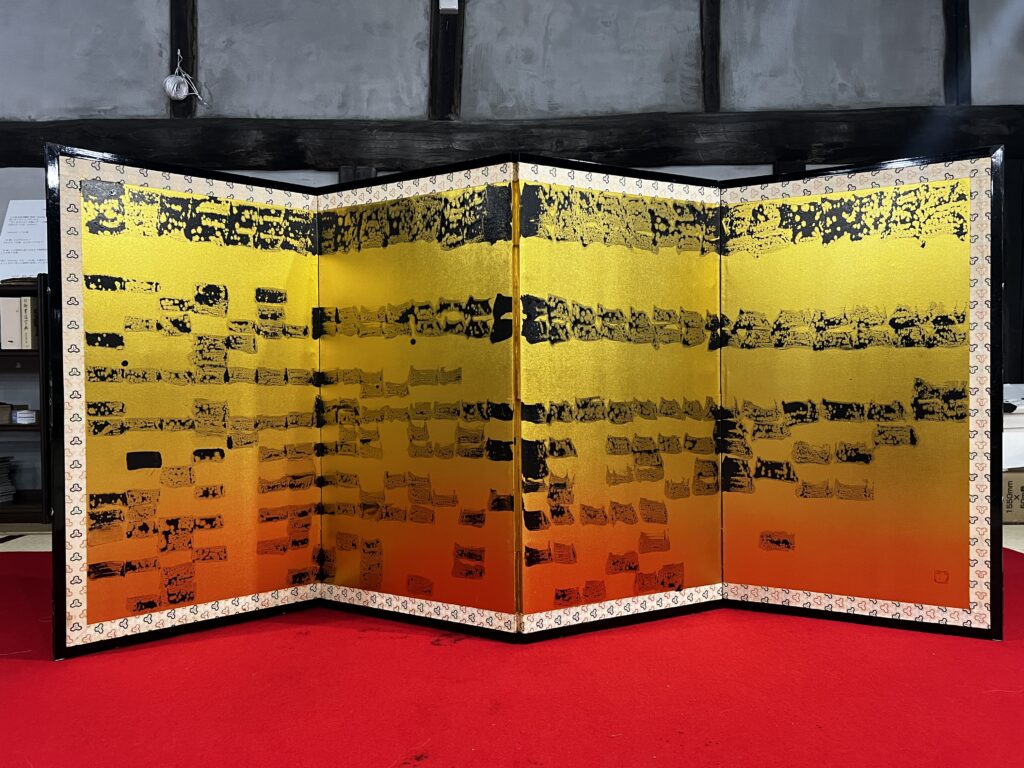
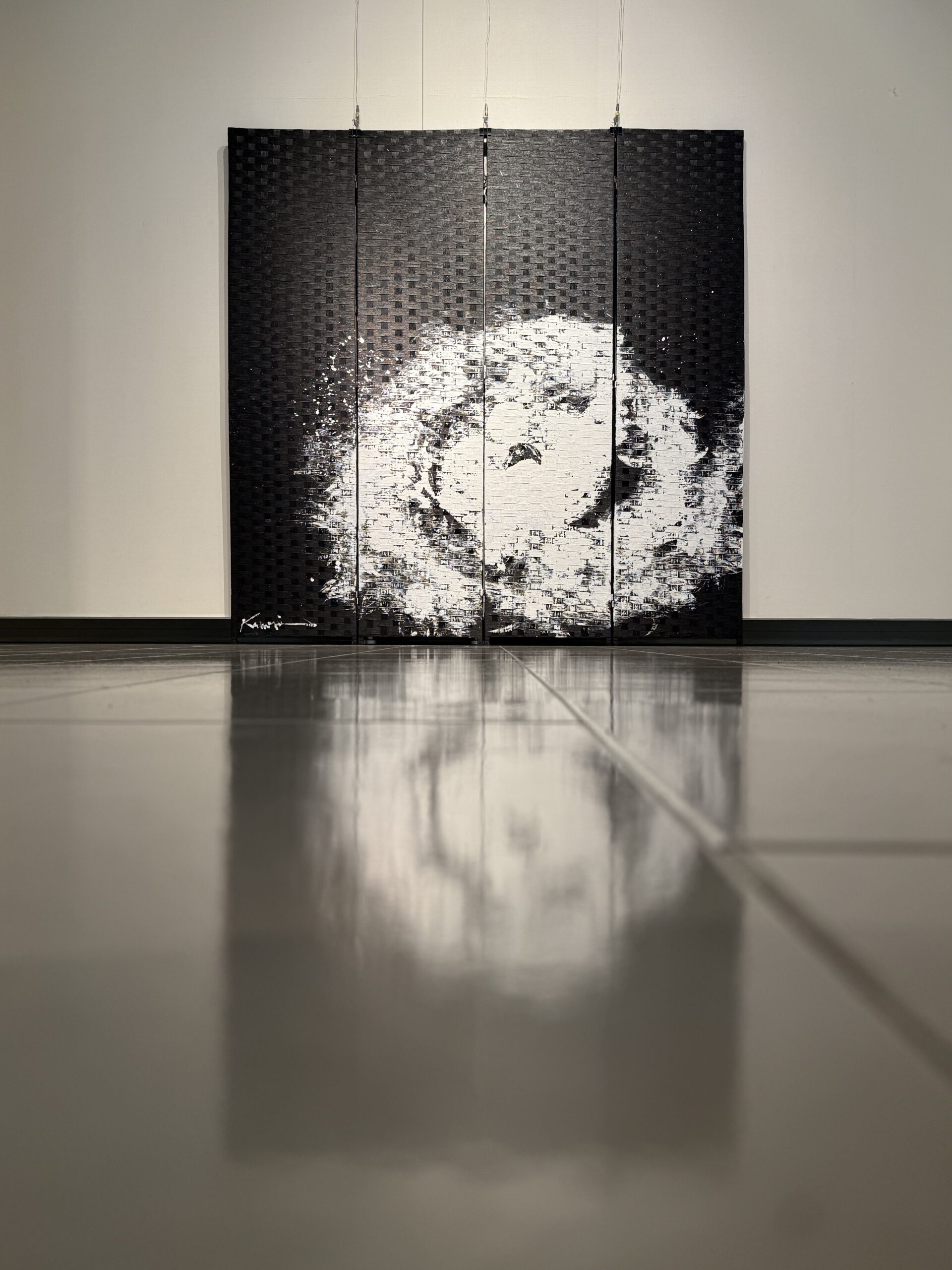
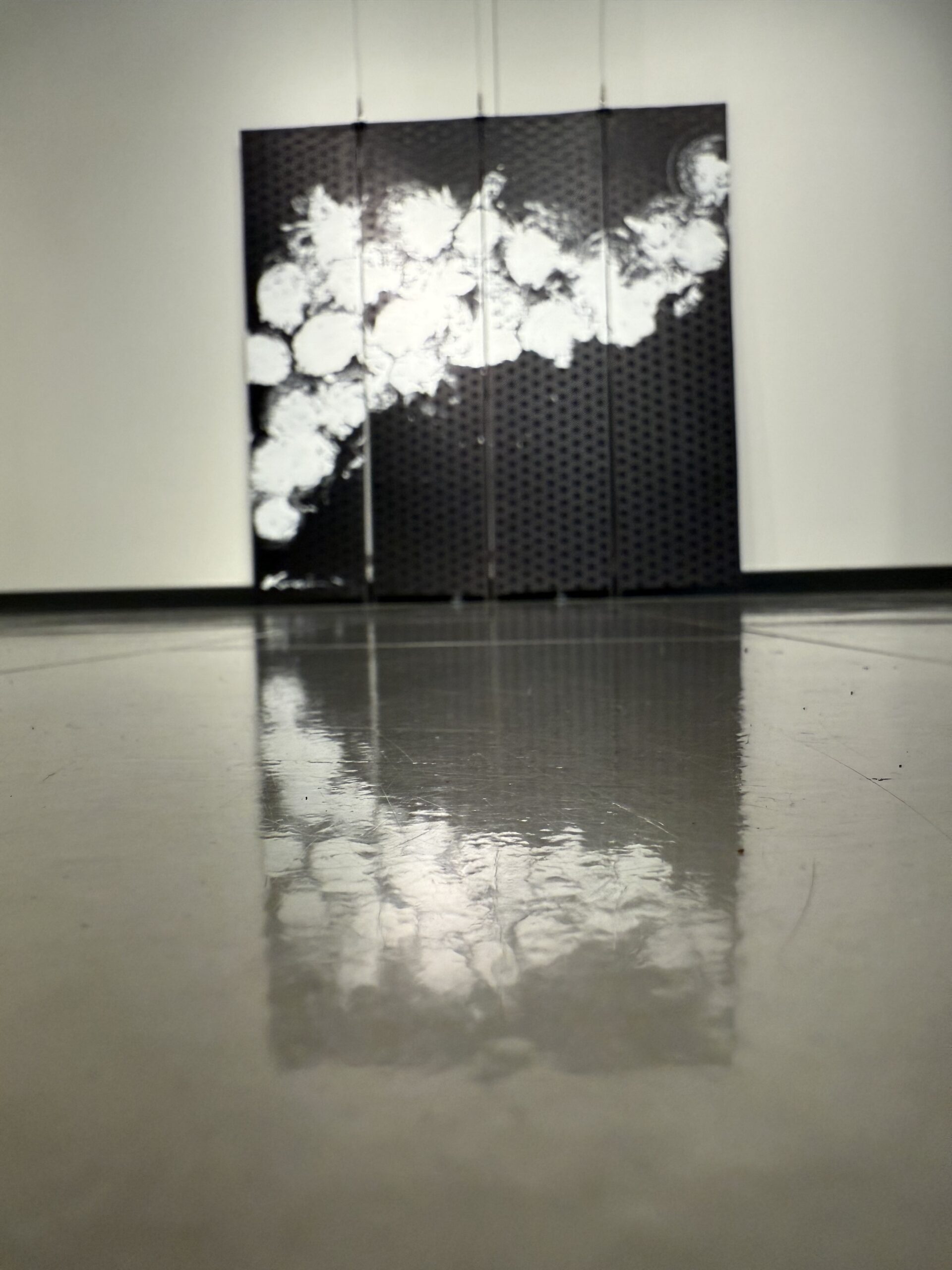
The left screen of the four-panel folding screen (yonkyoku issō) depicting “seisei ruten” portrays the scene of “seisei” – clouds rising on updrafts. Water vapor rising from the left gathers in layers to form large clouds.
The right screen shows “ruten” – the rain and snow falling from those clouds, flowing through rivers to reach the sea, becoming ocean currents.
Humans are 60-70% water.
We, who are made almost entirely of water, are beings that flow and change just like this perpetually flowing water.
Human activities too are in perpetual flow. This cyclic structure has continued and will continue eternally unchanged, and we hope it remains so.
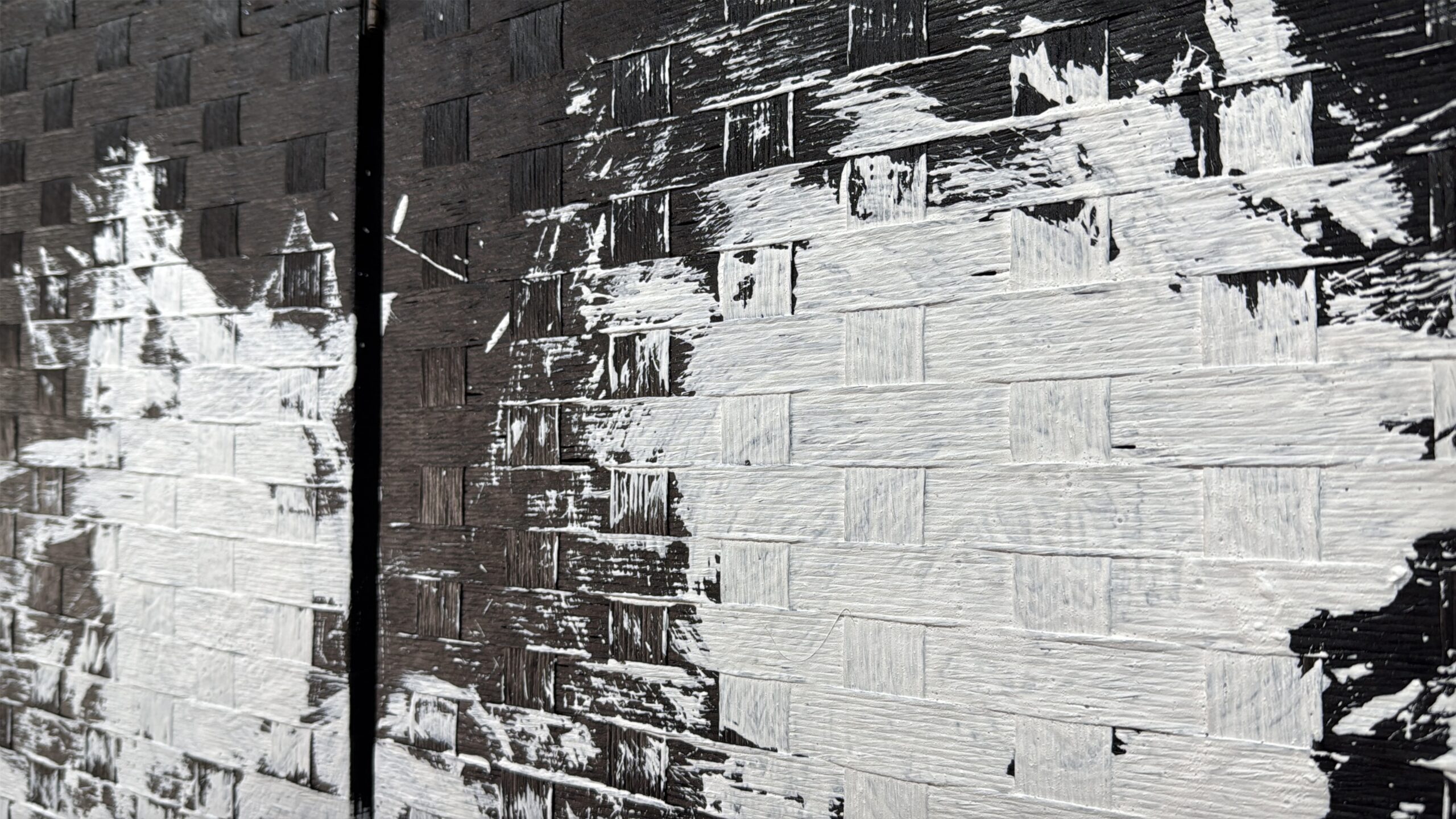
The folding screen used in this work employs partitions like those used in ordinary homes. Partitions are used to divide everyday spaces, and using a partition signifies a separation from the space on the other side.
However, when these partitions are wrapped in this “seisei ruten,” the divided world itself flows and changes.
“Walls” that separate people from people, countries from countries, languages from languages – all walls that have appeared throughout history are themselves human history, repeatedly emerging and collapsing with the times, and are symbols of perpetual flow.
This work expresses how even when walls form between opposing things, they will eventually disappear.
【YouTube】
URL

【Title】NOW
【Work Details】
Calligraphy is the act of writing with ink held in a brush onto an object.
The moistened line containing ink gradually fades, and eventually the ink runs out.
When this happens, it becomes difficult to read what was written.
The act of writing is said to have begun with oracle bone inscriptions.
Oracle bone script consisted of characters carved with blades into ox shoulder bones and turtle shells to create writing.
The origin of writing was preserved through the act of “carving.” Since ink and paper did not exist, expressions of moistness or fading in writing could not exist.
Between the transition from “carving” to “writing,” moisture and dryness in writing were born.
In modern times, we move from “typing” to “text generation” from voice,
Due to technological advancement, the very act of writing characters is disappearing.
Calligraphers living in this era strive to resist this trend, attempting to express the present era through the act of “writing.”
――
This moment of “now” becomes the past from the instant it is written, transitioning from moisture to dryness.
We humans are also born in a state containing much moisture, and as we approach death, we undergo physical changes toward dryness.
The moist past was also the present at that point in time, and the moment wrapped in dryness in the future is also a future that should be accepted as the present at that point.
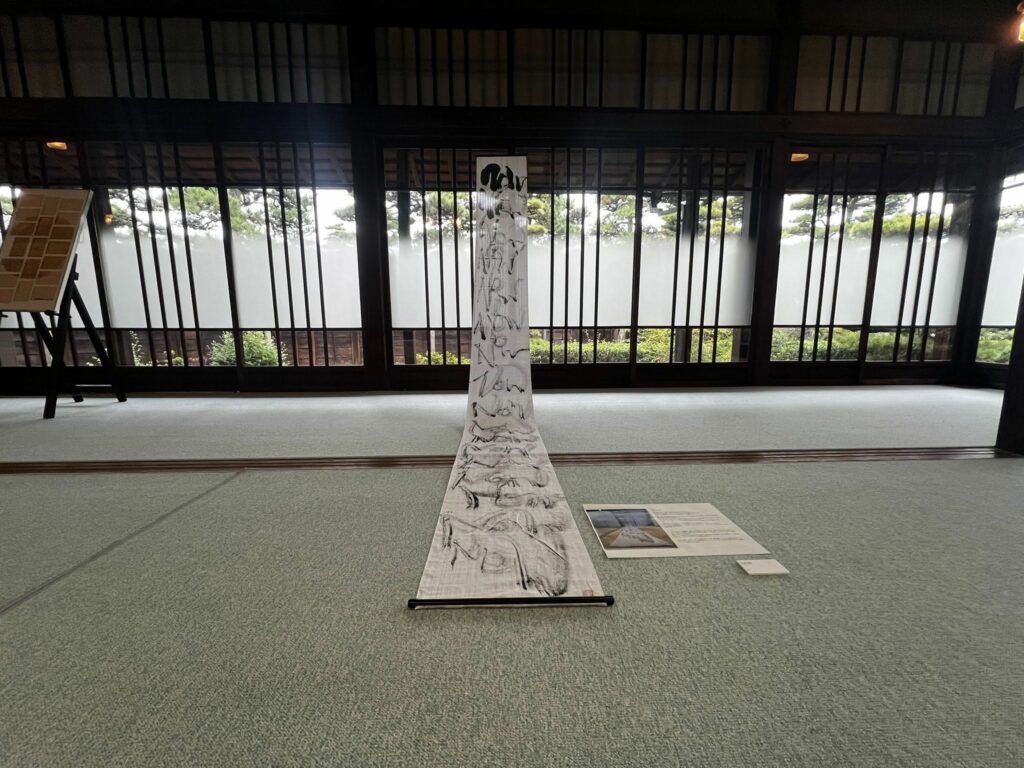
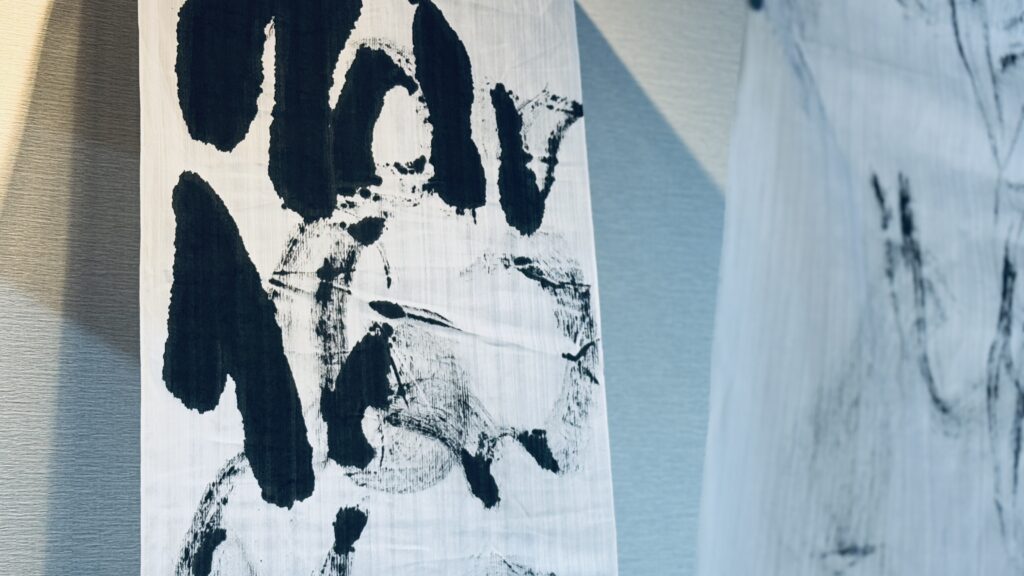
A single long piece of cloth represents a human life itself. Each moment of “now” is etched in ink. By connecting the beginning and end of the cloth to form a circle, it expresses how one person’s life circulates into the lives of the next generation.
【音声ガイド】

【作品名】念
【作品詳細】
念という漢字は「今」と「心」から構成される漢字。
念と書いて「おもい」と読みます。
「今」の上の部分は蓋を表しています。
蓋をしなければあふれるほど、心の中で強く大切にしている気持ちを表します。
この作品は、作品を見ているあなたと共に作り上げるインタラクティブアートです。
あなたが「今」この瞬間に大切にしている強い気持ちを書いて瓶に入れてください。
瓶に入れたら必ず蓋を閉めてください。
あなたのこの強い気持ちを瓶に納め、この瞬間を何年も何百年も先へと継ぐことも、「永遠」を具現化する一つの構成要素なのです。
【YouTube】
URL

【作品名】SANUKI CODE
【作品詳細】
人はなぜ文字を刻むのか。
それは、目には見えない感情や記憶を、時間の向こう側へと運びたかったからではないでしょうか。
書とは、起源からすでに「記憶の保存装置」であったーーこの確信が、SANUKI CODE の出発点となりました。
古代、海辺で一人の歌人が詠んだ万葉歌の一首があります。
志度の海人の袖の干る時なくしても我は恋ひなむ潮干の間もなし
(しどのあまのそでのひるときなくしてもわはこひなむしおひのまもなし)
志度の海の海女の袖が、潮で濡れて乾く間もないように、私の恋もまた、止まることなく続いていく。
その情景を思い浮かべると、潮の満ち引きの“呼吸’’の中に、人の想いの“永遠性”が重なってゆきます。
乾くことのない袖。絶えず続く恋慕。そこにはまさにETERNAL (永遠)という概念の原型が宿っているのです。
では、現代の私たちは、どのように感情を刻むのでしょうか。
その多くは0 と1 の信号ーーバイナリコードとして記録されます。
「1 =存在」「0 =不在」。墨と余白。潮と干。光と影。
古代の詩や書が持っていた構造は、いまやデジタルの海の中でも生きていることに気づきます。
バイナリとは、現代の“言霊’であり、新たな万葉仮名であると言えるのです。
SANUKI CODE は、古代の地名「志度(SANUKI) 」に宿る言霊をUn icode (世界共通文字コード) へと変換し、視覚化したデータアートです。
ー文字一文字が0 と1 の波(bit)へと転写され、白と黒のリズムとなって立ち上がる。縦に流れる線は潮の呼吸であり、恋の律動であり、“記憶のDNA” のように身体の奥へと響いていきます。
千年という時間を隔てながら、詩とデータは同じ構造で「永遠」を描きました。
私は書を否定したいのではありません。むしろ、書の本質ー一「存在を記録し、時空を超えて誰かに届く力」を、デジタル情報を筆によって拡張しました。
黒と白の点列に宿る筆致。見えない字形が立ち上げる“潮文’’。それは、現代の海に浮かぶもうひとつの万葉歌として表現しました。
潮は満ちては引き、また満ちます。
データは書かれては消え、また生成されます。形を変えても、想いは消えない。
このSANUKI CODE を通して、万葉の恋が再び光とデータの海に刻まれていく。
「古と今をつなぐ言語(Eternal Lan g uage) 」ではないかと私は考えます。
【YouTube】
URL


【作品名】潜在の層
【作品詳細】
この作品では釣竿から一本の糸を垂らしています。
それは何かを釣りあげる表現であり、同時に、言葉を生み出そうとする人間の営みそのものを表現しています。
私たちは何かを理解しようとするとき、内側の奥深くに沈んでいる感覚へと、意識の糸を伸ばします。
そして、それを言葉にしようと、そっと引き上げる。
この行為は、いつの時代も変わることのない、これまでも、これからも続いていく人間の本能です。
箱の底に敷かれた鏡は、潜在意識と顕在意識の境界を表しています。
鏡の向こう側には、まだ言葉になっていない感覚。記憶とも思考とも呼び切れない層が広がっています。
こちら側にあるのは、言葉として発せられ、意味として共有される世界。
鏡は、その二つを隔てると同時に、つなぐ装置です。
釣り糸に等間隔で吊るされた紙は、潜在意識の中に積み重なっている「層」を表しています。
それぞれの紙には文字が書かれていますが、それらはすべて下向きに配置されています。真上から見ても、文字は読めません。鏡を通したときにだけ、文字は判読できそうに思いますが、反転しているため、すぐに理解することは難しいでしょう。
これは、言葉の在り方そのものを表現しています。
人は内側にあるものを、そのまま言語化したとしても、それが本当に本意であるかどうかは他者には本質的には理解できません。場合によっては当の本人すらそうです。
顕在化したものを鵜呑みにするのではなく、その言葉の裏にある本意を見つめることを表現しました。
またこの作品では、水の変化を通して、意識と言葉のプロセスを重ねています。
最下層には「澱(おり)」。意味になる以前の、重く沈殿した感覚があります。そこから、濡(ぬ)れ、滴(したた)り、滲(にじ)み、潤(うるお)い、映(うつ)り、揺(ゆ)れ、霞(かす)み、靄(もや)となり、最上層で霧(きり)へと変わっていく。下から上へ進むにつれ、文字は薄くなり、輪郭を失い、やがて読めるかどうかも曖昧になっていきます。
潜在意識から顕在意識へと引き上げ、そして引き上げた後の言語化された言葉は、水が液体から気体へと昇華していくプロセスに似ています。
言葉は、口にした瞬間、音として空間に放たれ、すぐに霧のように消えていきます。しかし、その言葉に宿っていた念いは、語った者と、受け取った者の内側に、確かに残る。鏡に映る文字のように、
直接触れられなくても、確かに存在し続けます。
この作品は、大野という土地で展示されることで、はじめてこの構造を獲得しました。
地下を流れる水が姿を変え、やがて霧となって風景をつくるこの場所で、意識と言葉の在り方を重ねることに必然性を感じています。
どうかこの場で、文字を「読む」のではなく、鏡を通して、ご自身の内側にある何かを引き上げる感覚を静かに体験してみてください。
それぞれの中にある「潜在の層」が、一瞬、言葉として立ち上がることを願っています。
【YouTube】
URL

【作品名】8000generations
【作品詳細】
現代人の起源はアフリカで誕生した現在人類(ホモ・サピエンス)の出現であった約20万年前。
実際には、現在人類の起源は多くの個体群からなる集団的進化と言われてますが、もし仮に1組のカップルから現在人類が始まったとしたならば、1世代が25年周期で世代交代したと前提すると、私たちは約8,000世代目となる人類となります。
途切れることなく営まれてきた私たち人類の活動は今後も続いていくという希望的観測とそうはならないかもしれない悲観的未来がある。
不確実性が高まったVUCAの時代を生きる私たちに起こりうる設定された未来はA面かB面しか残されていない。
A面は現在の延長線上にある現在人類が存続する未来。
B面は途絶えゆく未来。
その先を地球に見るのか宇宙に見るのか。
現在人類はその活路として宇宙に目を向けている。
作品は1組の糸が現在人類の起点として繋がり紡がれ8000世代を経てその先の未来に広がる宇宙空間へのアプローチをイメージした。
現在の科学的な理解では、宇宙はダークエネルギーの影響で拡大し続けているとされています。そして、その拡大速度はむしろ加速しているという観測結果が得られています。
その拡大し続ける宇宙を幾重にも重なる線で表現しました。
この線の連なりを「時間の積層」と捉え、ビッグバンを中心としたところから宇宙年輪を表現しその年輪の積み重なりのいずれかの地点で発生しているであろう外宇宙に人類の未来があるかもしれないという予言的作品。
今回の作品制作には、福井県鯖江市の産業である絹繊維を福島織物株式会社様にご協賛いただきました。
鯖江市の産業としてはメガネや漆器が現在も盛んですが繊維業は江戸時代より福井県全体で盛んな産業であり、現在も革新を続けながら高品質な製品づくりと持続可能な取り組みを通じて、地域経済の活性化とともに、国内外での競争力を高めていくことが期待されています。
現在人類の未来を鯖江市で行う個展だからこそ、繊維業界で創り上げていく伝統と革新の生み出す未来と書の文化とを融合させた作品を制作しました。
【YouTube】
URL


【作品名】SAPPORO HISTORY
【作品詳細】
SAPPORO HISTORY は、開拓の始まりから未来へと続く札幌の歩みを、大通りを表現した一本の線上に5つの瓶とその中にエポックとなる年数を刻んだ作品です。
その背景には、北海道の大地に根づき、150年以上の時を経てもなお変わらぬ息吹を持ち続ける札幌の「永遠」というテーマがあります。
物語は 1869年、開拓使設置の年から始まります。まだ手つかずの雪原が広がるこの地に、人々は夢と希望を携え、碁盤目状の都市計画を描きました。作品では、この時代を象徴する未開拓の地を黒和紙で、そこに刻まれた1869を白い雪の色合いで「始まりの静寂」を示します。
1957年は、札幌のシンボルである「さっぽろテレビ塔」完成の年。赤い鉄骨は都市の成長と発信力を象徴します。筆は鋭く力強く、鈴鹿墨の薄赤色を潜ませ、鉄骨の存在感と街の息吹を重ね合わせています。
1972年は、札幌が世界へ開かれた瞬間——冬季オリンピック開催の年。聖火台の炎と銀世界が、都市の知名度と誇りを高めました。ここでは炎をあしらった和紙に雪の輝きと国際舞台への飛躍を表現。筆は流麗で躍動感にあふれ、五輪の高揚感を伝えます。
2025年は、現代札幌の姿。成熟した都市としての落ち着き、文化の厚み、そして未来への挑戦を表します。墨色は鈴鹿墨の薄緑を用い安定感と品格を表現しています。
そして最後は「未来」。ここには具体的な年号を記さず、見る者の想像に委ねます。和紙は煌めく鮮やかな未来を彩るやや黄色味がかった乳白色を使用し、札幌がこれからも四季と共に巡り、変化と調和を続けていく永遠の姿を象徴しています。
全体は左から右へ、時系列で歩んでいくような表現を施し、瓶に詰めることでガラスを通して見る年数の揺らぎや湾曲した形からその年代の息吹を見てとっていただければと思います。
SAPPORO HISTORY は、単なる年表ではありません。それは、札幌に生きる人々の息遣い、積み重ねられた時間、そしてこれから先の未来への希望を、書と色で紡いだ「札幌という物語」です。
鑑賞者は、過去を懐かしみながら現在を見つめ、そしてまだ見ぬ未来を思い描くことでしょう。この作品は、その瞬間を永遠に封じ込めるために生まれました。
【YouTube】
URL

【作品名】黒の循環
【作品紹介】
書は一回性の芸術です。
一筆は二度と同じ形を結ばず、書かれた瞬間に完成すると同時に、過去へと流れ去っていきます。
この作品は、その儚さを否定するのではなく、真正面から引き受け、再び時間の中へと呼び戻す試みです。
本作では、500枚を超える反故――書かれながらも選ばれなかった紙片から墨を抽出しているように見立てて、毎秒0.1mlという極めて遅い速度で点滴を通して墨を滴下させています。
会期中、絶えず変化する時間芸術としてその変化をお楽しみください。
中央に据えられた、傾斜をもつ2m×1mの和紙。その頭上から落ちる墨は、人の手を離れ、重力と時間に委ねられながら、新たな書の痕跡を刻み続ける。ここには、空間芸術と時間芸術が静かに交差する場が立ち上がります。
反故とは、失敗の記録。
本作に用いられた反故は、私が主宰する書道塾「継未」の合宿において、生徒たちが挑み、迷い、書き続けた時間の集積であるものを用いました。それらは単なる失敗作ではなく、意志と試行錯誤の痕跡であり、人と人が学び合った証でもあります。
「黒の循環」は、個人の制作を超え、世代と念いをつなぐ共同作品として成立しているのです。
AIが瞬時に「正解」を生成する時代において、迷い、失敗し、書き直す行為は効率の外へと追いやられつつあります。しかし、失敗することこそが、人間にのみ許された創造の証ではないでしょうか。
反故は否定されるべき過去ではなく、未来を生むための源泉。
失われゆく素材を循環させ、時間をかけて新たな書を生み出すこの作品は、書を瞬間芸術から永続の営みへと昇華するものとなっています。
有限の反復の中に無限を見出し、失敗を抱えながらも創り続ける人間の姿そのものが、ここに刻まれています。
【YouTube】URL

【作品名】TIMEMIT
【作品詳細】
現代人は忙しい。日々仕事や家事・育児・介護に追われ、やるべき作業や勉強が山積みになっている。皆に等しく与えられる1日24時間を、自分は何に使うのか、と考える意味で必ず時間の概念が絡んできます。
過ぎてしまった今は戻せない。
時間は絶えず過ぎていく。
過ぎてから過ぎたことを悔やむことに時間をかけることでも時間は過ぎていく。
それでも忙しい現代人は複数のタスクをこなしている。
それぞれの役割を止めることなく断続的に時間を消費している。
24時間を絶えず何かの役割をその瞬間瞬間で消費している。
この作品は、今この時間を何に使うか、計画的なようでありながらも衝動的で、それでいて止まることなくつながっている、今の私たちの時間感覚を表現した作品です。
進んだり戻ったり、全く別のことをしたり、やるべきこととやりたいことがある日常の中で私たちはどこかに必ずスイッチが入るように時間を消費します。
「TIME」は時間。
「EMIT」は発する、放出するという意味を持ちます。
私たちは時間を使って、何かを発し続けている生き物なのです。
【YouTube】
URL


【作品名】継未
【作品詳細】
私は2014年に独立起業し、一般社団法人 継未-TUGUMI-を設立しました。
「未来に日本の文化を継ぐ」という志を立て、『継未』という造語を企業名に据えました。
「継未」は福井県の県の鳥である「つぐみ」にも由来。
日本でも海外でも見ることができる故郷の鳥「つぐみ」と「未来へ継ぐ」のダブルミーニングを託しています。
未来に日本の文化を継ぐことは自分の世代で終わることではなく、多くの世代にわたって受け継がれていく永久的営みです。
「書く」という行為自体が表現のツールとして無くなっていく世の中、人類の最後の抗いとして「文化承継」があるのかもしれません。
今回、この「継未」の書を、福井県鯖江市の金継ぎ師である薮下喜行氏制作のうすくち漆のコーヒーカップに揮毫。蒔絵師の薮下小春氏に金と銀の蒔絵を施していただきました。
作品のそばに虫めがねを設置しています。書、漆、蒔絵といった日本の文化、それを継ぐ人の志を間近でご覧ください。
【YouTube】
URL


【作品名】永
【作品詳細】
黒龍酒造ESHIKOTO限定発売の日本酒パッケージ。
福井県永平寺にある酒造「ESHIKOTO」でしか購入できない日本酒のパッケージのロゴを揮毫しました。
「永」は読みとして「とこしえ」があり、意味として「長く変わらず永久不変である様」を表します。
「永」の漢字は象形文字で、流れる支流を引き込む長い川を表します。
永遠に飲み継がれる日本酒として、歴史を引き込みながら綿々と流れゆく様を筆のストロークで表現しました。
【YouTube】
リンク

【作品名】goldenrecord2024
【作品詳細】
1977年、アメリカ航空宇宙局 (NASA) は「ボイジャー計画」と題して太陽系の外惑星および太陽系外の探査計画を打ち立て、2機の無人惑星探査機ボイジャーを打ち上げました。
この探査機には異星人に向けてのメッセージを載せた「ゴールデンレコード」が搭載されています。
ゴールデンレコードには、地球上の様々な音や音楽、55種類の言語による挨拶や様々な科学情報などを紹介する写真、イラストなどが収録されました。
ボイジャーが太陽系を離れて他の恒星系へと向かう行程において、その恒星系の惑星に住むと思われる地球外知的生命体によって発見され、解読されることを期待したのです。
人類のまだ見ぬ未知の世界への探究心はとどまることを知りません。人類の進歩や進化のために私たちは日々の生活を営んでいると言っても過言ではないでしょう。
何もしていないように見えても、自分自身が存在する行為そのものが次の世代への人類の歩みへの何かしらのデータベースになり得るものであり、環境の変化に順応していく人類の営み自体が人類の進歩へと繋がり連動しています。
2020年の新型コロナウイルス感染症は人類に多くの行動変容をもたらしました。
学校や会社への移動が自粛され在宅が義務付けられたり、マスクを着用して誰とも会話を交わさないといった日々へ、全人類が何の疑いもなく移行していきました。
2024年。人類はそれらが何もなかったかのように以前の日常へとまた戻りつつありますが、その日常は完全にそれ以前とは異なる世界となりました。
1977年にゴールデンレコードに刻まれた音。
47年前の「今」を切り出した音は、ボイジャーによって永遠に宇宙を漂い続けます。
ボイジャーのゴールデンレコードには日本語の「こんにちは、お元気ですか?」が収録されています。
「こんにちは」という言葉はもともと、「今日は、ご機嫌いかがですか」「今日は、いいお天気ですね」といった言葉が挨拶として使われていました。
明治時代の教科書で「今日は」以降を省略したまま紹介されたことで「こんにちは」広まったとされています。
この省略文化は現在も日常の中で若者においてメッセージのやり取りでも散見されるようになりました。
「了解です。」→「り」 「お疲れ様です。」→「乙」 「そうだよな。」→「それな」 「まじ?」→「ま?」
このGolden Record 2024では、「こんにちは」をさらに短縮して「コン」という言葉を刻みました。
短縮化のその先の未来は、もしかすると何も残らない。何も表現しない。空の世界が漂うかもしれません。
しかし今を生きる私たちには言葉も存在し、伝える手段としてありとあらゆるツールが存在しています。
一方で、ことばのデリバリーには多くの障壁があって伝わりづらくなっています。
ボイジャーが発する電波が現在では微弱なものとなって伝わりづらくなっているのと同じように。
私たちを取り巻く世界は、自分たちが望む情報しか入ってこないフィルターバブルな世界。
届けたいメッセージは相手が必要とするメッセージと合致しなければ届かなくなってきています。
このエコーチェンバー現象からの脱却は、自分で興味を持ってフィルターを除去し、別の世界へ赴くことでしか実現できません。
この作品では、メッセージの行き来には多くのフィルターがあり、情報が限定して伝わってきていることを 複数の穴を開けたマットを用いて表現しています。
今のあなたをGolden Recordに刻むのならば、あなたは何を刻むでしょうか。
【YouTube】
URL

【作品名】生々流転
【作品解説】
朝日がのぼると人は目を覚まします。それと同じように、太陽の日差しが地上に注がれれば、その熱量によって海や川、地面に含まれる水分が蒸発して水蒸気となります。
水蒸気を含んだ空気は上昇気流に乗って上空に上がり、急速に冷やされて水滴となります。
水滴が集まり雲ができ、水滴や氷の粒が大きくなっていき、雲が分厚くなっていくと、支えきれなくなった上昇気流から水滴や氷の粒が落下し、雨や雪になって地上に降り注ぐ。
降り注いだ雨や雪は地面に染み込み、染み出し、川となり海へと流れていく。
そしてまた朝日がのぼり地上が温められて雲へと変化していく。
太古の昔より繰り返されたこの営みから「生々流転(せいせいるてん)」という言葉が生まれました。
「生々」は物が次々と生まれ育つこと。 「流転」は物事が止まることなく移り変わっていくことを表します。
私たちを取り巻くすべてのものは、大きく俯瞰して眺めてみるとこの「生々流転」の中に存在するものであり、その一部であることが認識できます。
四曲一双(よんきょくいっそう)からなる「生々流転」の左隻(させき)は、雲が上昇気流に乗って湧き上がっていく「生々」の情景を描いています。左側から湧き上がった水蒸気が集まり層となって大きな雲を形成しています。
そして右隻は、その雲から降り注がれた雨や雪が川を伝わり注がれて海へと辿り着き、海流として「流転」していく様を表しています。
私たち人間を構成する60%~70%は水です。
ほぼ水でできている私たちは、この生々流転する水と同じく流転する生き物です。
人類の営みも生々流転。この循環構造はこれまでも、これからも変わらず永遠に続くものであり、そうあってもらいたいと願うものでもあります。
今回使用している屏風には、一般家庭でも使用されるパーテーションが用いられています。パーテーションは日常の空間を仕切るために用いられるものであり、パーテーションを使用するということは、それで仕切られた向こう側にある空間との断絶を意味します。
しかし、パーテーションがこの「生々流転」を纏うことで、空間で仕切られた世界そのものが流転します。
人と人、国と国、言語と言語など互いを分離する「壁」。歴史上登場したすべての壁は、時代と共に表出し崩壊することを繰り返してきた人類の歴史そのものであり、それは生々流転する象徴でもあるのです。
対峙するものの間に壁ができても、いつかは無くなるものである、ということを表現した作品です。
【YouTube】
URL

【作品名】NOW
【作品紹介】
書は筆に含ませた墨を対象物に書き付ける行為である。
墨を含み潤った線が、徐々にかすれていき、いずれ墨が尽きてしまう。
すると、何が書かれているのかを判読することは難しくなる。
書く行為は甲骨文字から始まったとされる。牛の肩甲骨や亀の甲羅へ、文字となる造形を刃物で刻んだものが甲骨文字だ。
文字の起源は「刻む」という行為で残されるものだった。墨や紙などは存在せず、文字が潤っていたりかすれていたりという表現は存在しえなかった。
「刻む」から「書く」へ、文字表記の移り変わりのあいだに潤いと渇きが誕生した。
現代では「タイピング」、そして音声からの「文章生成」へ、
テクノロジーの進展によって文字を書く行為そのものがなくなろうとしている。
この時代に生きる書家は、その時代の流れに抗うべく、「書く」という行為で今という時代を表現しようとする。
——
「今」というこの瞬間は、書いたその瞬間から過去となり、潤いから渇きへと変遷します。
私たち人間もまた潤いを多分に含んだ状態で誕生し、死に近づくに従って渇きへと肉体的変化を遂げていきます。
潤っていた過去もその時点での今であり、未来において渇きに包まれた瞬間も、その時点での今として受け入れるべくして訪れる未来です。
一枚の「永い」布は、人の一生そのもの。その一瞬一瞬の「今」を、墨で刻みました。
布の始まりと終わりをつなぎ円をつくることで、人ひとりの生が次の世代の生へと循環していくことを表しています。
【音声ガイド】