Kamari Maeda’s solo exhibition “ETERNAL” has been held since January 17. Thank you to the many visitors who came to the first day of the exhibition and the live performance on January 18. We are pleased to announce an additional live performance “GRANICA” which was well received by the audience! Please come and see the live performance as well as the exhibition at the Hikone venue so that you don’t miss it. When|February 15, 2025 (Sat) 14:00-15:00 Where|Gallery & Cafe Zen 〒522-0064 2-3-45 Honmachi, Hikone City, Shiga Prefecture, Japan ※Admission free
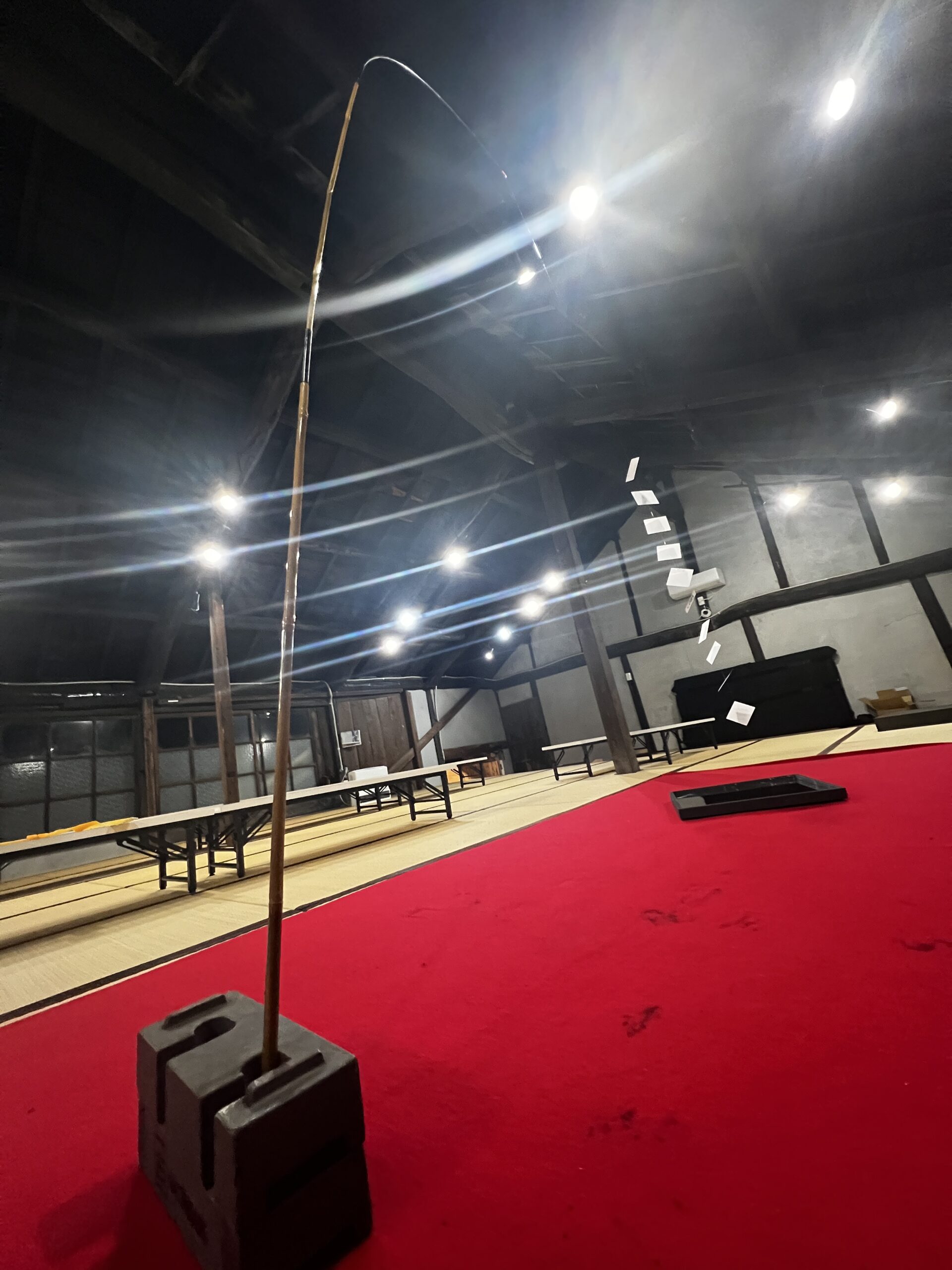
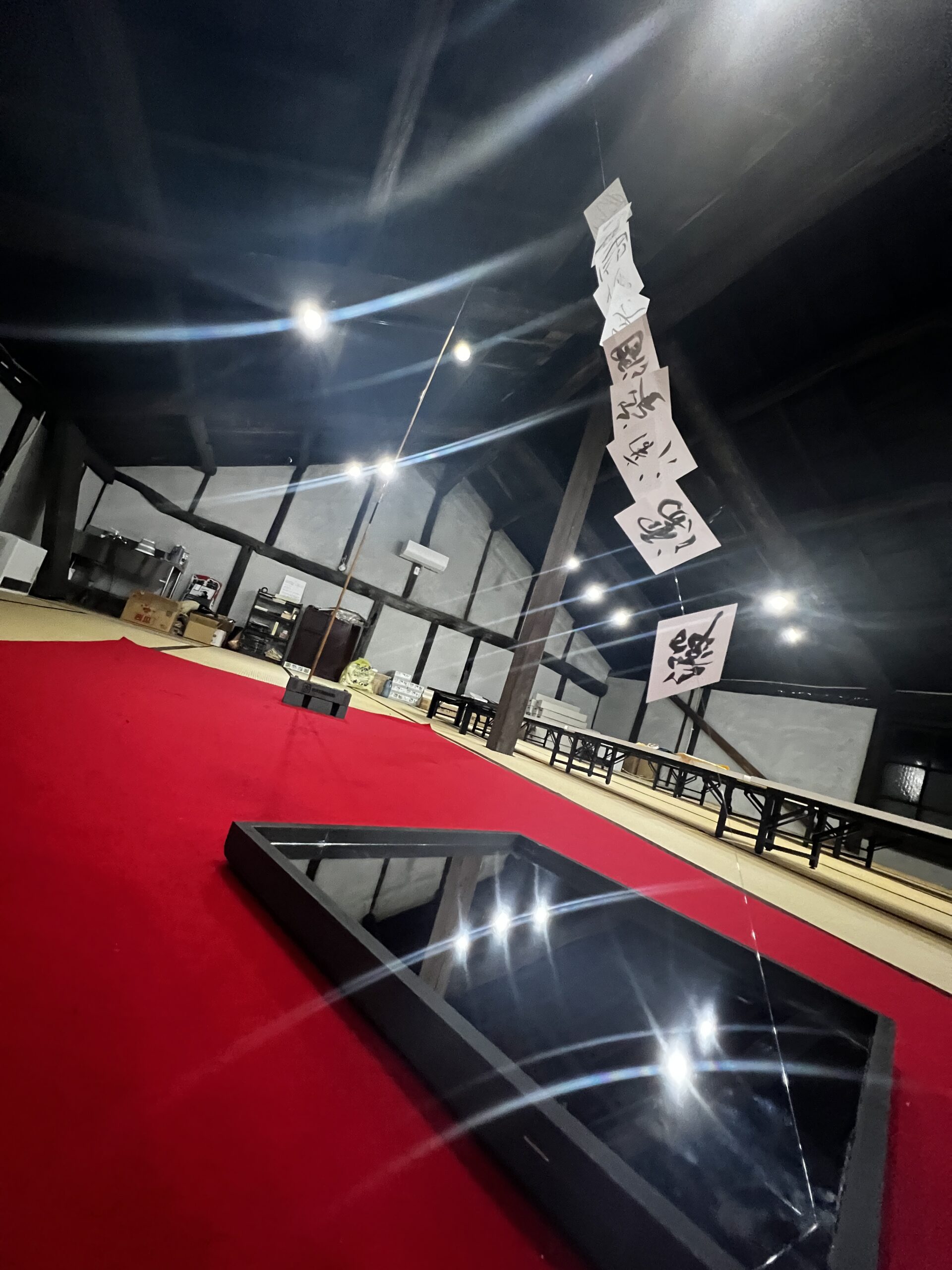
【Work Details】 In this work, a single line is lowered from a fishing rod. It is an image of drawing something up—and at the same time, a metaphor for the human act of trying to bring words into being. When we attempt to understand something, we extend a thread of consciousness deep into the sensations that lie submerged within us. Then, gently, we draw them upward in an effort to give them words. This act—unchanged across time—is an instinct intrinsic to humanity, one that has continued and will continue to do so. The mirror laid at the bottom of the box represents the boundary between the subconscious and the conscious. On the far side of the mirror lie sensations that have not yet become words—layers that cannot be fully called either memory or thought. On this side is the world in which words are spoken and meanings are shared. The mirror both separates and connects these two realms. The sheets of paper suspended at regular intervals along the fishing line represent the “layers” accumulated within the subconscious. Each sheet bears characters, yet all are oriented downward. Viewed from directly above, the text cannot be read. Through the mirror, the characters appear legible—but because they are reversed, immediate understanding remains difficult. This structure reflects the nature of language itself. Even when a person puts what lies within into words, whether those words truly convey their intention cannot be essentially understood by others—and at times, not even by the speaker themselves. Rather than taking what is verbalized at face value, this work invites the viewer to attend to the true intention that lies behind the words. The piece also layers the processes of consciousness and language through transformations of water. At the lowest level lies sediment—a heavy, settled sensation that precedes meaning. From there it moves through wetness, dripping, bleeding, saturation, reflection, trembling, haze, and mist, finally transforming into fog at the uppermost layer. As one moves upward, the characters grow fainter, their outlines dissolve, and eventually it becomes uncertain whether they can be read at all. Drawing something up from the subconscious into consciousness—and the subsequent act of verbalization—resembles the process by which water sublimates from liquid to vapor. The moment words are spoken, they are released into space as sound and quickly dissipate like fog. Yet the intentions that resided within those words remain, unmistakably, within both the speaker and the listener. Like letters reflected in a mirror, they continue to exist—certainly, even if they cannot be directly touched. This work acquired its structure only through being exhibited in the land of Ōno. In this place, where underground water changes form and eventually becomes mist that shapes the landscape, I felt an inevitability in overlaying the nature of consciousness and language. Here, rather than “reading” the letters, I invite you to quietly experience the sensation of drawing something up from within yourself through the mirror. I hope that, for a brief moment, the “latent layers” within each of you may rise and take shape as words.
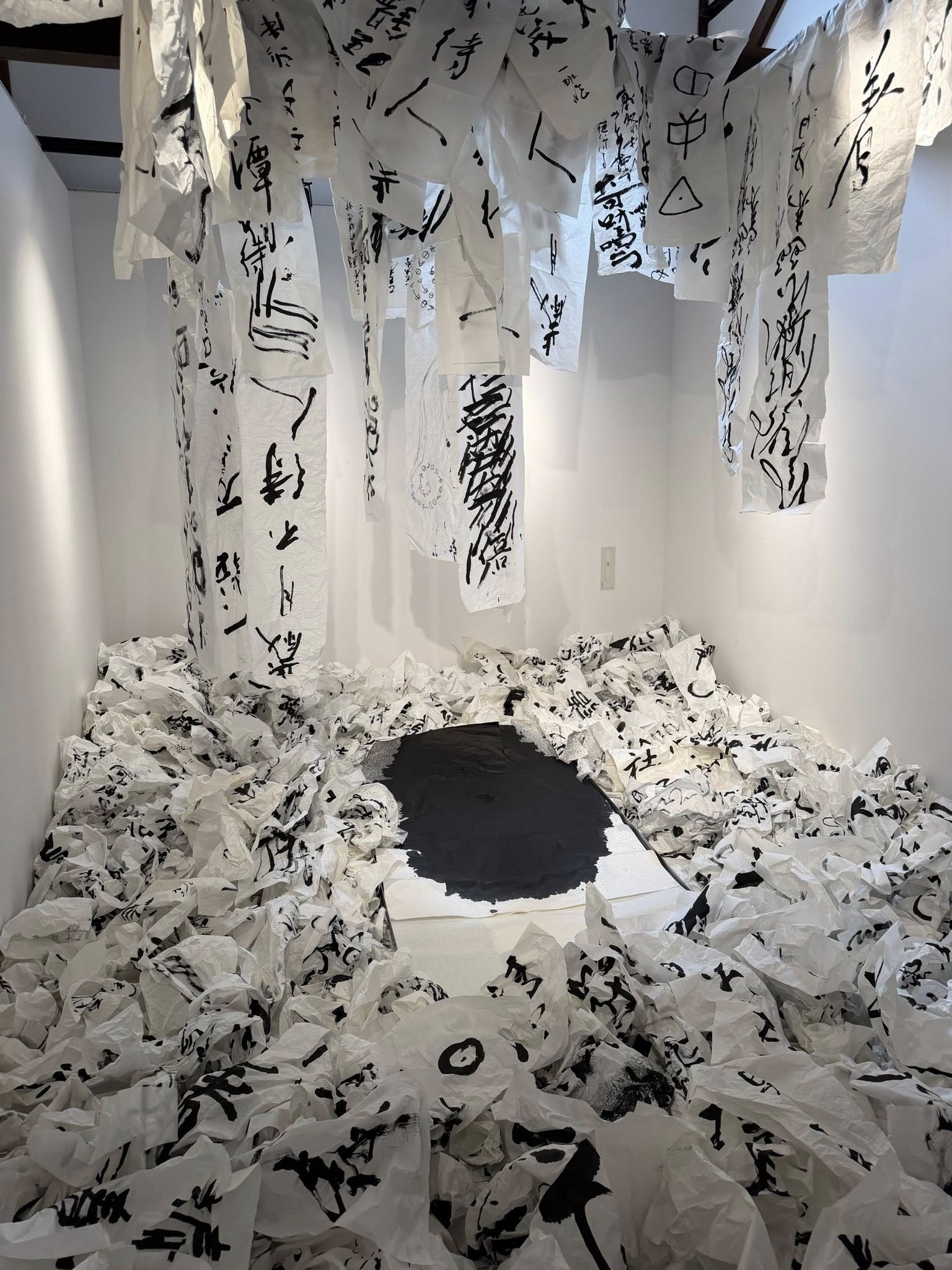
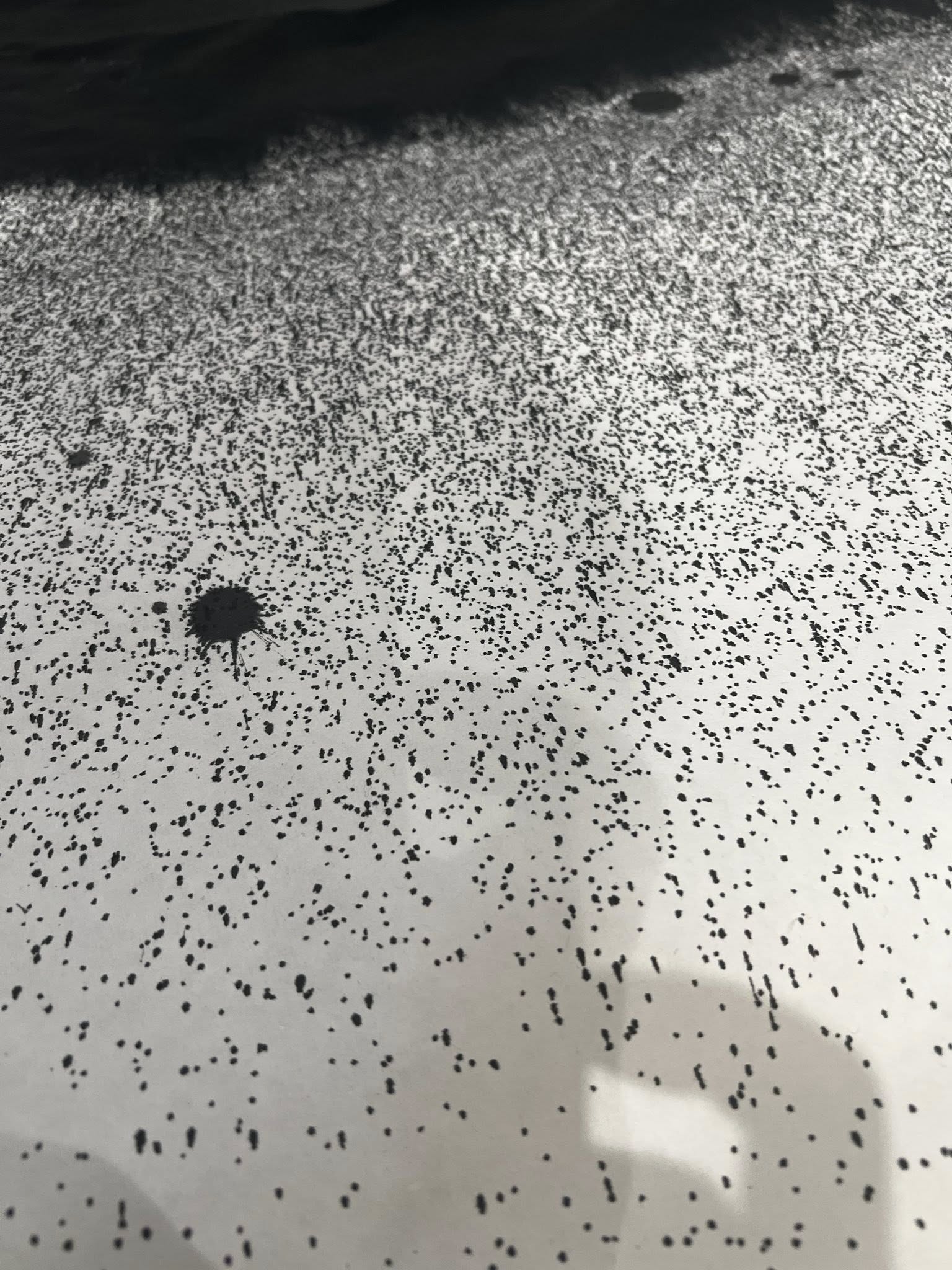
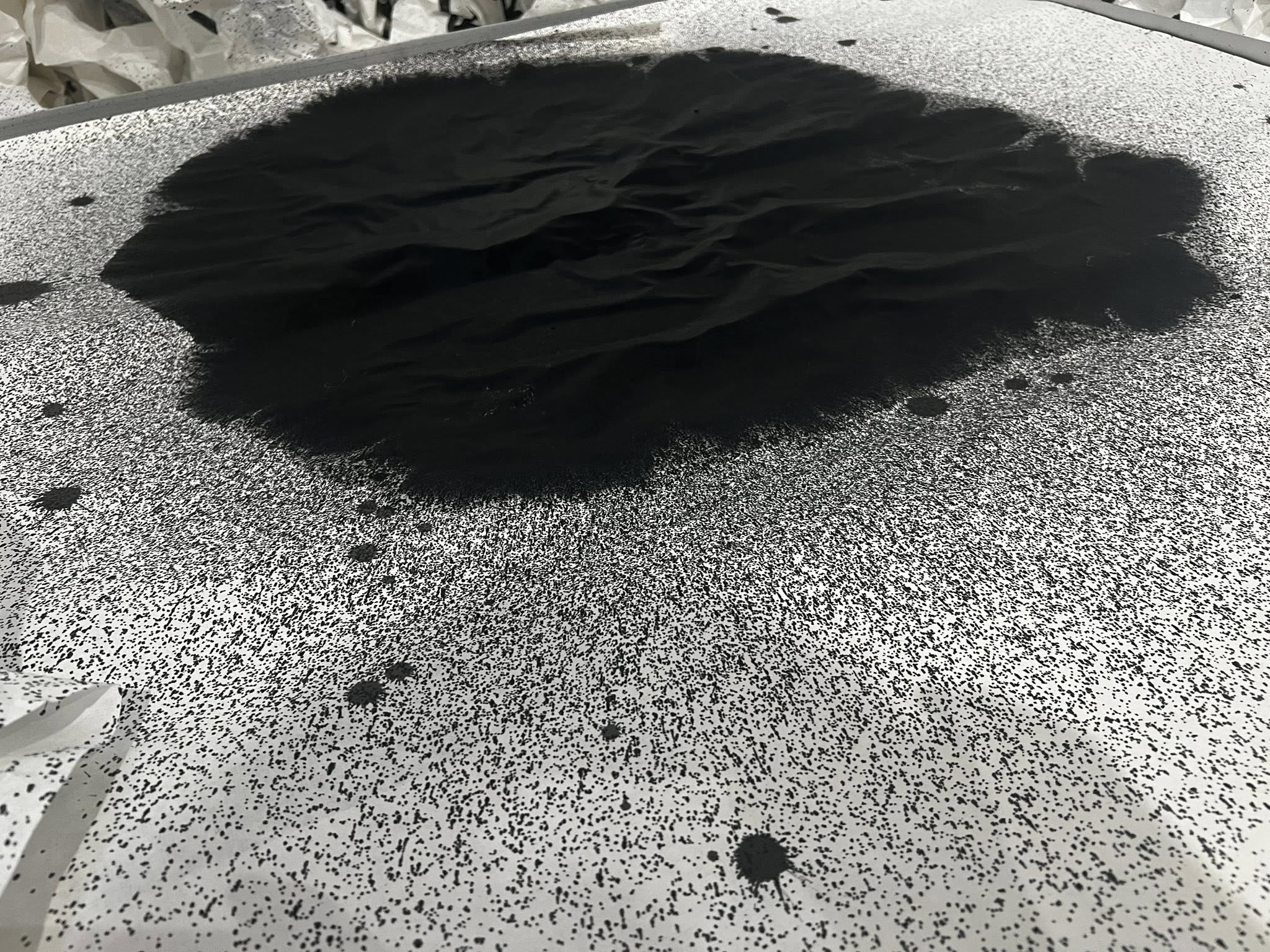
【Work Details】 Calligraphy is an art of irreversibility. No single stroke ever assumes the same form twice; the moment it is written, it is complete—and at the same time, it slips into the past. This work does not deny that transience. Rather, it confronts it directly, taking it upon itself and attempting to summon it back into time once more. In this piece, ink is made to appear as though it has been extracted from more than five hundred discarded sheets—pages that were written, yet not chosen. The ink is released through an IV drip at an extremely slow rate of 0.1 milliliters per second, falling drop by drop. Throughout the exhibition period, visitors are invited to witness and experience its continuous transformation as a work of time-based art. At the center lies a slanted sheet of washi measuring two meters by one meter. From above, ink falls onto it, released from the human hand and entrusted instead to gravity and time, endlessly inscribing new traces of calligraphy. Here, a quiet intersection emerges between spatial art and temporal art. Discarded sheets are records of failure. The papers used in this work were gathered from a retreat held by my calligraphy school, Tsugumi, which I oversee. They are the accumulation of time in which students challenged themselves, hesitated, and continued to write. These sheets are not mere failed attempts; they are traces of intention and trial and error, and at the same time, evidence of people learning together. “The Cycle of Black” thus transcends individual authorship and comes into being as a collaborative work that connects generations and shared intentions. In an age when AI can instantly generate “correct answers,” the acts of hesitation, failure, and rewriting are increasingly pushed outside the bounds of efficiency. Yet is it not precisely failure that stands as proof of creativity granted only to human beings? Discarded works are not a past to be denied, but a wellspring from which the future is born. By circulating materials that would otherwise be lost and giving rise to new calligraphy over time, this work elevates calligraphy from a momentary art to an enduring practice. Within finite repetition, it discovers the infinite; and here, inscribed before us, is the very image of humanity—continuing to create while carrying its failures forward.
【Work Details】 Why do human beings carve their thoughts into characters? Perhaps it is because we have always wished to carry invisible emotions and memories beyond the boundaries of time. From its very origin, calligraphy has been a “device for preserving memory.” This conviction became the starting point of SANUKI CODE. Long ago, a single tanka poem was composed by a poet on the shore: Even when the fisher’s sleeves at Shido never find a moment to dry, so too my love will never cease— not even for the briefest ebb of the tide. As we envision this scene, the “breathing” of the tides overlaps with the “eternity” of human longing. Sleeves that never dry. Love that never ends. Here, we find the very prototype of what we now call ETERNAL. So how do we, in the present age, inscribe our emotions? Most of them are recorded as signals of 0s and 1s—binary code. “1 = presence.” “0 = absence.” Ink and blank space. Tide and ebb. Light and shadow. The structures once inherent in ancient poetry and calligraphy are still alive today, drifting within the digital sea. Binary, in this sense, is the modern kotodama—a new form of Manyōgana, the phonetic script of ancient Japan. SANUKI CODE is a data art project that converts the kotodama dwelling in the ancient place-name “Shido (Sanuki)” into Unicode—the universal character encoding system—and renders it visible. Each character is transcribed into waves of 0s and 1s, rising as a rhythm of black and white. The vertical lines that flow downward are the breath of the tides, the pulse of love, resonating deep within the body like the “DNA of memory.” Separated by a thousand years, poetry and data depict “eternity” through the very same structure. I do not seek to deny calligraphy. On the contrary, I have expanded its essence—its power to record existence and reach far beyond time and space to another—by means of digital information guided by the brush. Brushstrokes dwell within sequences of black and white dots. Invisible letterforms give rise to “tidal inscriptions.” Thus, this work is presented as another Manyōshū poem floating upon the modern sea. The tide comes in and recedes, only to return again. Data is written, erased, and generated anew. Though its form may change, human feeling never disappears. Through SANUKI CODE, the love once sung in the Manyōshū is again engraved into a sea of light and data. I believe this to be an “Eternal Language”—a language that bridges the ancient and the present.
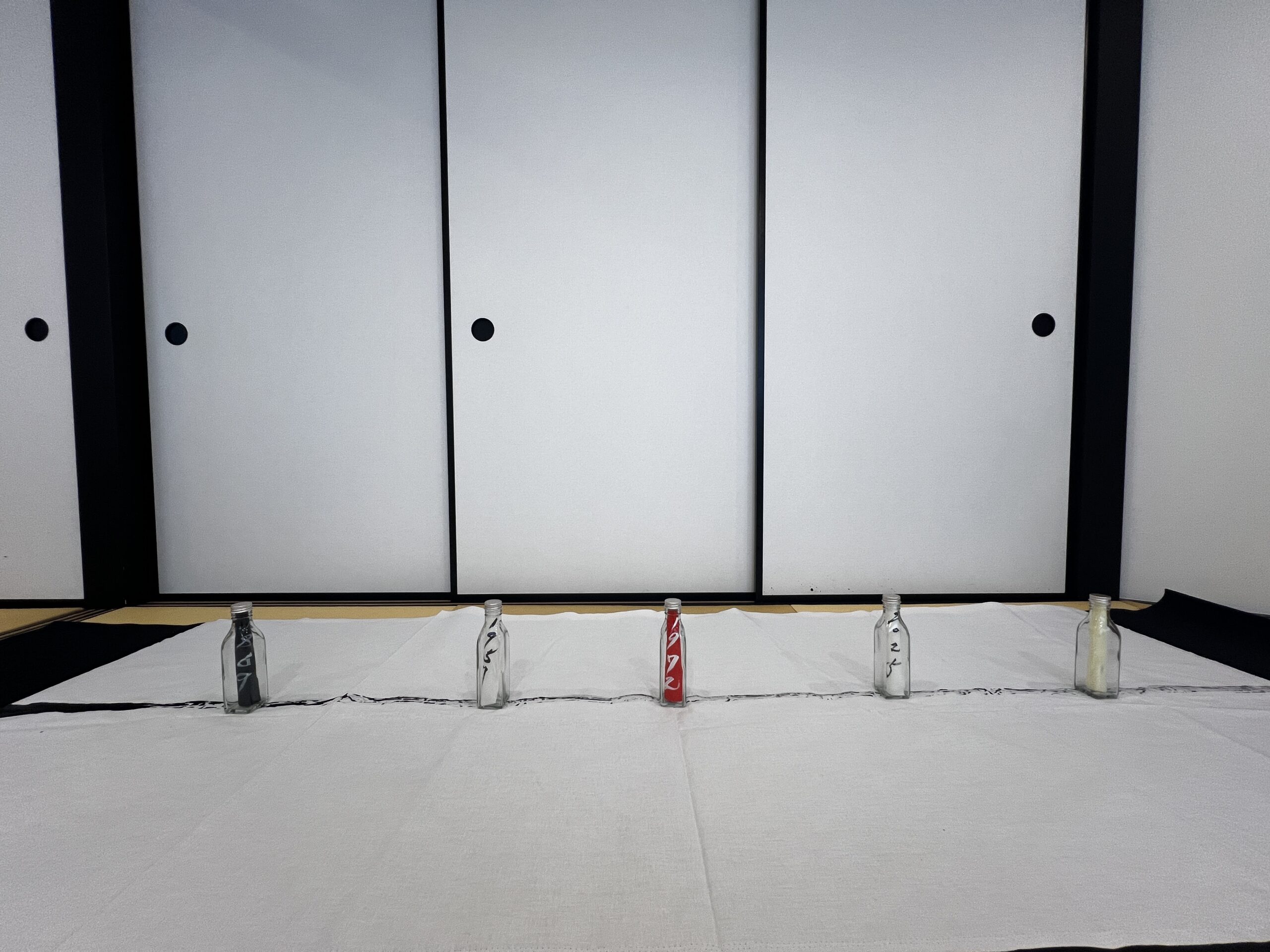
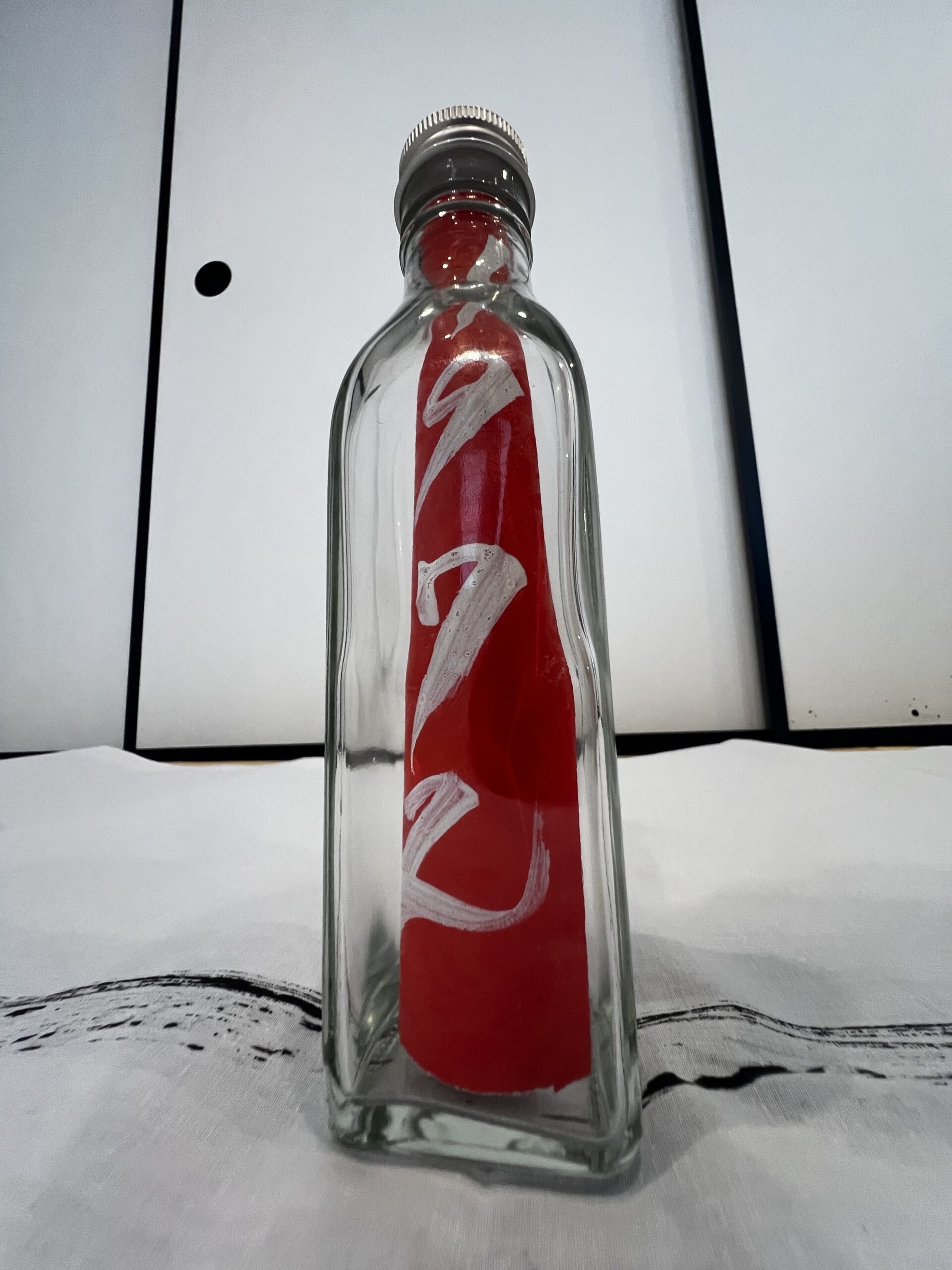
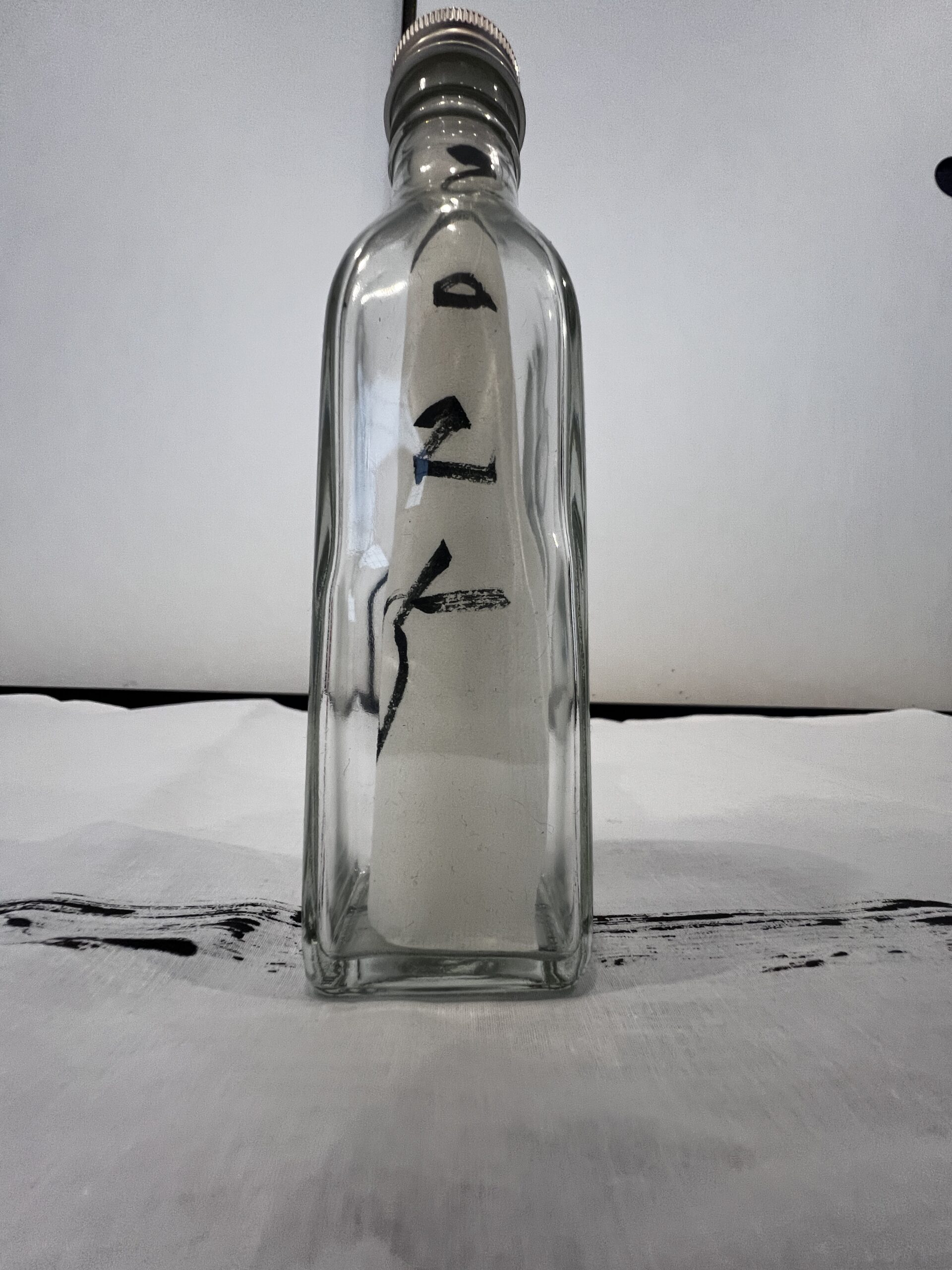
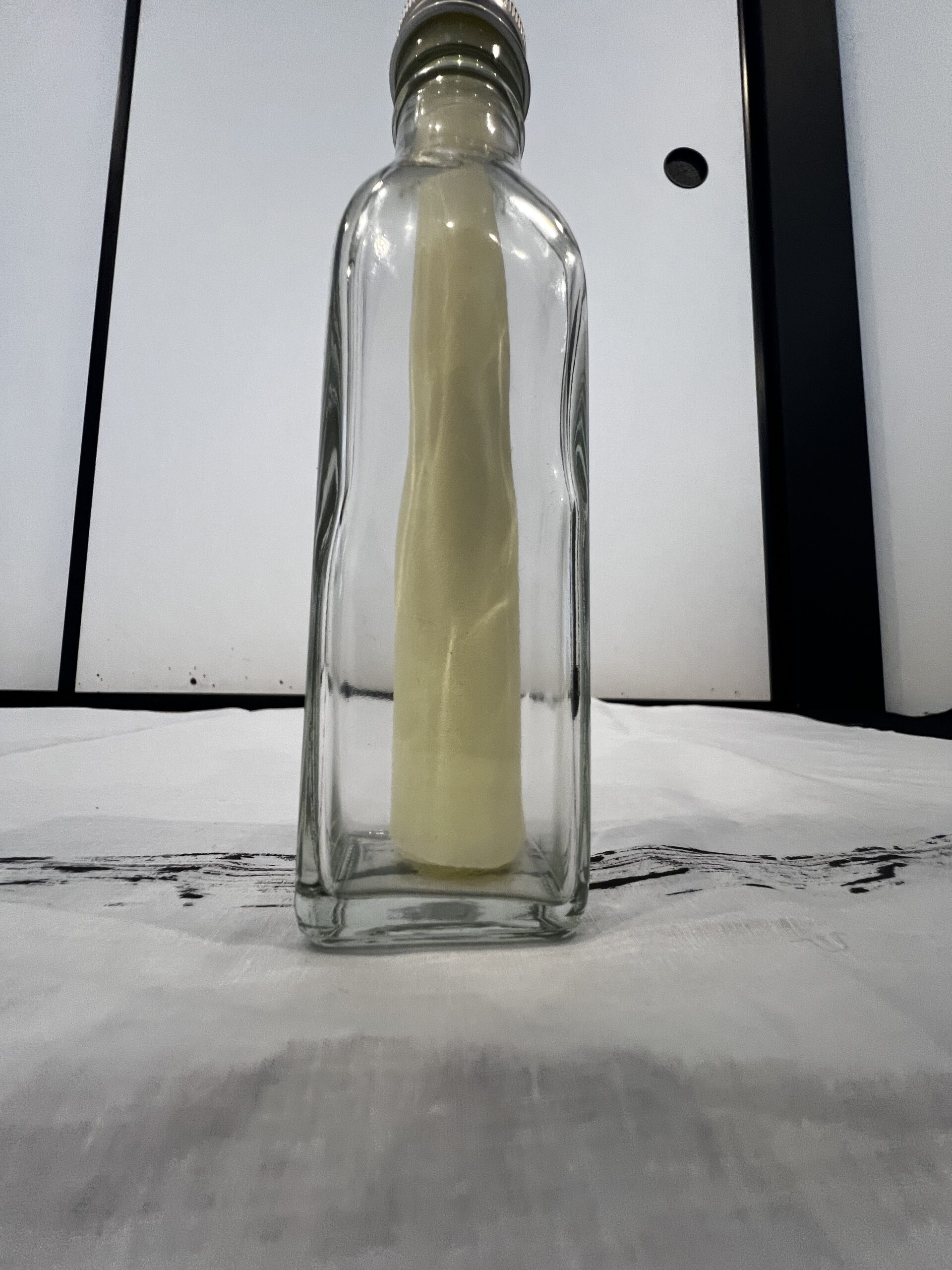
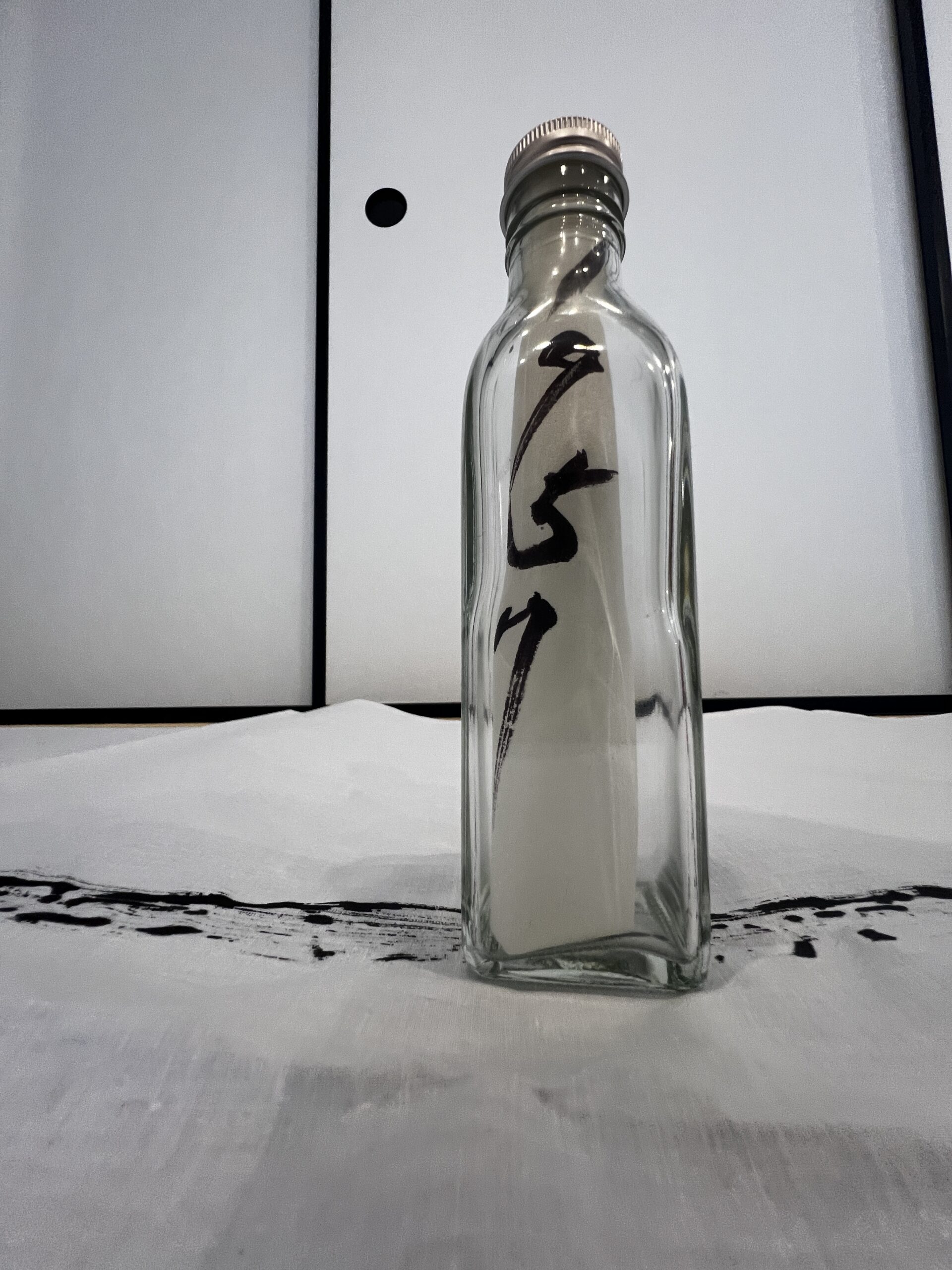
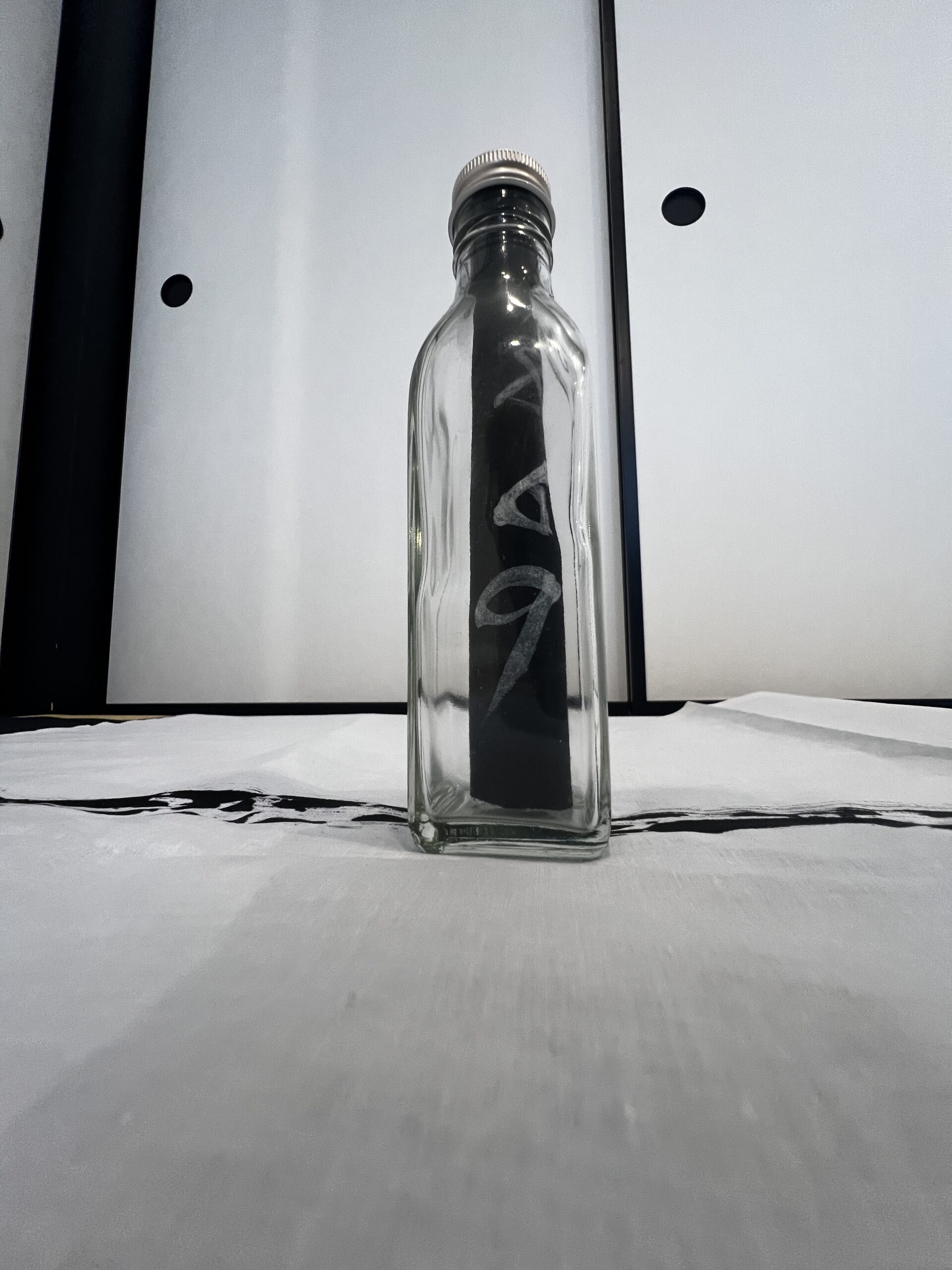
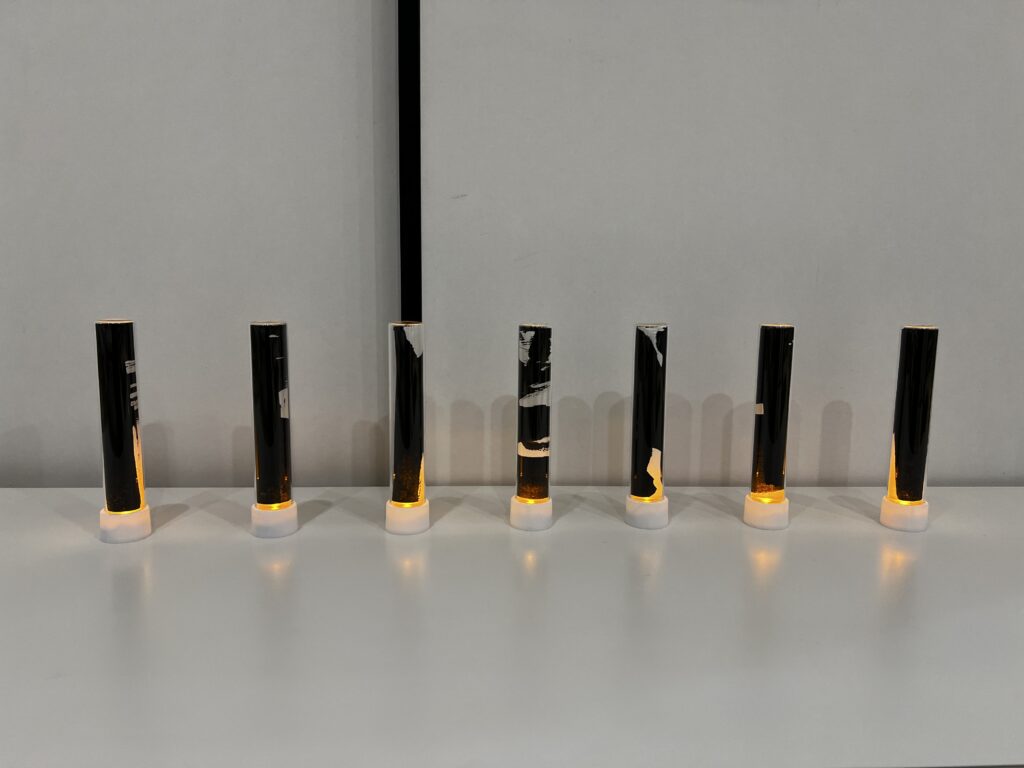
【Work Details】 This artwork represents Sapporo’s journey from the beginning of its pioneering development to its future, expressed through five bottles arranged along a single line representing Odori Avenue, with epochal years inscribed within them. The underlying theme is Sapporo’s “eternity” – rooted in Hokkaido’s vast land and maintaining its unchanging vitality even after more than 150 years. The story begins in 1869, the year the Hokkaido Development Commission was established. On this land where untouched snowfields stretched endlessly, people arrived carrying dreams and hopes, sketching out a grid-pattern city plan. In the artwork, this era is symbolized by black washi paper representing the undeveloped land, with 1869 inscribed in white snow tones to convey “the silence of beginnings.” 1957 marks the completion of Sapporo TV Tower, the city’s symbol. The red steel framework represents urban growth and broadcasting power. The brushwork is sharp and powerful, subtly incorporating the light red hue of Suzuka ink to layer the tower’s commanding presence with the city’s pulse. 1972 was the moment Sapporo opened to the world – the year it hosted the Winter Olympics. The Olympic flame and silver snow world elevated the city’s global recognition and pride. Here, flame-patterned washi paper expresses the brilliance of snow and the leap onto the international stage. The brushwork is graceful and dynamic, conveying the exhilaration of the Olympics. 2025 represents modern Sapporo – the composure of a mature city, cultural depth, and challenges for the future. The ink color uses light green Suzuka ink to express stability and dignity. Finally comes the “Future.” No specific year is inscribed here, leaving it to the viewer’s imagination. The washi paper uses a slightly yellowish milk-white color that paints a shimmering, vibrant future, symbolizing Sapporo’s eternal form as it continues to cycle with the seasons, perpetually balancing change and harmony. The overall composition flows from left to right in chronological progression. By encasing these elements in bottles, I hope viewers can perceive the fluctuation and breathing of each era through the glass’s distortion and curved forms. “SAPPORO HISTORY” is not merely a chronological table. It is “the story of Sapporo” – weaving together through calligraphy and color the breath of the people living in Sapporo, the accumulated layers of time, and hope for the future yet to come. Viewers will nostalgically reflect on the past while contemplating the present and envisioning an unseen future. This artwork was created to eternally capture that moment.
【Work Details】 The origin of modern humans can be traced back to the emergence of Homo sapiens in Africa approximately 200,000 years ago.
In reality, the origin of modern humans is understood to have been the result of collective evolution among multiple populations. However, if we were to imagine, hypothetically, that all modern humans began with a single pair, and if we assume that one generation turns over every 25 years, then we would be approximately the 8,000th generation of humanity.
The uninterrupted continuity of human activity carries with it both an optimistic projection—that our species will continue into the future—and a more pessimistic possibility—that it may not.
Living in an age of VUCA, where uncertainty continues to intensify, the future before us may be reduced to two possible sides: Side A or Side B.
Side A is a future in which modern humanity continues along the extension of the present. Side B is a future in which that continuity comes to an end.
Do we look for what lies beyond on Earth, or in outer space?
Modern humanity is now turning its gaze toward space as a possible path forward.
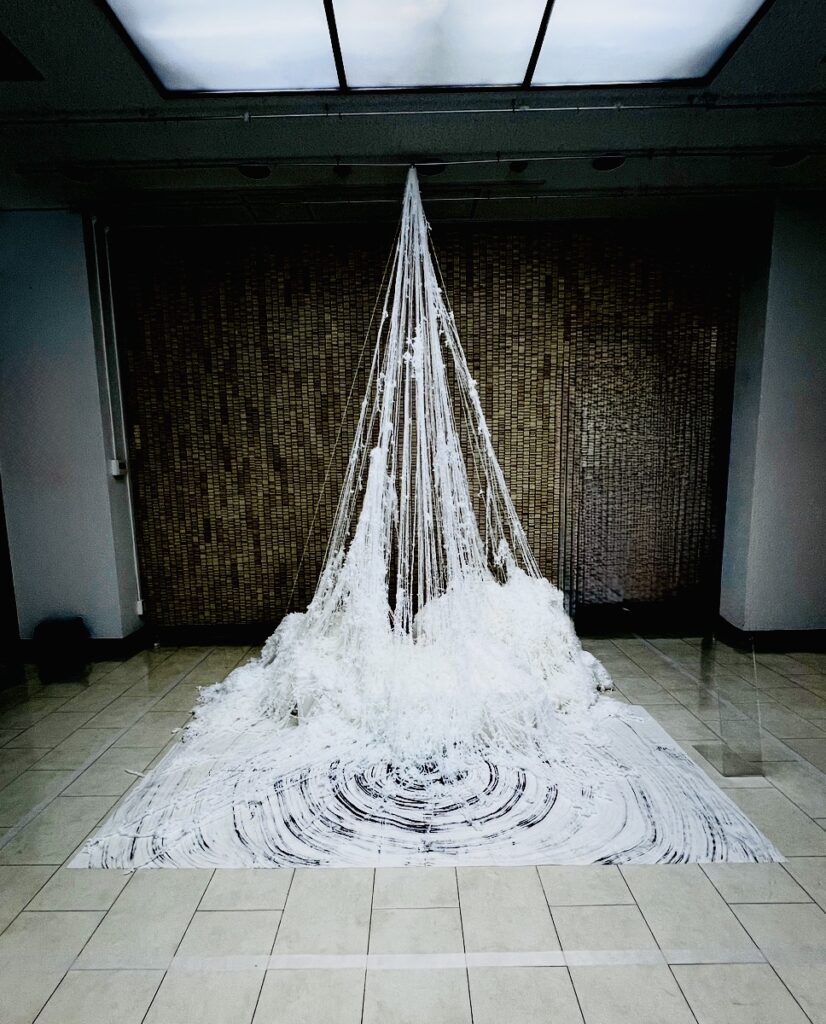
This work imagines a single pair of threads as the starting point of modern humanity—connected, spun, and carried through 8,000 generations—before extending into the future and reaching toward outer space.
According to current scientific understanding, the universe continues to expand under the influence of dark energy. Observations suggest that this expansion is not only ongoing, but accelerating.
The work expresses this ever-expanding universe through countless overlapping lines. These sequences of lines are conceived as “strata of time,” forming cosmic tree rings radiating from the Big Bang at their center. It is a prophetic work that imagines the possibility that humanity’s future may lie somewhere beyond the known universe, emerging at some point among these accumulated rings of cosmic time.
For the production of this work, silk fiber—one of the industries of Sabae City, Fukui Prefecture—was generously provided by Fukushima Orimono Co., Ltd.
Sabae City is widely known today for its eyewear and lacquerware industries, but the textile industry has also flourished throughout Fukui Prefecture since the Edo period. Even today, it continues to evolve through innovation, high-quality manufacturing, and sustainable initiatives, and is expected to further contribute to the revitalization of the regional economy while strengthening its competitiveness both in Japan and overseas.
Precisely because this solo exhibition, which reflects on the future of modern humanity, is being held in Sabae City, the work was created by bringing together the culture of calligraphy with the future born from tradition and innovation in the textile industry.
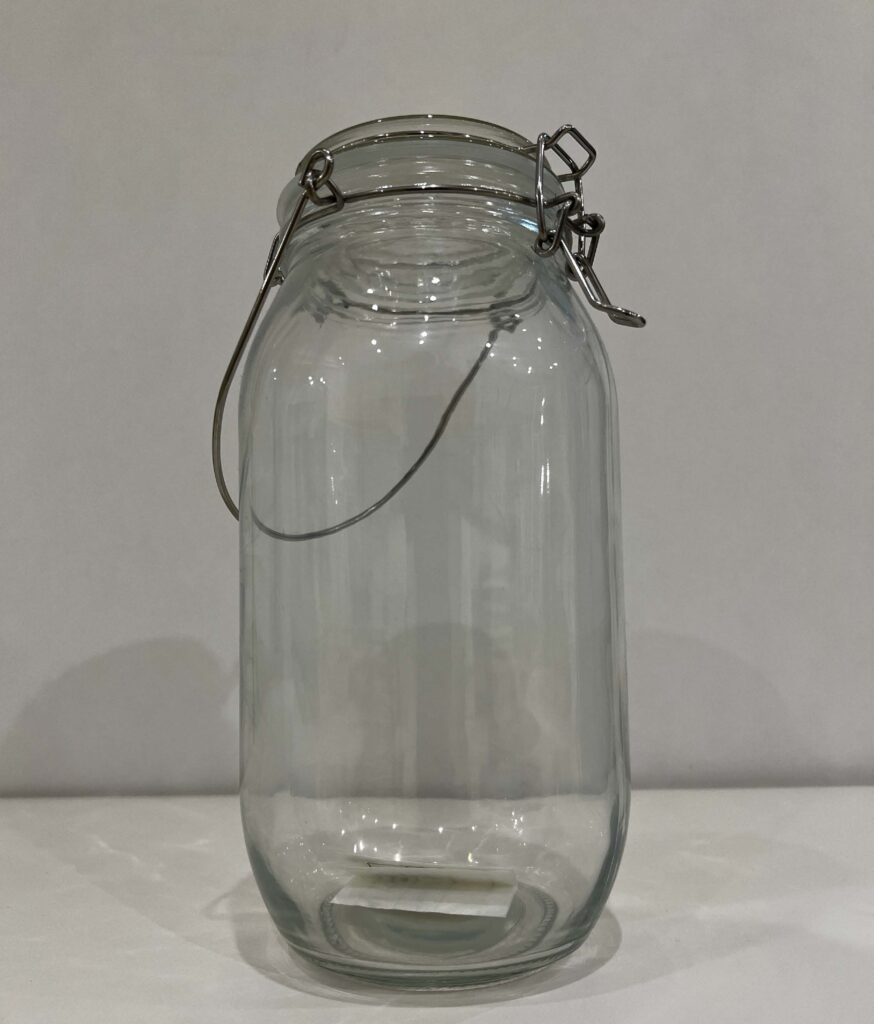
【Work Details】 The character “念” (nen) is composed of “今” (now) and “心” (heart/mind). Written as “念,” it is read as “omoi” (thought/feeling). The upper part of “今” represents a lid. It expresses feelings that are so strongly cherished in one’s heart that they would overflow without a lid. This work is an interactive art piece created together with you, the viewer. Please write down the strong feelings you cherish at this moment “now” and place them in the jar. Make sure to close the lid after putting them in the jar. Storing your strong feelings in this jar and passing this moment on to years and centuries ahead is one of the elements that embodies “eternity.”
【Work Details】 Modern people are busy. Consumed daily by work, housekeeping, childcare, and elderly care, tasks and studies pile up. The concept of time inevitably comes into play as we consider how to use the 24 hours given equally to everyone each day. The present that has passed cannot be returned. Time constantly passes by. Even spending time regretting what has passed makes time pass. Yet busy modern people handle multiple tasks. We continuously consume time without stopping any of our roles. We consume each moment of the 24 hours with some role or another. This work expresses our current sense of time – how we use this time now, seemingly planned yet impulsive, and continuously connected without stopping. In our daily lives filled with moving forward and backward, doing completely different things, having things we should do and want to do, we consume time as if a switch is always turned on somewhere. “TIME” means time. “EMIT” means to send out or release. We are creatures that continue to emit something while using time.
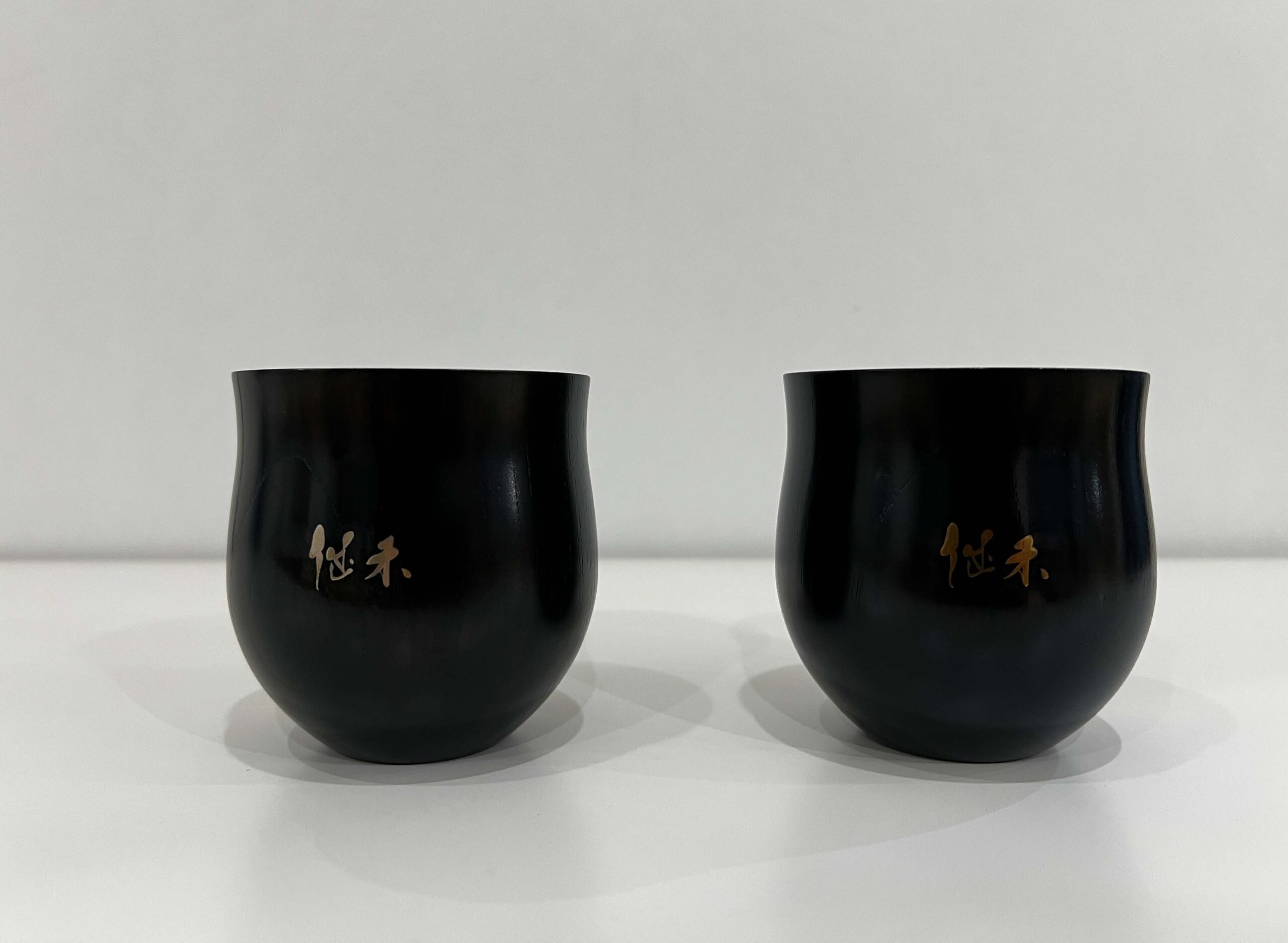
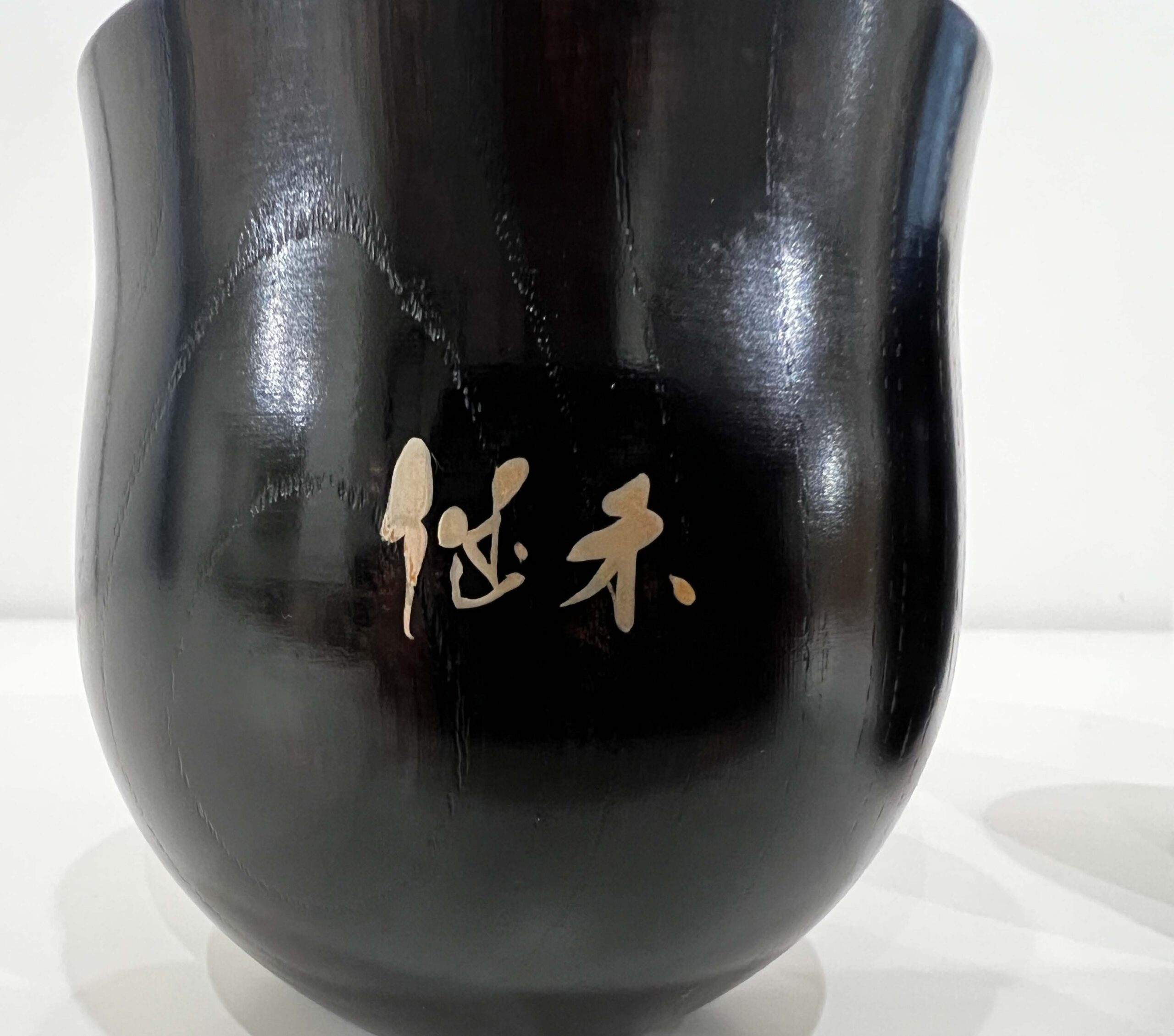
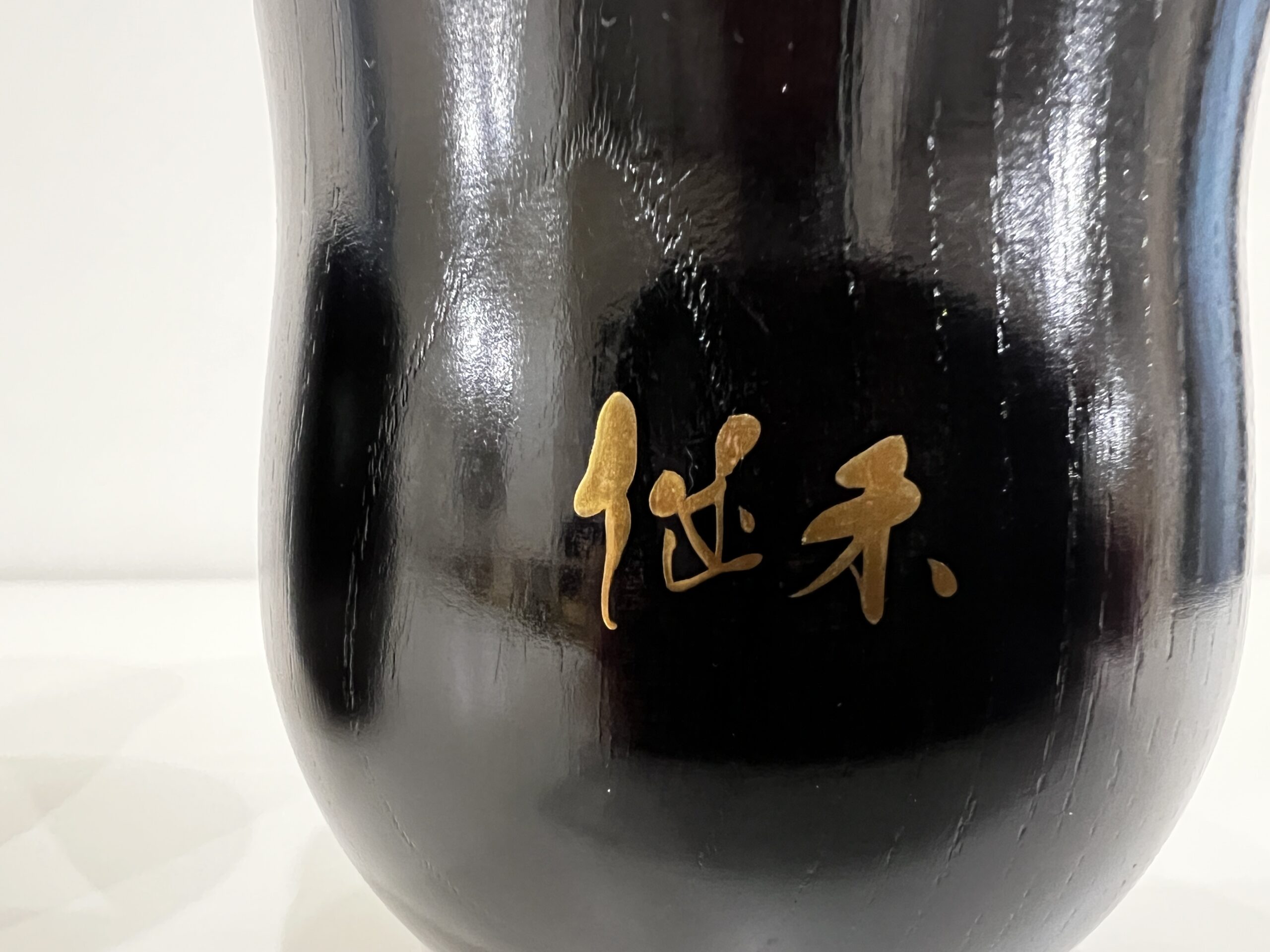
【Work Details】 In 2014, I established my own business, founding the general incorporated association Tsugumi-TUGUMI-. With the ambition to “pass on Japanese culture to the future,” I chose the coined word “Tsugumi” as the company name. “Tsugumi” also refers to the thrush, the prefectural bird of Fukui Prefecture. It carries a double meaning: the “thrush” – a hometown bird that can be seen both in Japan and abroad – and “passing on to the future.” Passing on Japanese culture to the future is not something that ends with our generation but is an eternal endeavor that continues across many generations. In a world where the act of “writing” itself is disappearing as a tool of expression, perhaps “cultural succession” exists as humanity’s final resistance. For this exhibition, I wrote the calligraphy “Tsugumi” on light urushi lacquer coffee cups created by Yabushita Yoshiyuki, a kintsugi master from Sabae City, Fukui Prefecture. Maki-e artist Yabushita Koharu applied gold and silver maki-e decoration to the pieces. A magnifying glass has been placed beside the artwork. Please feel free to use it to take a closer look at Japanese cultural elements such as calligraphy, lacquer, and makie, as well as the dedication of those who carry on these traditions.
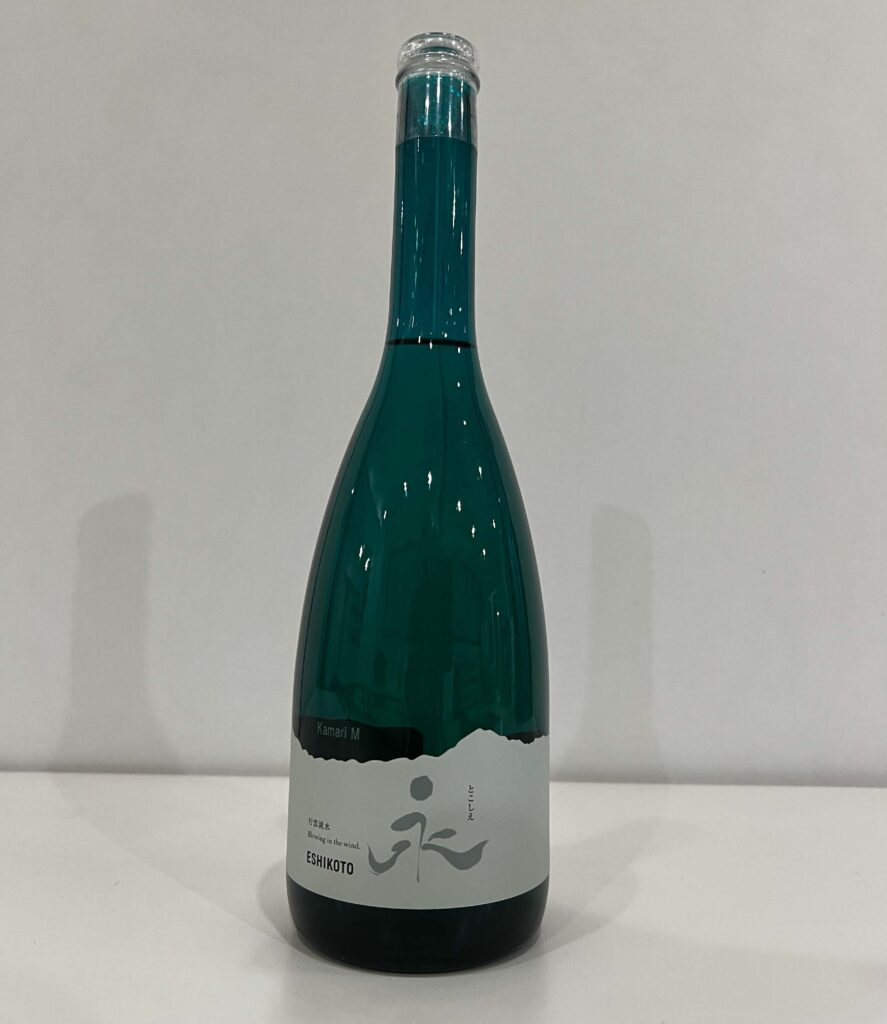
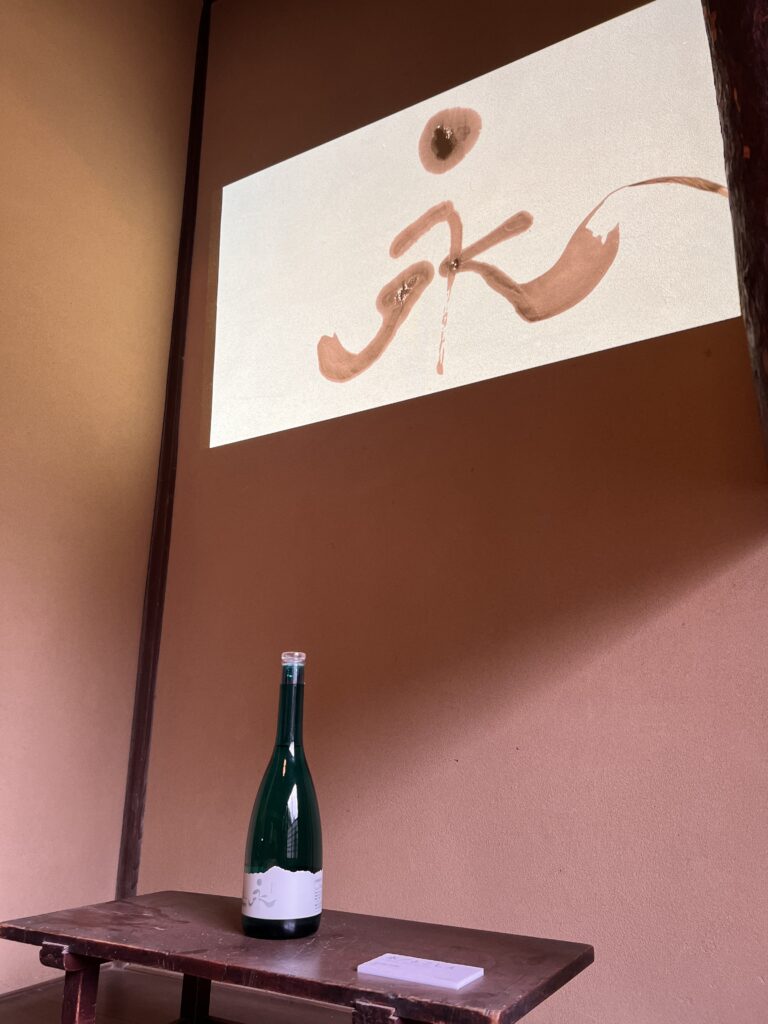
【Work Details】 Product: “Ei” Design Released in 2022 – Kokuryu Brewery (Sake) Product: “Tokoshie” Design Released in 2024 – Kokuryu Brewery (Sake) A sake package design exclusively available from Kokuryu Brewery’s ESHIKOTO. I created the calligraphy for the logo of this sake package, which can only be purchased at “ESHIKOTO” brewery in Eiheiji, Fukui Prefecture. The character “永” (ei) can be read as “tokoshie,” and means “to remain unchanged and eternal for a long time.” The Chinese character “永” is a pictograph representing a long river drawing in tributaries. As sake that will be continuously enjoyed for eternity, I expressed through brush strokes how it flows endlessly while drawing in history.
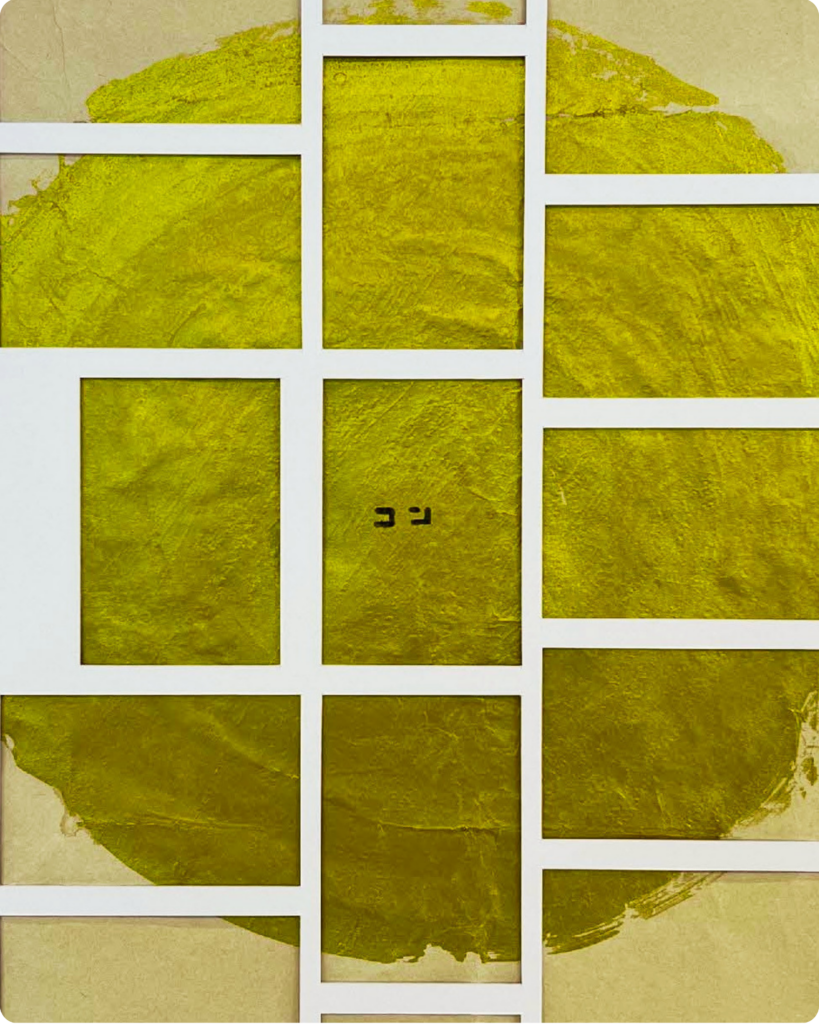
【Work Details】 In 1977, NASA launched the “Voyager Program,” a mission to explore the outer planets of the solar system and beyond, sending two unmanned spacecraft. These spacecraft carry the “Golden Record,” containing messages intended for extraterrestrial beings. The Golden Record contains various sounds and music from Earth, greetings in 55 languages, and photographs and illustrations introducing various scientific information. The hope was that as Voyager leaves our solar system and travels toward other star systems, it would be discovered and decoded by intelligent extraterrestrial life presumed to inhabit planets in those star systems. Humanity’s curiosity about unknown worlds knows no bounds. It wouldn’t be an exaggeration to say that we live our daily lives for the progress and evolution of humanity. Even when it seems we’re doing nothing, our very existence serves as a kind of database for humanity’s next generation, and our ability to adapt to environmental changes is itself linked to human progress. The COVID-19 pandemic in 2020 brought many behavioral changes to humanity. All of humanity transitioned without question to days of restricted movement to schools and offices, mandatory stay-at-home orders, and wearing masks while avoiding conversation with others. In 2024, humanity is returning to its previous daily life as if nothing happened, but that daily life has become a completely different world from before. The sounds etched into the Golden Record in 1977. These sounds, cutting out “now” from 47 years ago, will continue drifting through space eternally via Voyager. The Voyager’s Golden Record includes the Japanese greeting “Konnichiwa, ogenki desu ka?” (Hello, how are you?). Originally, “konnichiwa” came from phrases like “Kyō wa, gokigen ikaga desu ka” (How are you today?) and “Kyō wa, ii otenki desu ne” (It’s nice weather today). It’s said that “konnichiwa” spread after being introduced in Meiji-era textbooks with the latter part of “kyō wa” omitted. This culture of abbreviation can now be seen in messages exchanged among young people in daily life: “Ryōkai desu.” → “ri” “Otsukare sama desu.” → “otsu” “Sō da yo na.” → “sore na” “Maji?” → “ma?” In this Golden Record 2024, I’ve carved “kon,” an even shorter version of “konnichiwa.” The future of such abbreviation might lead to nothing remaining. Nothing expressed. An empty world might drift. However, we who live now have words and all kinds of tools available as means of communication. Yet, there are many barriers to delivering words, making them harder to convey. Just as the radio waves emitted by Voyager have become weak and difficult to receive. The world surrounding us is a filter bubble where only information we want enters. Messages we want to deliver won’t reach their destination unless they match what the receiver needs. Escaping this echo chamber phenomenon can only be achieved by taking interest ourselves, removing filters, and venturing into different worlds. This work uses a mat with multiple holes to express how messages pass through many filters, and information is transmitted in limited ways. If you were to etch yourself now onto a Golden Record, what would you etch?
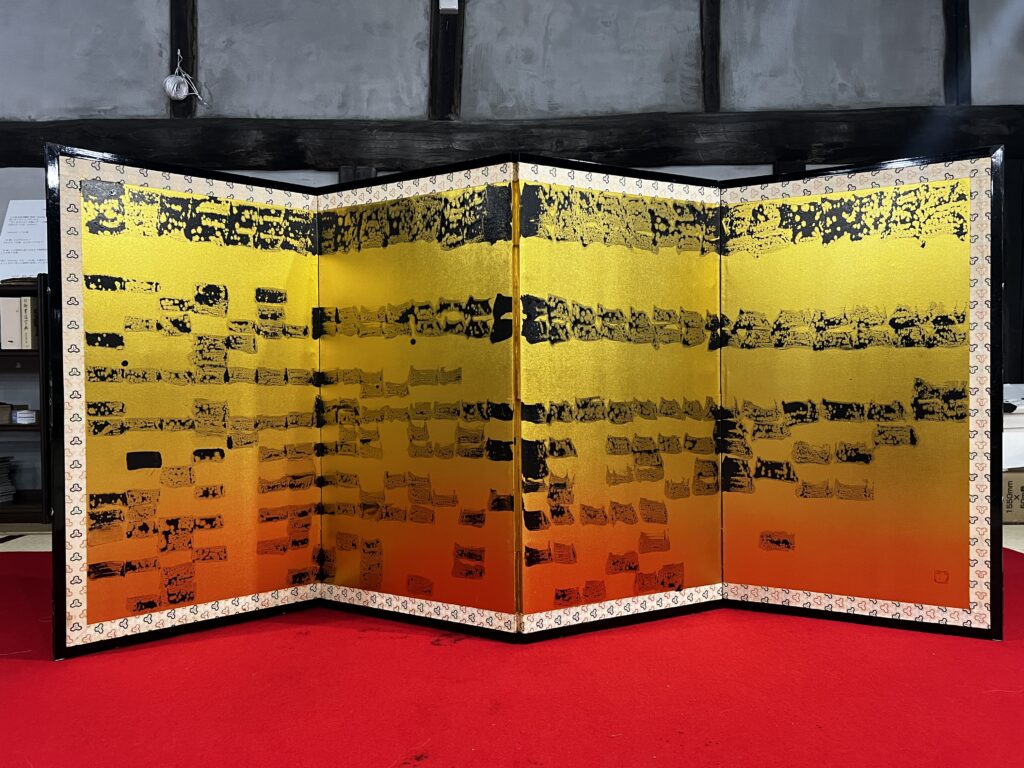
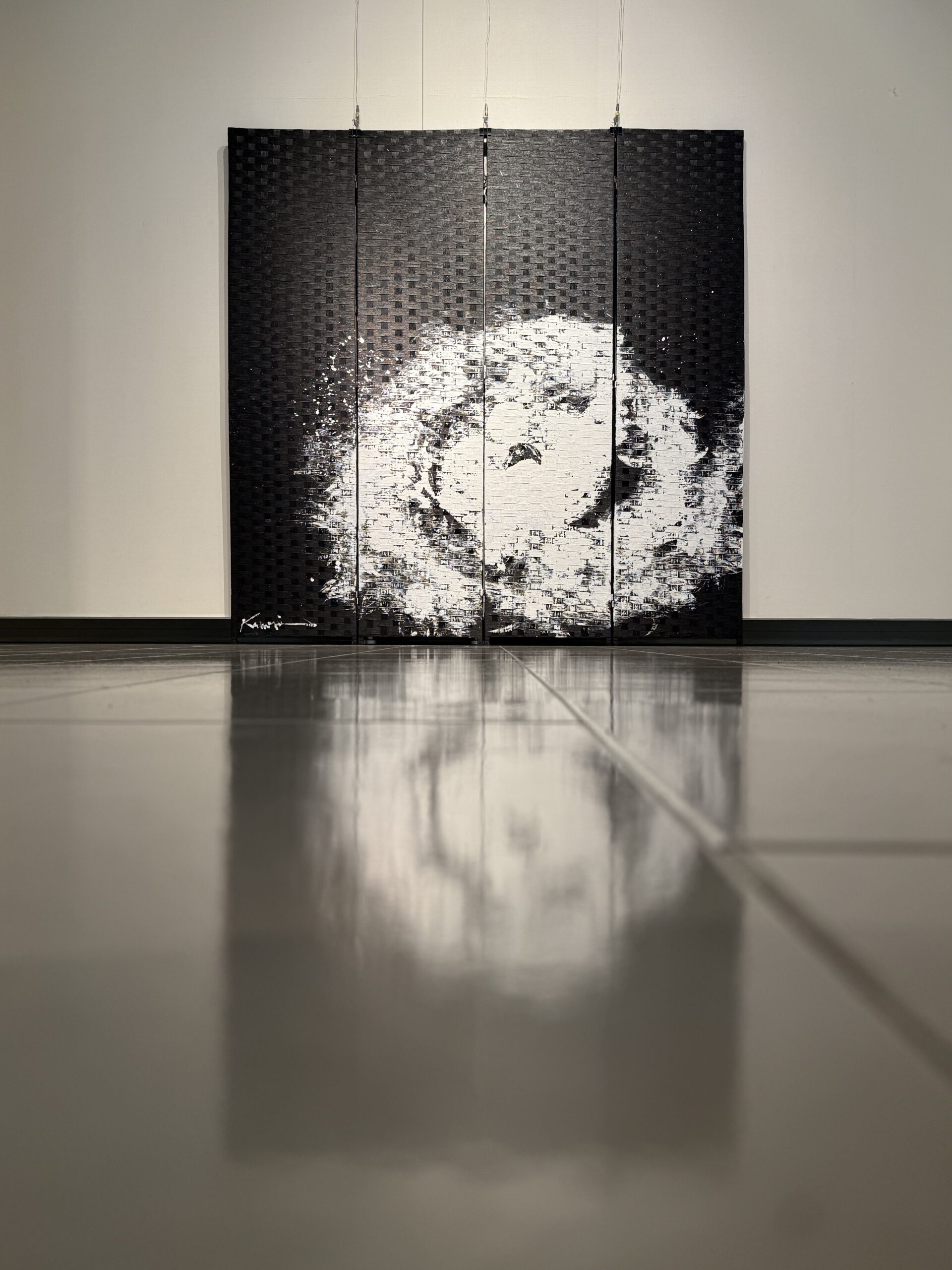
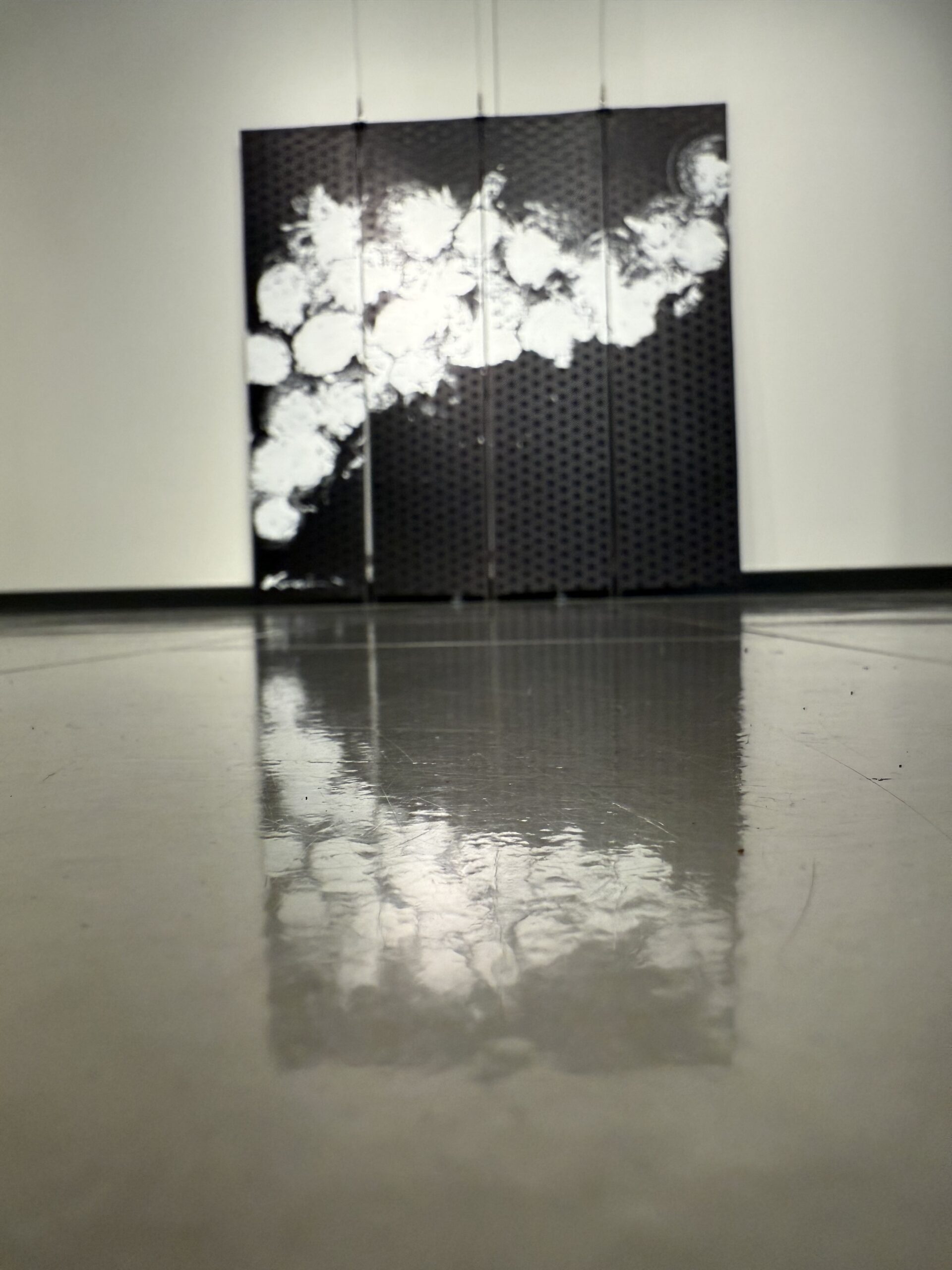
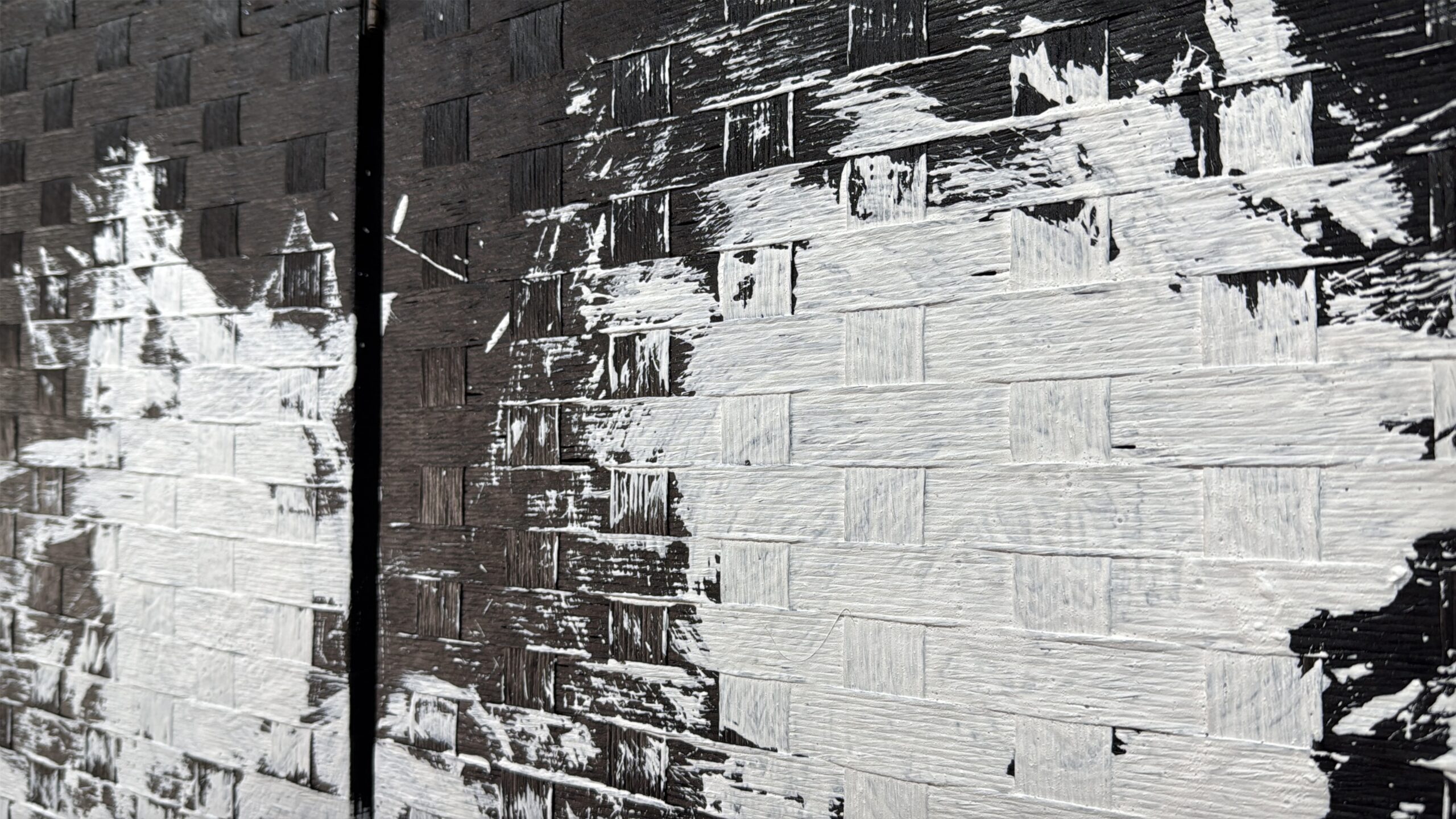
【Work Details】 Just as people wake up when the morning sun rises, when sunlight shines upon the earth, its heat causes water in the seas, rivers, and ground to evaporate into water vapor. Air containing water vapor rises on updrafts into the sky, where it rapidly cools and becomes water droplets. These droplets gather to form clouds, and as the water droplets and ice particles grow larger and the clouds thicken, they can no longer be supported by the updrafts, causing the droplets and ice particles to fall as rain and snow upon the earth. The fallen rain and snow seep into the ground, then seep out, becoming rivers that flow to the sea. And once again the morning sun rises, warming the earth, transforming water back into clouds. From this cycle that has repeated since ancient times comes the term “seisei ruten” (perpetual flow). “Seisei” refers to things being born and growing one after another. “Ruten” expresses how things continue to change without stopping. When we look at everything around us from a broad perspective, we can recognize that all exists within this “seisei ruten” and is part of it. The left screen of the four-panel folding screen (yonkyoku issō) depicting “seisei ruten” portrays the scene of “seisei” – clouds rising on updrafts. Water vapor rising from the left gathers in layers to form large clouds. The right screen shows “ruten” – the rain and snow falling from those clouds, flowing through rivers to reach the sea, becoming ocean currents. Humans are 60-70% water. We, who are made almost entirely of water, are beings that flow and change just like this perpetually flowing water. Human activities too are in perpetual flow. This cyclic structure has continued and will continue eternally unchanged, and we hope it remains so. The folding screen used in this work employs partitions like those used in ordinary homes. Partitions are used to divide everyday spaces, and using a partition signifies a separation from the space on the other side. However, when these partitions are wrapped in this “seisei ruten,” the divided world itself flows and changes. “Walls” that separate people from people, countries from countries, languages from languages – all walls that have appeared throughout history are themselves human history, repeatedly emerging and collapsing with the times, and are symbols of perpetual flow. This work expresses how even when walls form between opposing things, they will eventually disappear.
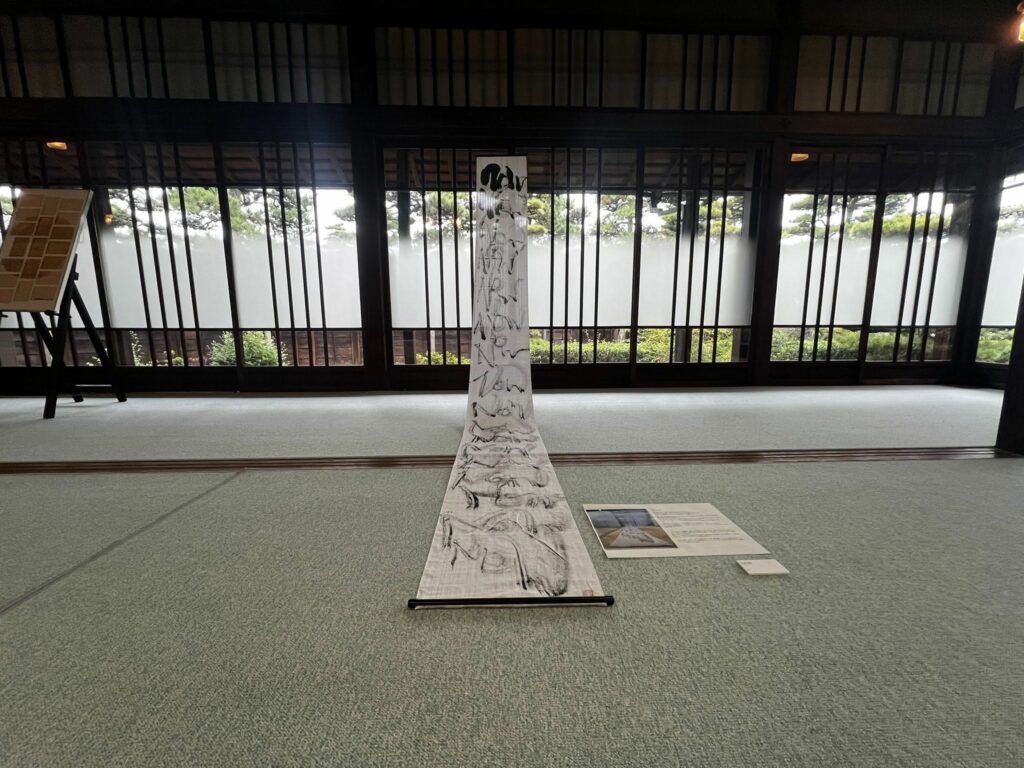
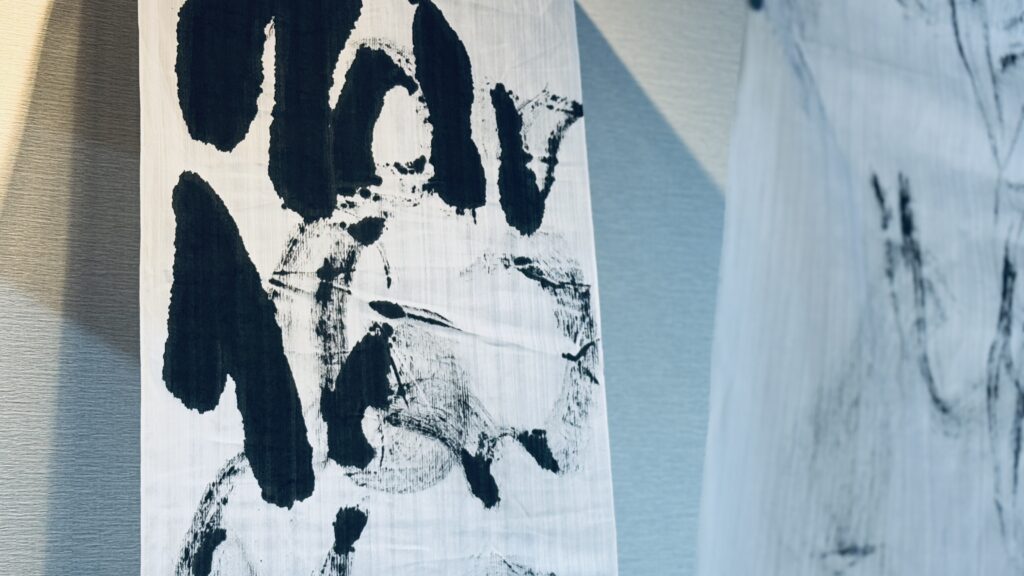
【Work Details】 Calligraphy is the act of writing with ink held in a brush onto an object. The moistened line containing ink gradually fades, and eventually the ink runs out. When this happens, it becomes difficult to read what was written. The act of writing is said to have begun with oracle bone inscriptions. Oracle bone script consisted of characters carved with blades into ox shoulder bones and turtle shells to create writing. The origin of writing was preserved through the act of “carving.” Since ink and paper did not exist, expressions of moistness or fading in writing could not exist. Between the transition from “carving” to “writing,” moisture and dryness in writing were born. In modern times, we move from “typing” to “text generation” from voice, Due to technological advancement, the very act of writing characters is disappearing. Calligraphers living in this era strive to resist this trend, attempting to express the present era through the act of “writing.” ―― This moment of “now” becomes the past from the instant it is written, transitioning from moisture to dryness. We humans are also born in a state containing much moisture, and as we approach death, we undergo physical changes toward dryness. The moist past was also the present at that point in time, and the moment wrapped in dryness in the future is also a future that should be accepted as the present at that point. A single long piece of cloth represents a human life itself. Each moment of “now” is etched in ink. By connecting the beginning and end of the cloth to form a circle, it expresses how one person’s life circulates into the lives of the next generation.
【作品詳細】 SAPPORO HISTORY は、開拓の始まりから未来へと続く札幌の歩みを、大通りを表現した一本の線上に5つの瓶とその中にエポックとなる年数を刻んだ作品です。 その背景には、北海道の大地に根づき、150年以上の時を経てもなお変わらぬ息吹を持ち続ける札幌の「永遠」というテーマがあります。
SAPPORO HISTORY は、単なる年表ではありません。それは、札幌に生きる人々の息遣い、積み重ねられた時間、そしてこれから先の未来への希望を、書と色で紡いだ「札幌という物語」です。 鑑賞者は、過去を懐かしみながら現在を見つめ、そしてまだ見ぬ未来を思い描くことでしょう。この作品は、その瞬間を永遠に封じ込めるために生まれました。
このGolden Record 2024では、「こんにちは」をさらに短縮して「コン」という言葉を刻みました。 短縮化のその先の未来は、もしかすると何も残らない。何も表現しない。空の世界が漂うかもしれません。 しかし今を生きる私たちには言葉も存在し、伝える手段としてありとあらゆるツールが存在しています。
 MaedaKamari2020